Budapest's Baths in Winter 2026-2027: Steam, Snow and the 38 Degree Trick
The water does not know it is January. You will, for about twenty seconds.
 Written with Gábor Kovács, Budapest thermal bath specialist and spa experience guide
Short answer
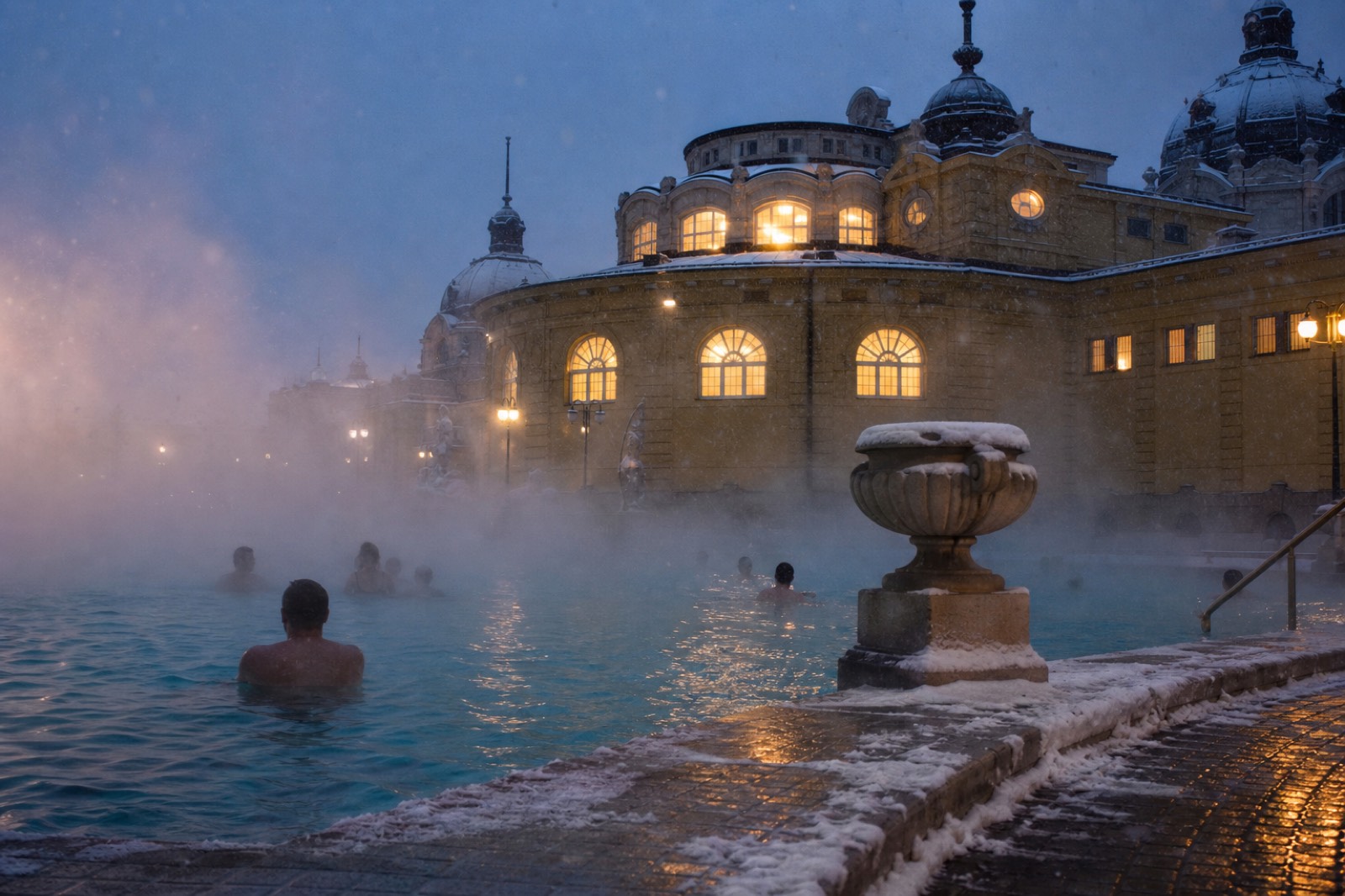
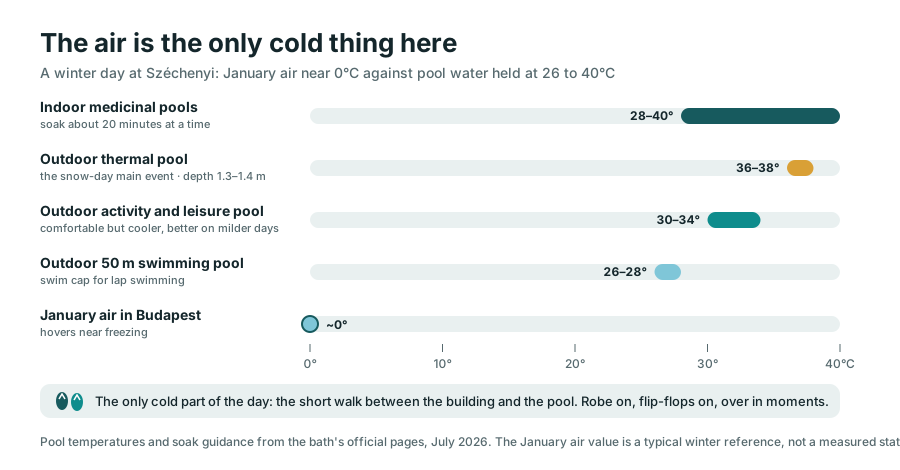
Yes, you can soak outdoors in Budapest all winter. Széchenyi's outdoor thermal pool is held at 36 to 38°C year round, so the water stays hot while the air hovers near freezing. The only genuinely cold moment is the short walk between the building and the pool, and December to January is actually the busiest stretch of the year.
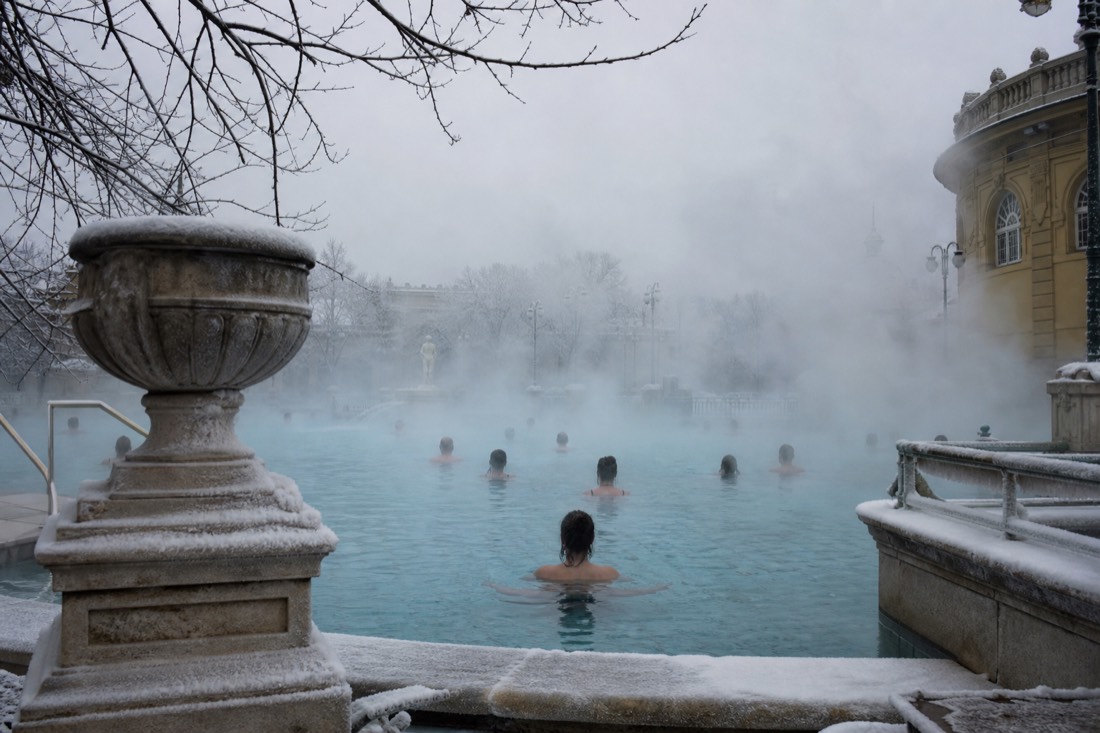
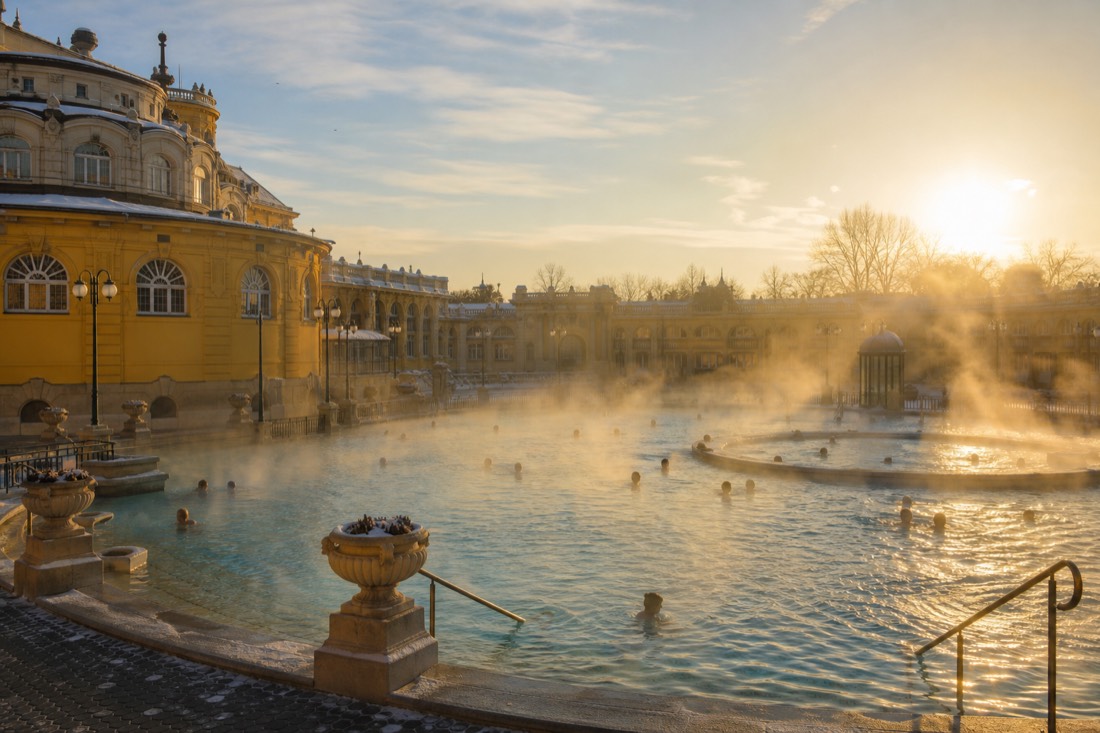
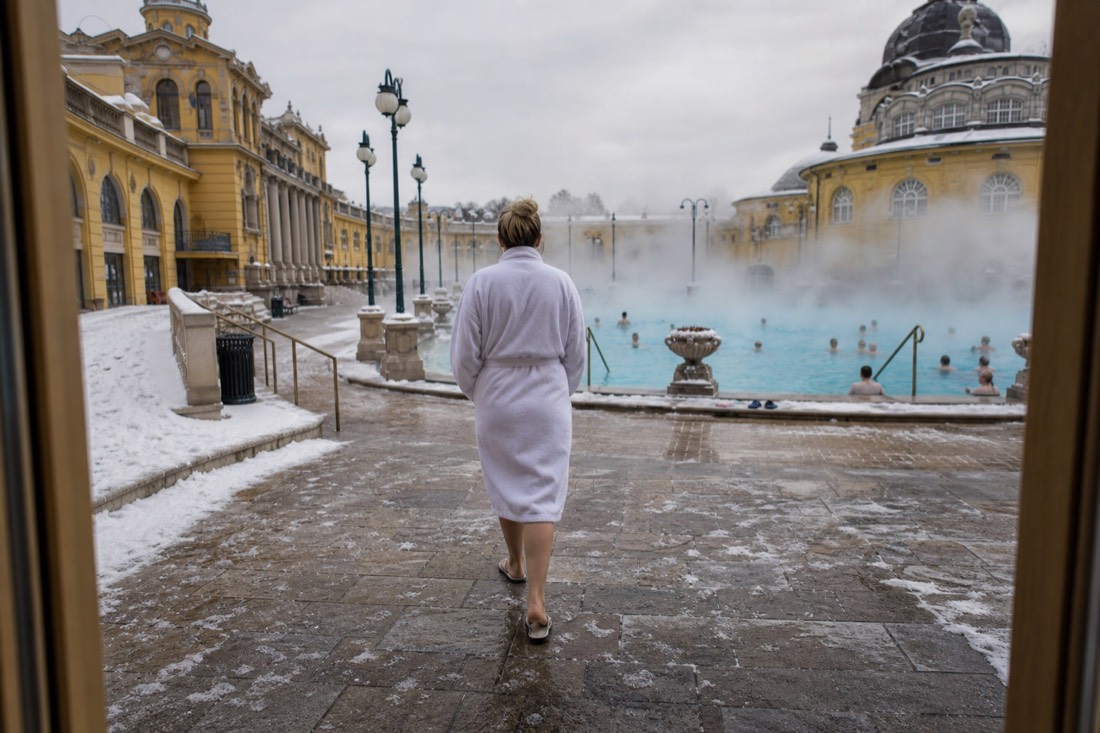
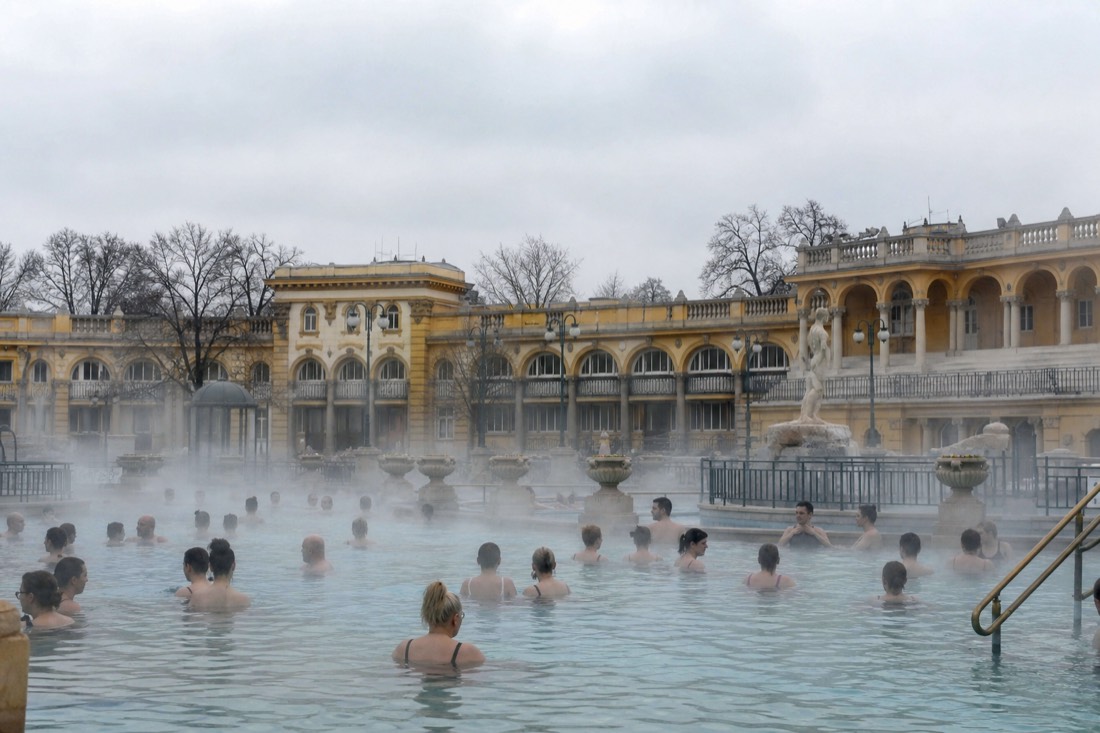
Steam is the first thing you notice. On a cold morning it climbs off Széchenyi's big outdoor pool in slow white columns, thick enough that the yellow building behind it goes soft at the edges. I have been walking visitors into Budapest's baths since 2022, in every month the calendar offers, and winter is the season people describe to me afterwards in the most detail. Summer soaks blur together. A January soak, with your shoulders in 38-degree water and frost forming in your hair, does not.
Are the outdoor pools open in winter?
Yes. Széchenyi's outdoor thermal pool runs at 36 to 38°C every day of the year, snow included. The water rises hot from deep underground, so the season cannot cool it. The outdoor pools stay open right through December, January and February, and those cold months are the busiest of the year, not the quietest.
This is the part first-time visitors struggle to believe, so it helps to know why it works. Budapest sits on more than 100 medicinal geothermal springs, which is the whole reason the city earned its "City of Spas" nickname, a fact laid out plainly on the Budapest Wikipedia entry. The water arrives at the surface hot. Nobody is fighting the winter with a boiler; the winter simply loses.
Here is how the pools at Széchenyi break down, per the official pool guide:
| Pool | Temperature | Winter role |
|---|---|---|
| Outdoor thermal pool | 36-38°C, depth 1.3-1.4 m | The main event, hot enough for falling snow |
| Outdoor activity and leisure pool | 30-34°C | Comfortable, but cooler; better on milder days |
| Outdoor 50 m swimming pool | 26-28°C, swim cap for laps | For committed swimmers only in January |
| Indoor medicinal pools | 28-40°C, soak about 20 minutes | Your warm-up circuit and refuge between outdoor rounds |
The honest caveat: the pools are hot, the pavement is not. The bracing part of a winter visit is never the soaking. It is the thirty-metre walk between the door and the water, and I cover how to handle that next.
Is it too cold to actually enjoy?
No, and this is the 38 degree trick: once your shoulders are under, the air temperature stops mattering. Heat comes from the water you are sitting in, not the sky. The only cold part of the experience is the brisk walk from the changing area to the pool edge, and it is over in moments.
I tell nervous guests the same thing every December. You will be cold exactly once, on the way in. After that the problem reverses, because 38-degree water works on you fast and the indoor medicinal pools run 28 to 40°C, so there is always a warmer or cooler room to retreat to. The recommended soak in the hottest medicinal pools is around 20 minutes at a time, and winter is when people actually respect that advice, stepping out to let the cold air cut the heat before sliding back in. Summer visitors overheat. Winter visitors self-regulate without trying.
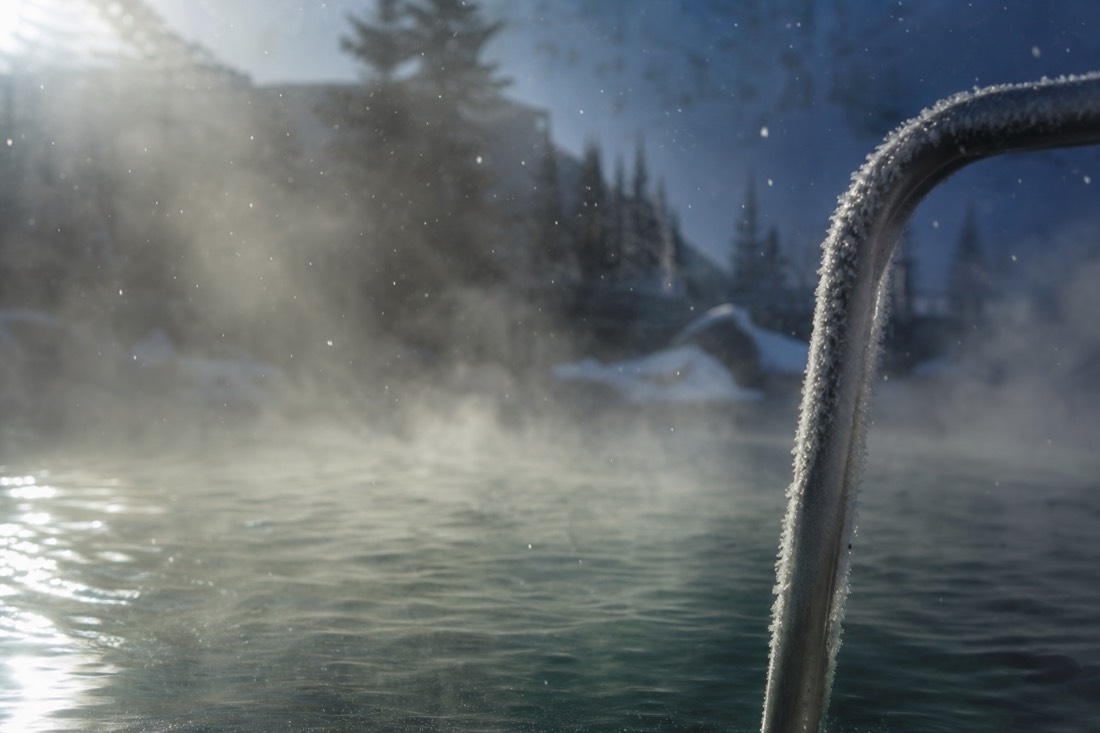
The sensory payoff is what makes the season. Your body sits in bath-hot water while your face feels the frost, and if your hair is wet it will stiffen and whiten at the tips while you watch the steam roll. When snow falls into the pool it vanishes a hand's width above the surface. I have watched guests who grumbled through the whole tram ride go silent at that.
There is a version of this that goes wrong, and it is always the same version: someone lingers at the pool edge deciding whether to get in. Do not decide at the edge. Walk out, go straight down the steps, and the whole question dissolves. The people I see suffer are the deliberators, hugging themselves in the wind while they negotiate with the water. The ones who commit are grinning before the deliberators have finished shivering. For a longer, snow-day account of how this plays out at Széchenyi, I wrote up the full scene in Széchenyi in the snow.
Which bath is best in winter?
Széchenyi, without much argument, because it has the biggest outdoor hot-water scene in the city and winter is exactly when outdoor soaking is the point. Rudas and Veli Bej are strong indoor-heavy alternatives if you would rather stay under a roof. Gellért is closed and cannot be your plan.
Széchenyi is the one that gives you the postcard: the huge Neo-Baroque courtyard, the 36-38°C outdoor pool, steam against a grey sky. It rates 4.2 across roughly 66,000 Google reviews, which is a remarkable score at that volume. If your winter fantasy is chess players in the mist and snowflakes dying over the water, this is the bath, and the practical move is to book the Széchenyi full-day pass ahead and check live availability and prices on GetYourGuide. The pass carries a genuine "likely to sell out" flag, includes a full-day locker or cabin, and cancels free up to 24 hours out, which matters in a season when demand runs high. One restriction to know: under-14s are not admitted.
If you run cold and want the soak without the outdoor dash, the Turkish-era baths lean your way. Here is the honest winter field:
| Bath | Google rating | Winter character |
|---|---|---|
| Széchenyi | 4.2 across ~66,000 reviews | The outdoor snow-and-steam classic; busiest, biggest |
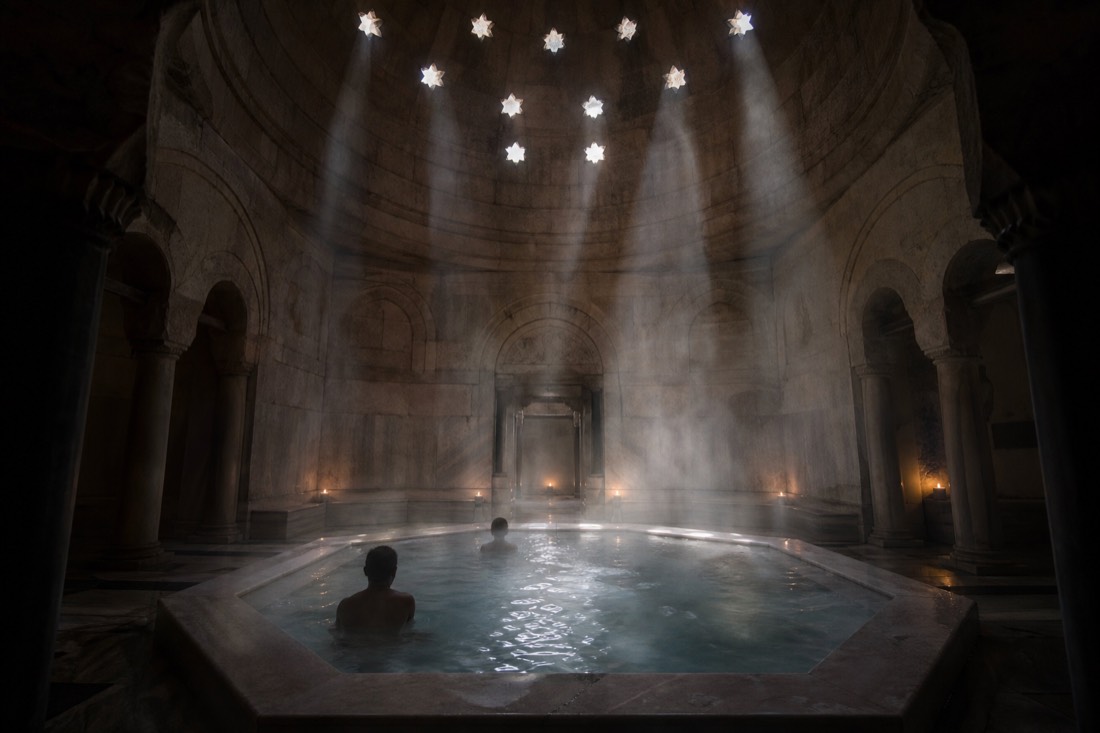
| Rudas | 4.3 across ~12,000 reviews | Ottoman dome, indoor-heavy; a moodier, warmer-corridored day; day pass + meal bookable online |
| Veli Bej | 4.5 across ~3,400 reviews | Small, quiet, mostly indoors; the local's cold-day pick |
| Gellért | Closed | Shut since 1 October 2025, reopening planned for 2028 |
That last row matters more than it looks. Older articles still send winter visitors to Gellért's famous hall, and the official Gellért site confirms it has been closed since October 2025 with a planned 2028 reopening. Do not build a day around it. If you are torn between the rest, my side-by-side breakdown lives on the comparison page.
One more cold-weather option hides inside Széchenyi itself. The beer spa is a fully indoor 45-minute private session in a wooden tub laced with hops and malt, with unlimited Hungarian draft beer flowing from your own copper tap beside the water. It rates 4.7 across 58 GetYourGuide reviews, a small sample but a happy one, and it pairs naturally with a bath day since you can add a Széchenyi day ticket to the booking. It is adults only, not suitable for pregnant women, and it sits at Entrance One of the bath, third door on the left. Go straight to that door; guests who report to the main desks first describe a confusing runaround.
What should you bring in winter?
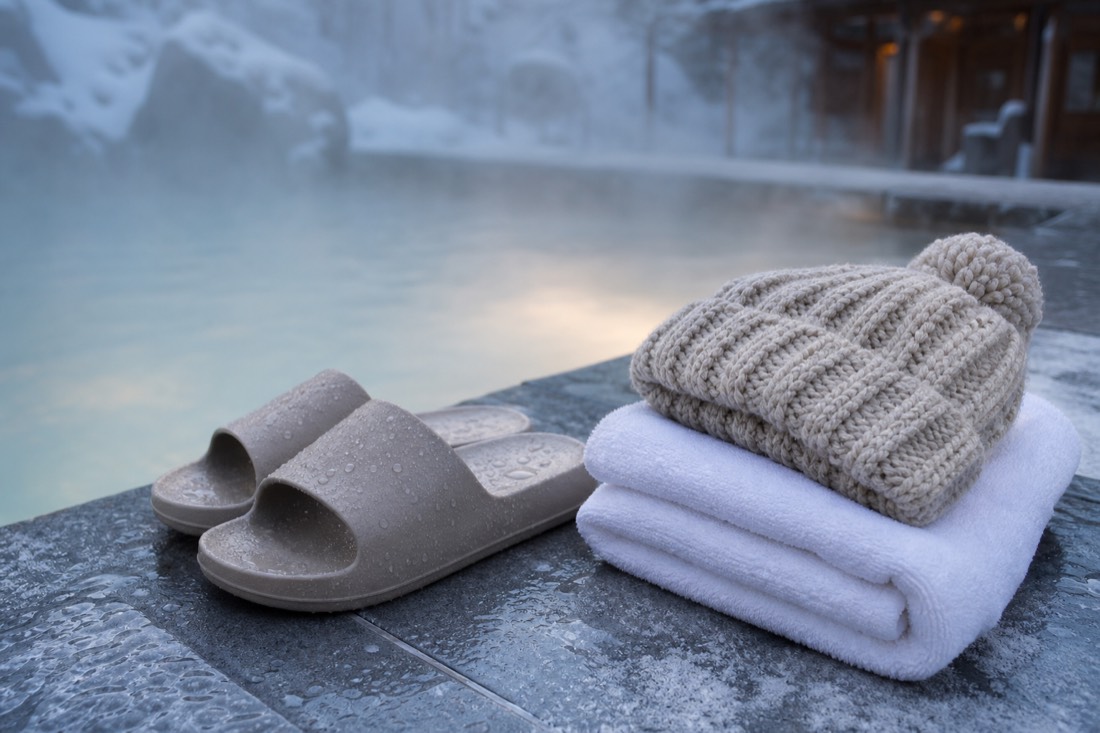
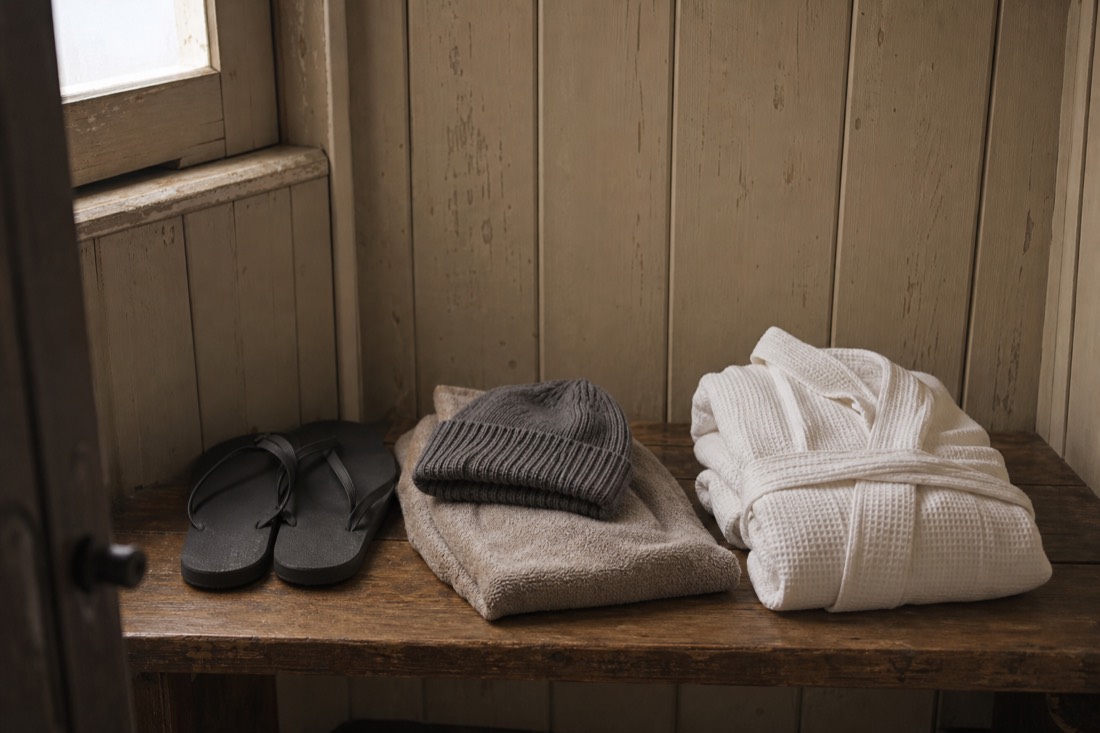
Everything you would bring in July, plus a warm hat, and treat flip-flops as non-negotiable rather than optional. The walk between building and pool is the whole hardship of a winter visit, so the packing question is really: how do I make thirty metres of freezing air trivial?
| Item | Why it matters more in winter |
|---|---|
| Flip-flops or sliders | The outdoor walkways are near freezing; bare feet on winter stone is the worst moment of the day |
| Warm hat | Your body soaks at 38°C while your head sits in January air; a hat lets you stay in longer |
| Your own towel | Guests say it constantly in reviews: bring one, and in winter you want it waiting at the pool ladder, not in a locker |
| Robe (rentable on site) | Turns the cold dash between pools and building into a non-event |
| Swim cap | Only needed if you lap swim in the 26-28°C outdoor 50 m pool |
| Dry warm layers for after | You leave with damp hair into a Budapest winter evening; plan for that |
A hat sounds eccentric until you try it. With your body fully submerged, the only heat you lose is through your head, so a wool hat effectively removes winter from the equation. I wear one and take zero teasing from anyone who has been in the water more than five minutes.
Two logistics notes worth money. First, the cabin trick: groups regularly book one changing-cabin ticket and lockers for everyone else, then share the cabin, which in winter means a private, warmish room for the getting-dressed stage instead of a bench. Guests mention this in reviews and it works. Second, rent the robe. In July it is vanity; in January it is infrastructure. For the full rundown on swimwear rules, towels and how not to stand out, see what to wear and bath etiquette.
Is Sparty good in winter?
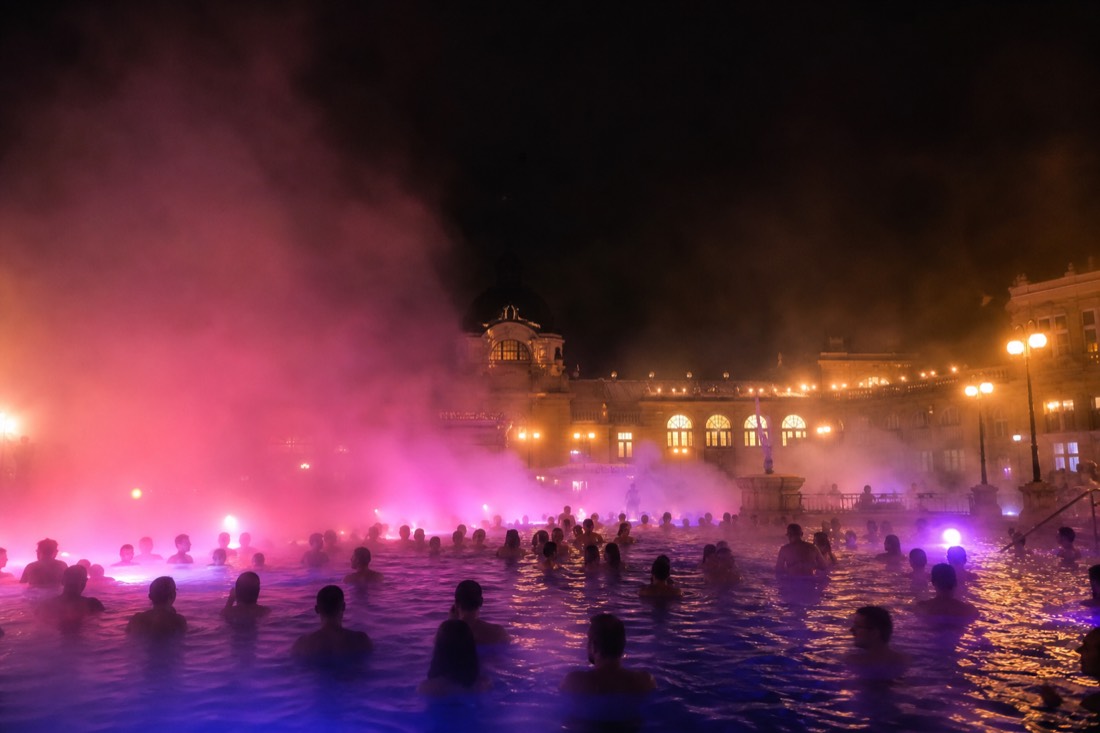
Yes, and arguably better than in summer. The Saturday-night spa party runs through winter in the same 36-38°C outdoor pool, so you dance in hot water while the night air stays cold, which is the entire appeal doubled. It is 18+ only and rates 4.1 across 1,731 GetYourGuide reviews.
The fear is always the same: a night-time outdoor party in a Central European winter sounds like hypothermia with a DJ. The water answers it. One guest, Rachel, put it exactly this way in her review: "What a great evening. We were worried as we went at the end of November and thought we were going to freeze. Didn't feel the cold at all. Great night, feel like it is an experience we will remember for a life time." That worried-then-converted arc is the standard winter Sparty story I hear.
The event runs every Saturday night at Széchenyi, per the official Sparty site, and the official 2026 tiers are the one set of prices I will print:
| Tier | Official 2026 price |
|---|---|
| BASIC | €59 |
| PREMIUM | €80 |
| PREMIUM PLUS | €97 |
| EXPRESS | €111 |
| EXPRESS SUPERIOR | €143 |
Prices are before drinks. The premium tiers add extras such as drink coupons, a towel and flip-flops, and the towel and flip-flops earn their keep in January far more than in June; check the Sparty ticket page for what each tier bundles. Know the drink system going in: you load cash onto a card, drinks are pricey, and the only top-up ATM is inside. Bring more than you think. Cancellation terms are shown on the listing, so read them before you commit to a date, and remember it is strictly 18 and over.
When in winter should you go?
Early, and ideally on a weekday. December and January are peak demand, with the Christmas-to-New-Year week the most crowded stretch of the whole year. Weekday mornings right at opening give you the steam without the shoulder-to-shoulder soak, and Friday evenings run late, until 22:00 at Széchenyi.
I will not dress this up: if you come between Christmas and New Year, you will share the water with half of Europe. The baths absorb crowds better than most attractions, because people spread across many pools, but the changing areas and the famous outdoor pool feel it. I cannot give you a number for how busy, and I will not invent one. I can tell you that booking ahead stops being optional that week, and that the day pass's sell-out flag is at its most literal.
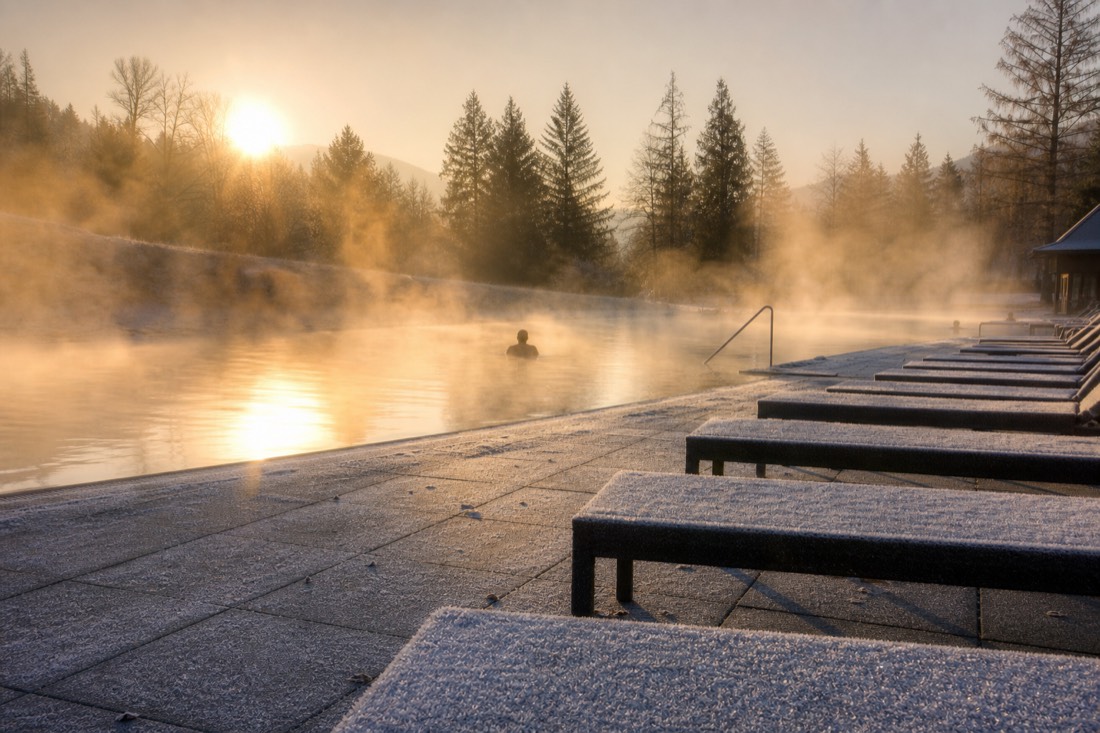
The counter-move is timing. Széchenyi opens at 07:00 on weekdays and 08:00 on weekends, closing at 20:00 most nights. The first two hours on a weekday morning are the quiet winter gold: locals, steam, low light coming up over the courtyard. Guests who go early say so in reviews again and again. The other underused window is Friday night, when the bath stays open until 22:00, two hours longer than any other day, and the after-dinner crowd thins as the temperature drops. Soaking outdoors at 21:30 in January, in the dark, is the single best free upgrade the schedule offers. Service hours can shift, so glance at the official schedule before a holiday visit.
One planning note for the party crowd: Sparty only happens on Saturdays, so if a winter Sparty is on your list, your whole Budapest weekend anchors to that night. Book the ticket first, then arrange the rest of the trip around it, rather than hoping a Saturday slot survives until you land in a peak-demand month.
If you are weighing a winter date against the rest of the calendar, the full month-by-month picture is in the best time to visit Széchenyi, and the short answers to everything else live on the FAQ page.
How does the winter warming circuit work, minute by minute?
Start outdoors, not indoors. Go straight from the changing hall into the 36 to 38 degree outdoor thermal pool, stay 20 to 30 minutes, then retreat inside to the 28 to 40 degree medicinal pools for about 20 minutes per hot pool, add a sauna round if you use them, and go back out. Two or three loops fill a winter afternoon without ever feeling cold.
People assume the sensible order is to warm up indoors first and brave the outdoor pool once they are toasty. In my experience it works the other way round. Warm skin meets freezing air worse than cold skin does, and the outdoor pool is the hottest large body of water on the site anyway, so the dash-then-plunge is the gentlest start you can give yourself. The circuit below is how I walk guests through a winter visit at Széchenyi. The pool temperatures and the 20 minute soak guidance are official; the allowances are mine, from doing this in every cold month since 2022, and you should stretch or shrink them to taste.
| Elapsed | Where you are | Water or air | Allowance and why |
|---|---|---|---|
| 0:00 | Changing hall, locker or cabin | Indoor air | 15 to 20 minutes; slower in winter because of the extra layers |
| 0:20 | The dash to the outdoor pool | Freezing air, wet stone | Under a minute in flip-flops; do not stop at the edge, go straight down the steps |
| 0:21 | Outdoor thermal pool | 36-38°C | 20 to 30 minutes; the steam is thickest and the shoulders-under moment happens here |
| 0:50 | Indoors to the medicinal pools | 28-40°C, room by room | About 20 minutes per hot pool, per the official guidance; pick a cooler room between hot ones |
| 1:15 | Sauna round, if you use them, then a rinse | Dry heat then cool water | Short; winter is when a cold rinse after the sauna finally feels good |
| 1:35 | Back out to the thermal pool | 36-38°C | Another 20 to 30 minutes; the second dash is easier than the first, every time |
| 2:05 | Loop again, or the 30-34°C activity pool on a milder day | Outdoor | Optional; on a real January day most guests skip the cooler outdoor pools |
| 2:30 onward | Final soak, then out with the robe on | Outdoor to indoor | Allow 20 minutes to dry, dress in full layers and get out into the evening |
Two things make the loop work. The first is the robe: it lives on a hook by the door and turns every crossing into a non-event. The second is honesty with yourself about the 20 minute guidance. Winter is the season when people actually respect it, because stepping out into cold air after a hot pool feels like relief rather than punishment, and that natural rhythm keeps you comfortable across three hours where a summer visitor would wilt after one. The full-day pass has no time limit inside opening hours, so there is no clock on the circuit but the 20:00 close, or 22:00 on Friday.
What is the winter audit at the changing-hall door?
Before you leave the locker, everything you own should be in one of three places: on you for the dash, waiting at the pool edge, or locked away. Flip-flops, hat and robe on you; your own towel at the ladder; phone, cards and forint in the locker. Sort it once at the door and the whole visit runs warm.
The packing list earlier in this guide tells you what to bring. This is the second question, the one that trips people up at the changing-hall door in January: where should each thing be once you are inside? Summer forgives a bad answer, because walking back to a locker in warm air costs nothing. Winter charges for every trip across the courtyard. So I run guests through the same short audit at the door, and I have yet to see anyone regret it.
| Item | On you for the dash | Waiting at the pool edge | Locked away | Winter note |
|---|---|---|---|---|
| Flip-flops or sliders | Yes | Kicked off at the ladder | No | The stone is near freezing; bare feet outdoors is the worst moment of the day |
| Wool hat | Yes, and keep it on in the water | Body at 38°C, head in January air; the hat is what lets you stay in | ||
| Robe (rentable on site) | Yes, dropped at the ladder | Yes | Turns thirty metres of cold into nothing | |
| Your own towel | Yes, hung near the ladder | Second one in the locker if you have it | Guests say bring your own; in winter you want it dry and within reach | |
| Phone, wallet, cards | Yes | Hungary's currency is the forint; leave money and cards locked, not poolside | ||
| Swim cap | Only if you lap swim | Otherwise | Required for laps in the 26-28°C 50 m pool | |
| Dry warm layers | Yes, top of the locker | You leave with damp hair into a winter evening; make dressing quick | ||
| Water bottle | Optional | Hot water dehydrates you faster than you notice in the cold |
Groups get one extra move here. The cabin trick, one cabin ticket plus lockers for everyone else, gives the whole group a private, warmish room to sort this audit in, instead of a bench in a busy hall. In July that is a convenience. In January it is the difference between dressing calmly and hopping on one foot in a draught. If you are still deciding between a locker and a cabin, or wondering what to wear in the water, what to wear and bath etiquette answers both before you get anywhere near the door.
How crowded are the baths at Christmas and New Year, honestly?
Busy enough that booking ahead stops being a choice. December and January are the peak-demand months, and the days between Christmas and New Year sit at the top of that peak. I do not have a headcount and will not invent one. What I can give you is what is known, what is not, and the plan that follows from both.
Every winter someone asks me for a number: how many people, how long the queue, what percentage full. I do not have those figures, the baths do not publish them, and any article that quotes one is guessing. So instead of a number, here is the honest ledger I use for the holiday week, split into what stands on a verified source, what does not, and what to do about each.
| Question | What is known | What is not | What I tell guests to do |
|---|---|---|---|
| Demand | December and January are peak; the day pass carries a live "likely to sell out" flag | Exact visitor counts | Book the full-day pass as soon as the date is fixed; it cancels free to 24 hours |
| Opening hours over the holidays | Regular hours are 07:00-20:00 Monday to Thursday, to 22:00 Friday, 08:00-20:00 weekends, and service hours can vary | Whether specific holiday dates change those hours | Check the official schedule the day before; do not assume regular hours on a public holiday |
| Sparty | Runs Saturday nights, 18+, official 2026 tiers €59 to €143 before drinks | Whether a holiday-week Saturday behaves like a normal one | Book the Saturday first and build the weekend around it |
| Gellért | Closed since 1 October 2025, reopening planned for 2028 | Nothing to plan around | Cross it off, whatever an older list says |
| Alternatives | Rudas is open daily with night bathing Friday and Saturday 22:00-03:00; Veli Bej sells door tickets only, in 3-hour sessions, and closes 12:00-15:00 daily | Their holiday-week crowds | Treat Rudas as the indoor plan B; do not count on walking into Veli Bej at a peak hour |
| Best hour | The first two hours after opening are the calm of any day | How calm on 27 December | Be at the door at opening; on the holiday week that advice is at its most literal |
The pattern is the same one that runs through everything on this site. Where a fact is verified, I use it. Where it is not, I say so and plan for the cautious version. If you want the current status of every bath before you commit a holiday to one, which Budapest baths are actually open keeps that list current, and the full booking logic, including why the free 24 hour cancellation makes an early booking the safe move even when your plans are loose, is in do you need to book Széchenyi in advance.
Which winter bath suits which visitor?
Széchenyi for anyone who wants the outdoor snow-and-steam scene, which is most first-timers, couples and photographers. Rudas for people who run cold and want a roof, an Ottoman dome and weekend night bathing to 03:00. Veli Bej for quiet, in 3-hour sessions bought at the door. Sparty for the party crowd, and the beer spa for a private, fully indoor hour.
The winter field table earlier in this guide ranks the baths. This is the other way round: start from who you are, and read across to the bath. It is a ladder rather than a ranking, because the right rung depends on how you feel about walking through freezing air in a swimsuit, and that is not something a rating can tell you.
| Visitor | Winter bath | Why it fits | Winter caveat |
|---|---|---|---|
| First-timer who wants the postcard | Széchenyi | The biggest outdoor hot-water scene in the city; the steam-and-snow image is this building | Busiest of the field in December and January; go at opening |
| Couple after atmosphere | Széchenyi on a Friday evening, or Rudas at night | Széchenyi runs to 22:00 on Friday; Rudas has night bathing Friday and Saturday 22:00-03:00 | Rudas's Ottoman section is single-sex in the mornings; co-ed with swimsuits from 11:00 |
| Runs cold, wants a roof | Rudas | Indoor-heavy, 1550s Ottoman dome, rooftop panorama pool in the wellness section | Check the single-sex schedule before a morning visit: men-only 06:00-10:45 most weekdays, women-only Tuesday |
| Wants quiet above everything | Veli Bej | Small, mostly indoors, run by the Hospitaller Order, 4.5 across about 3,400 Google reviews | 3-hour sessions, door tickets only, closed 12:00-15:00 daily; read the Veli Bej guide first |
| Party crowd, 18 and over | Sparty at Széchenyi | Hot outdoor water, cold night air, DJs; guests who went in late November report not feeling the cold | Saturday only; drinks on a cash-loaded card; read the terms on the listing |
| Wants a private, fully indoor hour | Beer spa at Széchenyi | 45 minute private tub session, own beer tap, indoors throughout; 4.7 across 58 GetYourGuide reviews | 18+, not for pregnant guests; go straight to Entrance One, third door on the left |
| Loves the Turkish-bath idea | Rudas, or Veli Bej | Both are Ottoman-era buildings still in use | Király is closed for reconstruction with no announced reopening; Gellért is closed until 2028 |
The row that surprises people is Rudas at night. Everyone knows about Sparty, far fewer know that a calmer, un-DJ'd late soak exists across the river on the same two nights, running until 03:00. If the idea of Ottoman stone and steam under a dome at one in the morning appeals more than lasers, that is your rung; my Turkish baths guide sets the two Ottoman-era survivors side by side. And if the party version is the one you want, my first Sparty night tells you exactly what a cold Saturday at Széchenyi looks like from the queue to the exit.
Are Budapest's outdoor pools really open in December and January?
Yes. Széchenyi's outdoor thermal pool stays at 36-38°C all year because the water arrives hot from geothermal springs. Winter is peak season, not the off season.
Is Gellért open this winter?
No. Gellért has been closed since 1 October 2025 and its reopening is planned for 2028. Any winter guide still recommending it is out of date.
Do I really need a hat in the pool?
Need is strong, but it is the single best winter accessory. Your body is in 38-degree water while your head is in freezing air, so a wool hat lets you stay in comfortably for much longer.
How long should I stay in the hot water?
The official guidance for the hottest medicinal pools is a soak of about 20 minutes at a time. In winter, stepping out into the cold air between rounds does the regulating for you.
Can children visit in winter?
The rules are the same year round: under-14s are not permitted in Széchenyi's medicinal pools, and the full-day entrance pass does not admit children under 14 at all.
Does Sparty still run outdoors in winter?
Yes, every Saturday night, in the same 36-38°C outdoor pool. It is 18+ only, official 2026 tickets run €59 to €143 before drinks, and guests who went in November report not feeling the cold at all.