The Best Time to Visit Széchenyi in 2026: Morning, Evening or Winter?
A local guide's honest timetable for the big yellow bath: the quiet hours, the crowded ones, and the two windows most visitors never think of.
 Written with Gábor Kovács, Budapest thermal bath specialist and spa experience guide
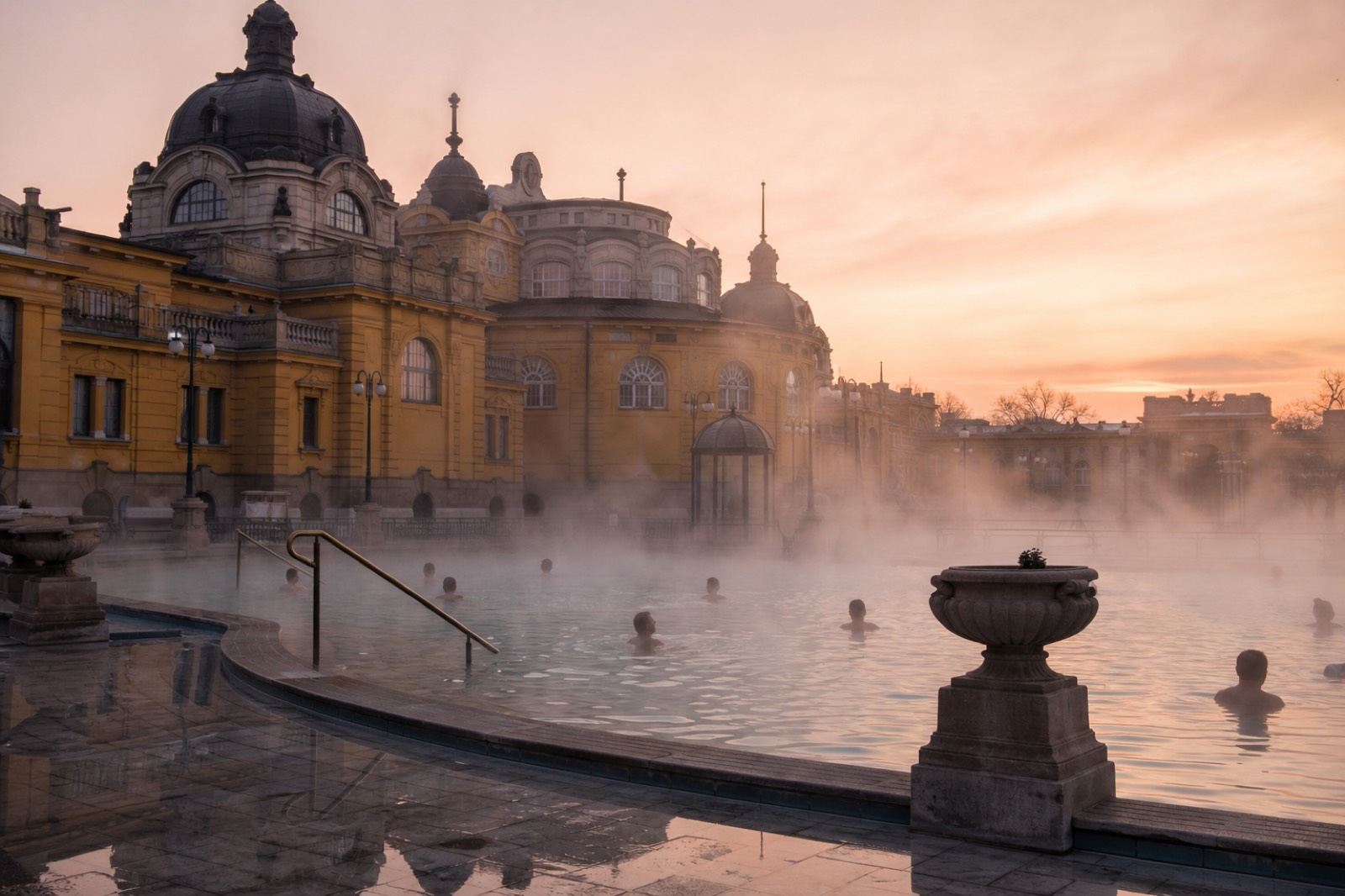
Short answer
Go on a weekday within the first two hours of opening, 07:00 Monday to Friday or 08:00 at weekends. Tuesday and Wednesday mornings are the calmest of the week, Friday is the only evening that runs to 22:00, and December and January deliver the famous steam. Avoid Saturday evening, when the bath winds down toward the 18+ Sparty.
Ten past eight on a February morning, and the outdoor thermal pool at Széchenyi is more steam than water. You can hear it before you see it: a low churn of jets, two regulars discussing chess moves, nothing else. By noon the same pool will hold ten times as many people. I have been walking visitors into this building since 2022, and the question I get more than any other is not about tickets or towels. It is about timing. So here is the honest timetable, hour by hour and month by month.
What is the best time to go to the thermal baths?
The best time is a weekday within the first two hours of opening: from 07:00 Monday to Friday, or 08:00 on weekends. The pools are at their calmest, the water feels freshest, and the tour groups have not arrived yet. For pure atmosphere, a cold December or January morning beats everything else on the calendar.
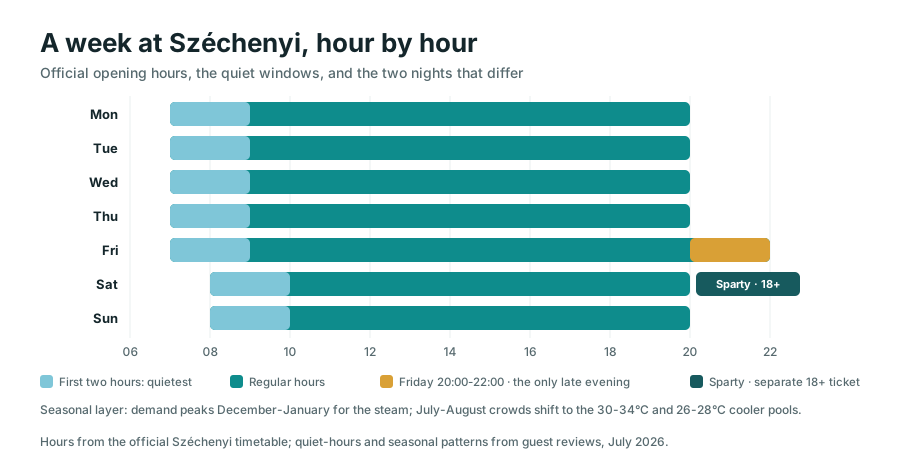
That first-two-hours rule is not just my habit talking. Read through recent guest reviews of the Széchenyi full-day pass and "go early" is the single most repeated piece of advice, ahead of even the flip-flop reminders. The bath opens at 07:00 Monday through Friday and 08:00 on Saturday and Sunday, with closing at 20:00 every day except Friday, which runs to 22:00. Those are the official opening hours published by Széchenyi, and they shape every recommendation in this guide.
Why do the early hours matter so much? Three reasons. The overnight cleaning cycle has just finished, so the water feels at its best. The big group bookings tend to land between 10:00 and 15:00. And the ticket also covers the whole day, so arriving at opening costs nothing extra; you simply get more quiet soak for the same money. If you want the full plan for stretching one ticket across twelve hours, I wrote up a full day at Széchenyi hour by hour.
Is it better to go to Széchenyi in the morning or afternoon?
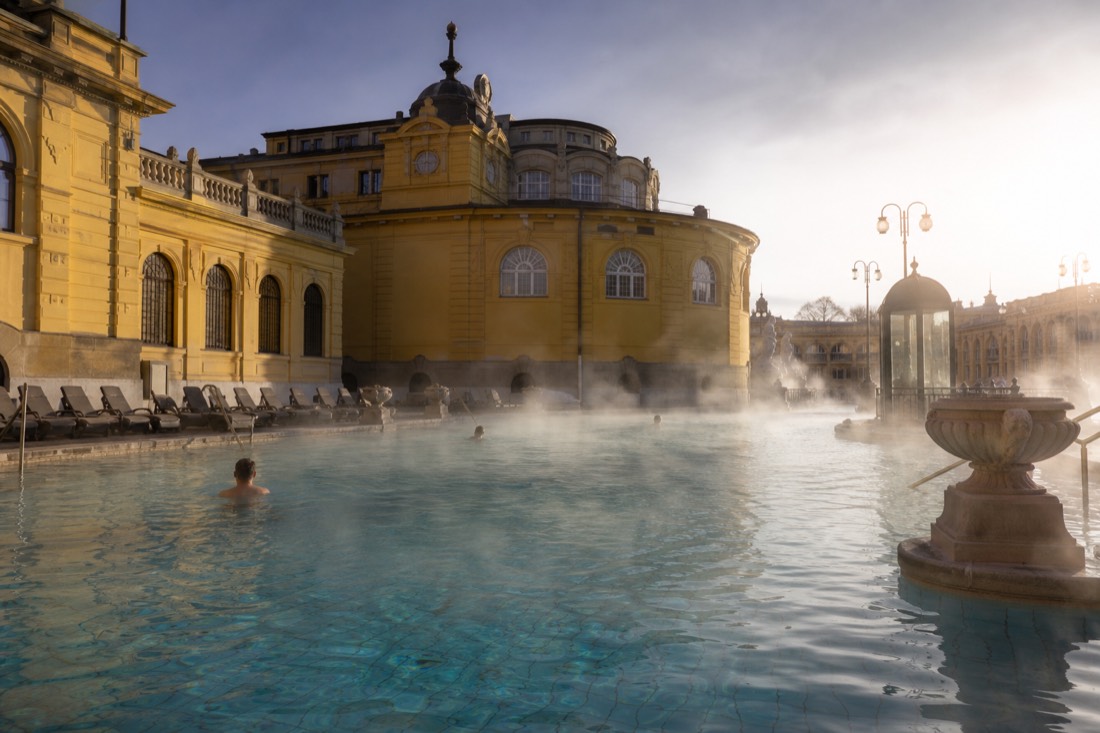
Morning, and it is not close. The first two hours after opening are the quietest of the entire day, while early afternoon is the peak. The one real exception is Friday evening: the bath stays open until 22:00 that night only, and the last two hours turn calm again as the day crowd drains away.
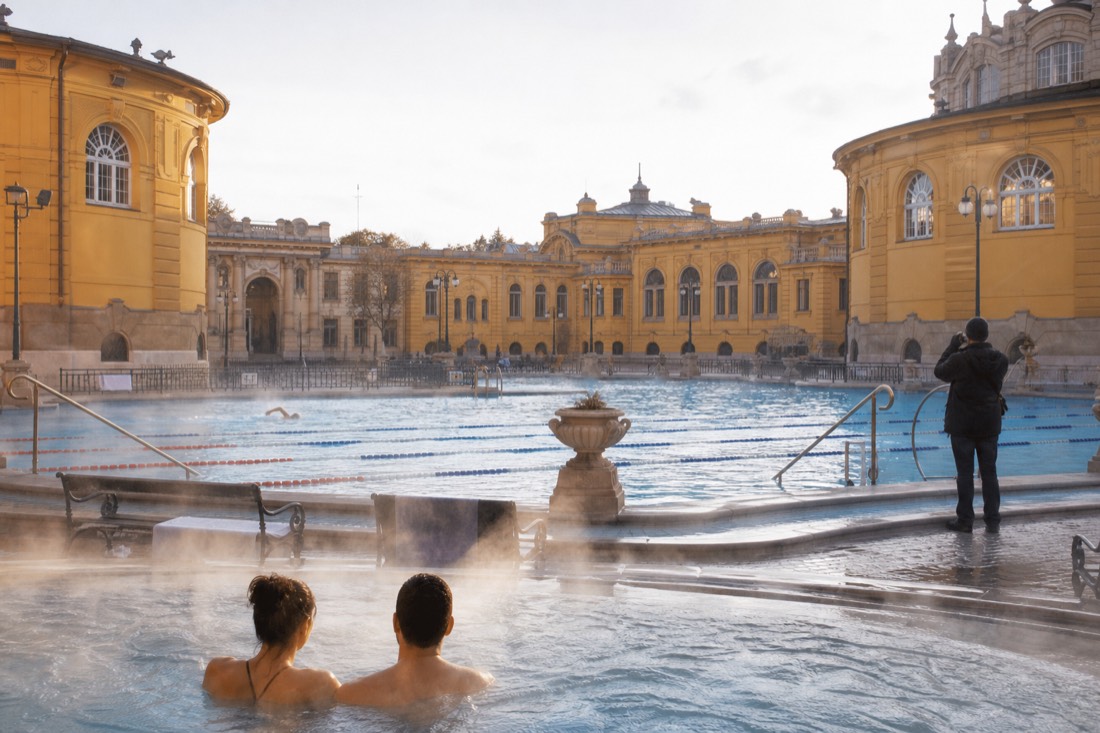
The afternoon peak is real and it builds fast. From late morning the courtyard fills, the loungers go first, then the rim of the big thermal pool, and by mid afternoon you are choosing your spot rather than taking your pick. None of this makes an afternoon visit bad. The building is still magnificent at 15:00. It is simply the difference between soaking and queueing to soak.
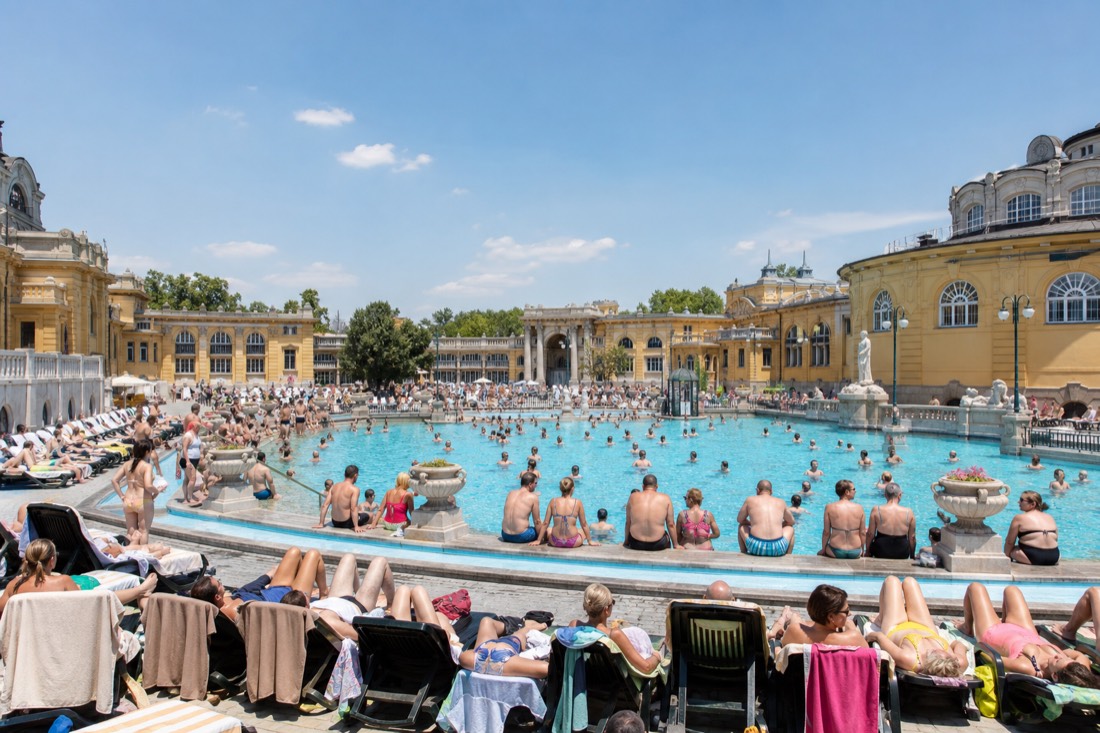
The Friday window is the detail almost nobody plans around, and it is my favourite trick to hand to guests. Every other night the bath closes at 20:00. Friday runs two hours longer, and those two hours feel like a different building: lit facade, dark sky, far thinner crowds than any daytime slot outside of opening. If your schedule puts you in Budapest over a Friday, an evening arrival around 19:00 gives you three hours that feel almost private by Széchenyi standards.
One caution from experience: morning works best when you have actually secured entry beforehand. The pass is flagged likely to sell out, and standing at the ticket window at 07:05 defeats the entire point. The guide on booking Széchenyi in advance covers how far ahead is far enough.
Which day of the week is best?
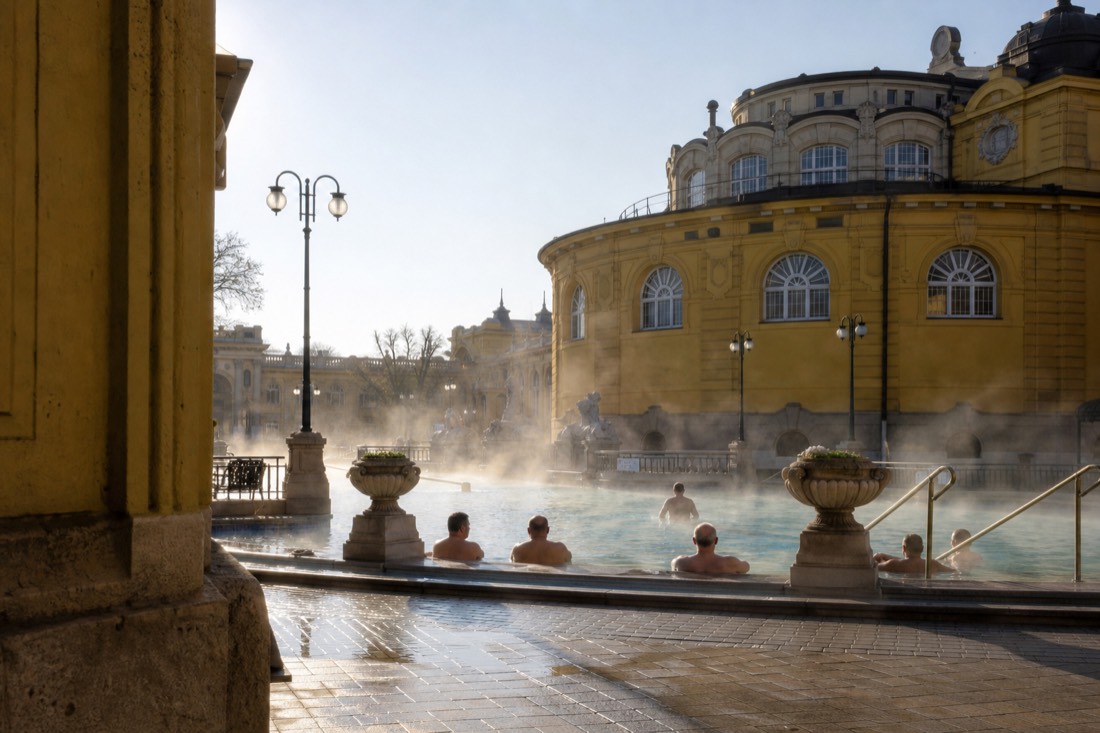
Tuesday or Wednesday morning is the sweet spot of the week. Monday collects weekend spillover, Thursday starts filling with weekend arrivals, and Saturday is the busiest day of all, ending early as the building turns over to the 18+ Sparty. Friday earns a special mention for its 22:00 close, the longest evening of the week.
Here is the whole week in one table. The hours column comes straight from the official Széchenyi timetable; the crowd columns are my own judgment from walking guests in week after week since 2022, so treat them as an experienced read rather than measured data.
| Day | Official hours | First two hours | Midday and afternoon | Evening |
|---|---|---|---|---|
| Monday | 07:00-20:00 | Quiet | Moderate to busy | Settles after 18:00 |
| Tuesday | 07:00-20:00 | Quietest of the week | Moderate | Calm |
| Wednesday | 07:00-20:00 | Very quiet | Moderate | Calm |
| Thursday | 07:00-20:00 | Quiet | Busier, weekend arrivals | Moderate |
| Friday | 07:00-22:00 | Quiet | Busy | Best evening: thins out, open to 22:00 |
| Saturday | 08:00-20:00 | Moderate | Peak of the week | Winds down toward Sparty |
| Sunday | 08:00-20:00 | Moderate | Busy | Softens late |
Saturday deserves its own explanation. It is the natural day for both tourists and locals, so daytime crowds peak, and then the venue flips character entirely: Sparty runs every Saturday night as a separate, ticketed, adults-only event. That is a completely different evening, lasers and DJs rather than quiet steam, and it needs its own ticket via the Sparty late-night spa party page if that is your scene.
If a Tuesday or Wednesday morning fits your itinerary, take it. Book the Széchenyi full-day pass for that date and check live availability and prices on GetYourGuide; it cancels free up to 24 hours ahead, so an early booking costs you nothing in flexibility.
What month is best for Széchenyi?
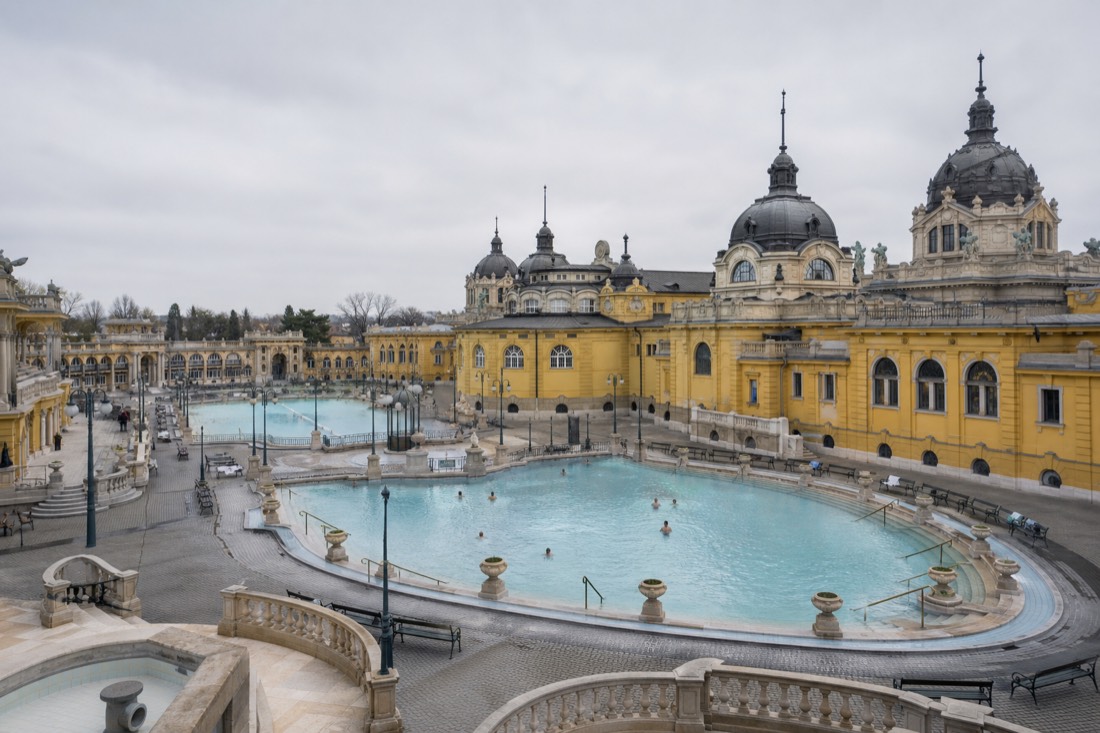
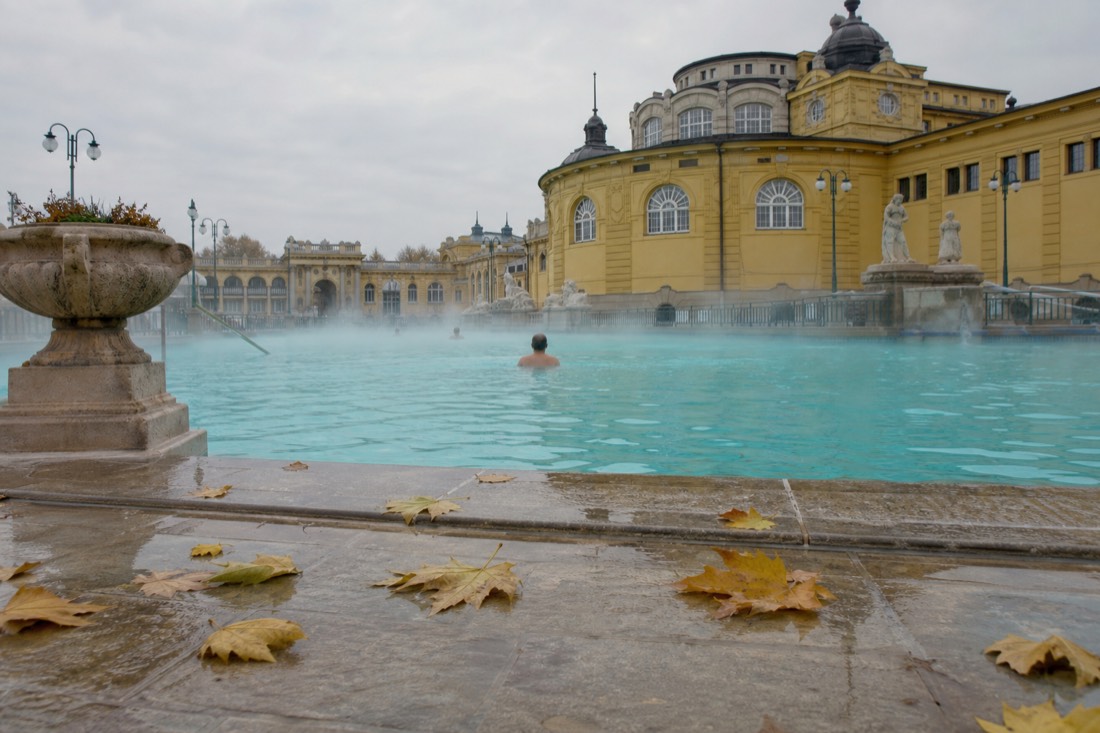
Winter, if you want the experience the photographs promise. December and January are the peak-demand months precisely because 36 to 38 degree water under freezing air produces walls of steam and that unbeatable hot-cold contrast. Summer flips the logic: guests migrate to the cooler outdoor pools and the hottest water goes quiet.
The steam is not a marketing invention. The outdoor thermal pool sits at 36-38°C year round, so the colder the air above it, the thicker the fog rolling off the surface. That physics is why demand peaks in December and January despite the cold walk between pools, and why I still rate a winter morning as the single best Széchenyi experience available. The wider winter picture, including what to pack and how the other baths handle the season, is in the Budapest baths in winter guide.
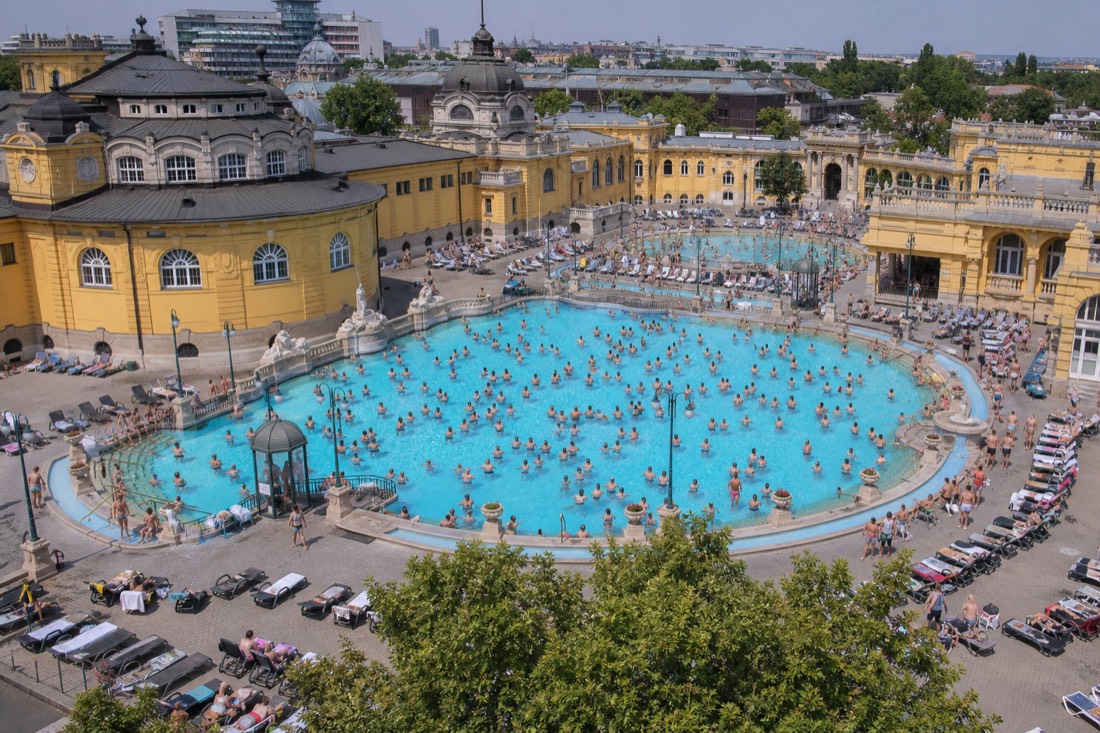
Summer is a different animal. When the city hits the high heat of July and August, guests in the reviews say the same thing I see on the ground: the 36-38°C thermal water stops being the main event, and the 30-34°C activity pool and the 26-28°C swimming pool become the refuge everyone actually uses. You get more of a lido day than a spa day. Still good, just a different trip. Bear in mind the 50 metre pool asks for a swim cap if you want to do proper laps, so summer visitors planning to actually swim should pack one.
There is one more seasonal pressure worth naming, and it applies to every month right now. Gellért, the other grand historic bath, closed in October 2025 and is not due back until 2028. Its would-be visitors have to go somewhere, and most of them land at Széchenyi. That makes the timing advice on this page matter more than it did a few years ago, not less.
| Season | Months | Water and air | My read on crowds |
|---|---|---|---|
| Winter | Dec-Feb | Thermal pools at full contrast, heavy steam | Peak demand Dec-Jan, book ahead |
| Spring | Mar-May | Mild air, all pools comfortable | Moderate, easing midweek |
| Summer | Jun-Aug | Hot air, lukewarm pools become the refuge | Busy, but spread across all pools |
| Autumn | Sep-Nov | Cooling air, steam returning | Moderate, quietest stretch of the year midweek |
Hours and temperatures above are official; the crowd column is my firsthand judgment, not a measurement.
When should photographers go?
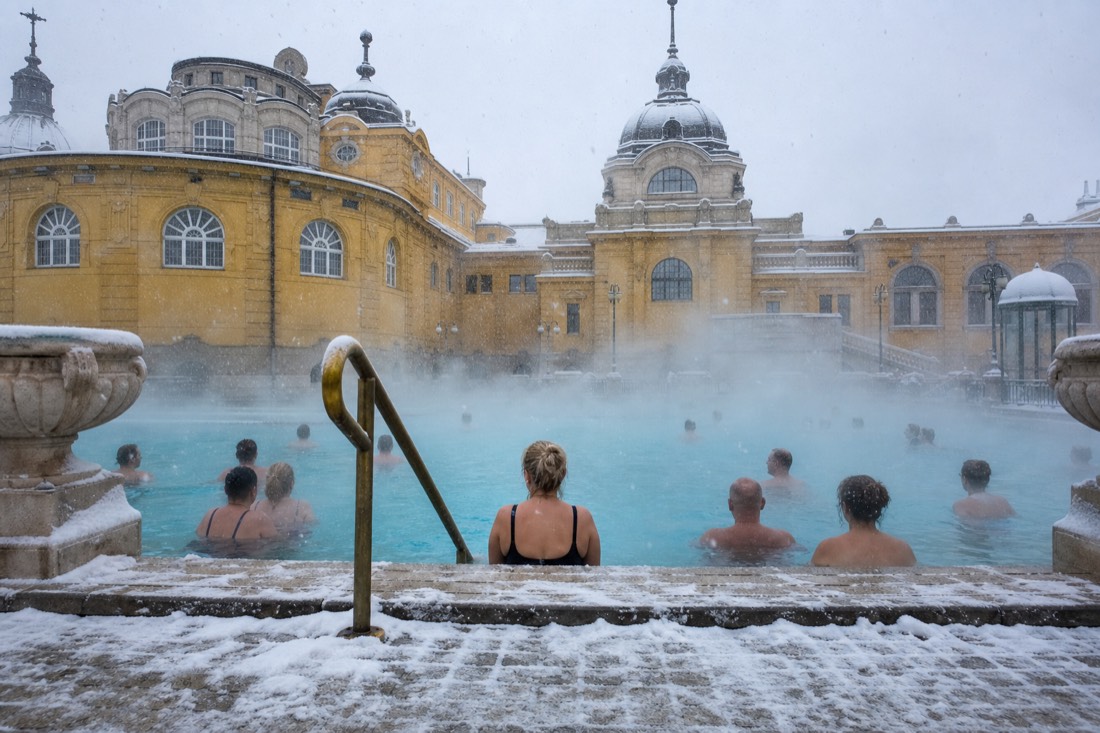
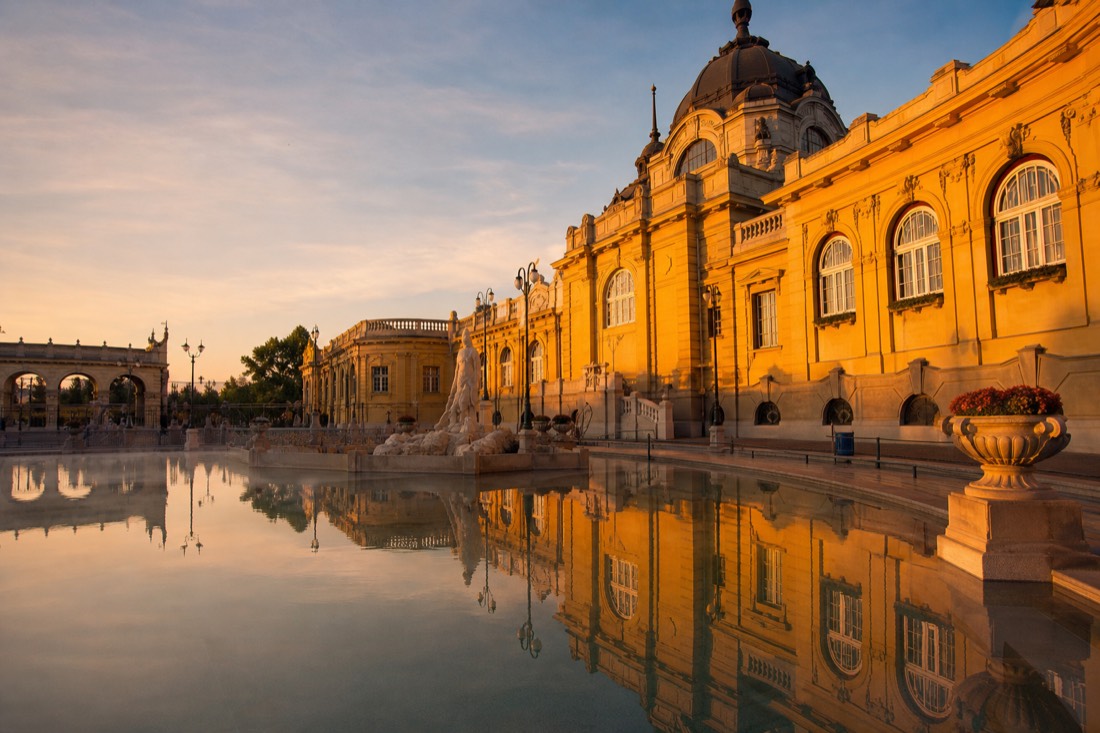
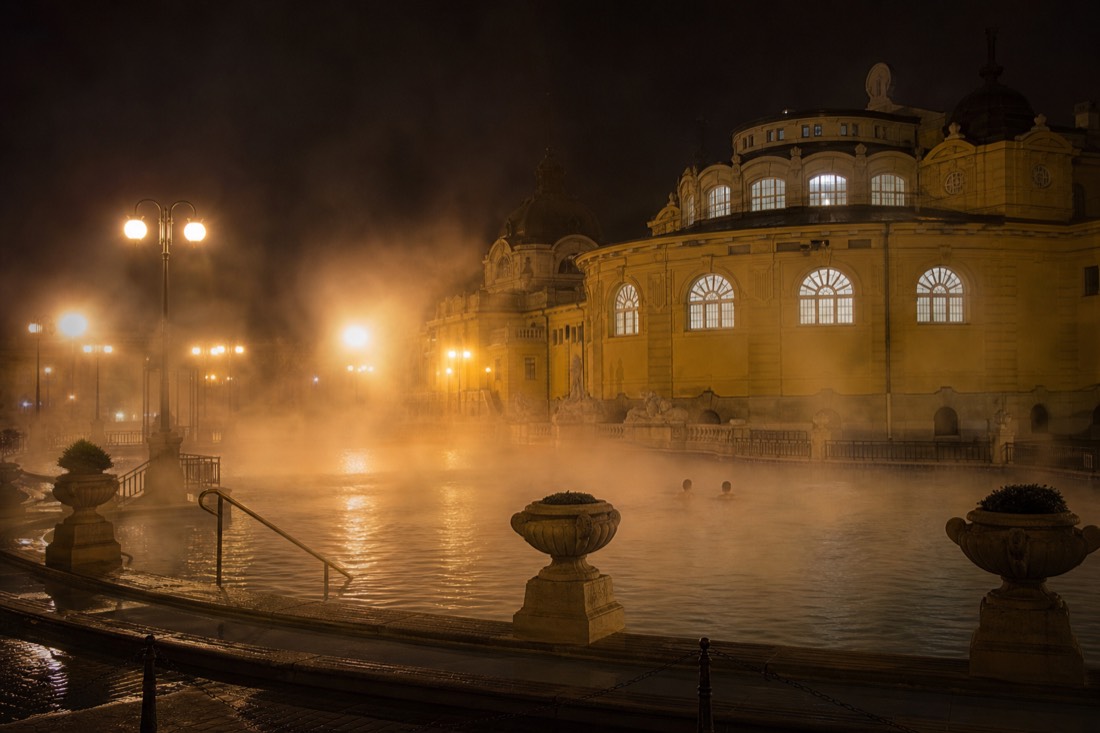
Golden hour, when low sun turns the neo-baroque facade a deep saffron yellow, or a winter morning right at opening, when steam does the work for you. Midday light is flat and the pools are at their fullest, which is the worst of both worlds for a camera.
The building is the subject as much as the water. That famous yellow reads best in warm, angled light, so the hour after opening and the last stretch before sunset are when I tell photographer guests to show up. In winter you can catch both effects at once: the 07:00 weekday opening puts you in the courtyard around first light, with steam pouring off the 36-38°C pool and hardly anyone in frame.
A few practical notes from years of watching people try. Condensation is the enemy, so let the lens acclimatise before shooting across hot water in cold air. The quiet Tuesday and Wednesday mornings from the table above double as the best people-free frames. And Friday night is the only chance to shoot the lit facade from inside the courtyard with water in the foreground, since every other evening ends at 20:00.
| Your priority | Best slot | Why it works |
|---|---|---|
| Empty-pool frames | Tue or Wed at opening, 07:00 | Fewest bathers of the week |
| Steam drama | Dec-Jan weekday morning | Coldest air over 36-38°C water |
| Golden facade | Last hour before sunset | Low warm light on the yellow walls |
| Night shots | Friday 20:00-22:00 | Only late-opening evening |
| Party atmosphere | Saturday night Sparty, 18+ | The one night the bath turns nightclub |
One honest limit on the sunset row: in high summer the bath closes at 20:00 before the latest golden hour, so late June photographers get their warm light in the final open hour rather than at true sunset.
When should you avoid Széchenyi?
Saturday afternoon and evening, full stop. It is the busiest stretch of the week and the regular bathing day ends early while the building turns over to Sparty. December and January middays are the other squeeze, when peak-season demand meets the daily group-booking window between roughly 10:00 and 15:00.
None of these times are unbearable, but they are when the bath is furthest from its best self. Saturday brings the week's biggest daytime crowd, and by late afternoon you can feel the gear change as the venue prepares for a party you cannot attend on a day ticket. Sparty is a separate 18+ event with its own tiers, so a family or an early-night soaker gets the short end of that particular day.
Two other timing notes matter for specific travellers. Széchenyi does not admit children under 14 on the day pass, and Budapest's bath operator states that under-14s are not permitted in medicinal pools at all, so there is no clever timing workaround for young kids at this particular bath. And in July and August, skip the 36-38°C pools in the mid-afternoon heat; that is exactly when reviewers describe retreating to the cooler water, and the indoor medicinal pools with a recommended soak of about 20 minutes are better saved for the milder ends of the day.
The good news is that every bad window has a mirror image. Trade Saturday for Tuesday, midday for opening time, and an August afternoon for a January morning, and you meet an entirely different bath. Timing is genuinely the cheapest upgrade Széchenyi sells, because it is free.
How does each month score at Széchenyi?
January and December score highest for atmosphere and lowest for elbow room, since freezing air over 36 to 38 degree water makes the famous steam and pulls the year's peak demand. July and August score highest for the cooler pools and lowest for the hot ones. The months in between are where the quiet, cheap-feeling visits live.
The seasons table earlier in this guide gives you the four-quarter view. Guests kept asking me for something finer, because a trip in early March and a trip in late May are both "spring" and feel nothing alike at the pool edge. So here is the month-by-month version. The water temperatures and hours behind it are official; the demand column is my standing read from walking people in since 2022, not a measurement, and it should be treated that way. Where I could not say something honest about a month, I said less.
| Month | Air over the 36-38°C outdoor pool | Demand, my read | Best slot that month |
|---|---|---|---|
| January | Coldest of the year, thickest steam | Peak, book ahead | Weekday 07:00 opening |
| February | Still cold, steam most mornings | Easing after the January peak | Weekday opening |
| March | Milder, steam thinning by midday | Moderate | Tuesday or Wednesday morning |
| April | Mild, every pool comfortable | Moderate, weekends fuller | Weekday morning or Friday evening |
| May | Warm days, first sunbathing crowds | Busier weekends | Weekday opening |
| June | Hot, guests drift toward the cooler pools | Busy | Opening, or Friday 19:00 onward |
| July | Hottest stretch, hot pools quiet at midday | Busy, long afternoon ticket lines | Opening; avoid 13:00 to 15:00 |
| August | Same heat, same lines | Busiest summer month at the door | Opening or Friday evening only |
| September | Cooling, steam returns to the mornings | Moderate | Almost any weekday morning |
| October | Cool air, real steam again | Quiet midweek | Weekday, any hour outside midday |
| November | Cold enough for full steam, Sparty guests still call the water warm | Quiet midweek, weekends moderate | Weekday morning; Friday evening |
| December | Freezing, full steam, festive city | Peak with January, book early | Weekday opening; skip weekend afternoons |
Read the table diagonally and a pattern appears. The months that photograph best are the months that crowd worst, and the months that feel quietest are the ones nobody puts on a postcard. If you can only choose one, choose by what you came for. Steam and drama: December or January, at opening, booked well ahead. Space and calm: October or the first half of November, midweek. A lido day with a thermal pool on the side: June, arriving as the doors open. Whichever month you land on, the full-day pass is the same ticket, so the price of a better month is only the planning.
What does the crowd curve look like hour by hour?
It rises in two steps and falls in one. The first two hours are quiet, the group window from around 10:00 lifts it, and 13:00 to 15:00 is the daily peak. From late afternoon it eases steadily to closing at 20:00, and on Friday the final two hours to 22:00 are the emptiest the courtyard gets after dawn.
I cannot count heads in the water for you, and the bath does not publish occupancy. What I can give you is the shape of the day as it looks from the courtyard, week after week, which is a standing observation rather than a statistic. The times below use the weekday 07:00 opening; shift everything an hour later on Saturday and Sunday, when the doors open at 08:00, and remember the ticket is single entry, so the plan has to work in one continuous stretch.
| Window | What I see in the courtyard | Best use of the window |
|---|---|---|
| 07:00 to 09:00 | Regulars, chess players, steam, loungers free | Outdoor thermal pool first, while it is yours |
| 09:00 to 11:00 | Filling steadily, first tour groups gathering at the door | Move indoors to the 28-40°C medicinal pools before they fill; about 20 minutes per hot pool |
| 11:00 to 13:00 | Busy, group window in full swing | Cooler outdoor pools; the 26-28°C lap pool if you brought a cap |
| 13:00 to 15:00 | The daily peak; loungers gone, pool rims full | Stay in the water, not on the deck; this is not the moment to arrive |
| 15:00 to 17:00 | Slow, steady easing as day-trippers leave | Back to the hot outdoor pool as space returns |
| 17:00 to 20:00 | Calm again, lights coming on in the cold months | Last long soak; out before the 20:00 close |
| Friday 20:00 to 22:00 | Near-private by Széchenyi standards, lit facade | The sleeper slot; treat it as its own visit |
Two practical consequences fall out of that curve. The first is that arrival time decides your whole day more than the day of the week does. A Saturday at 08:00 sharp beats a Tuesday at 13:00. The second is about food. Guests consistently say the food and drink inside are on the pricey side, and the peak hours are exactly when the counters are longest, so eat before you arrive rather than planning lunch inside at 13:30. My hour-by-hour account of a full day at Széchenyi shows how one ticket stretches across that whole curve, and if you are still deciding whether the day earns its keep at all, is a Budapest bath day worth it does the arithmetic honestly.
Is Friday evening worth planning around? A worked example
Yes, if a Friday falls inside your trip. Széchenyi's 22:00 close that night is the only regular late evening of the week, the day crowd drains from about 19:00, and the lit facade over steaming water is the best free upgrade the bath offers. Arrive around 18:30 and you get a three-hour visit that feels almost private.
I mention the Friday window all over this site, so here is exactly how I tell guests to run it, with the allowances I actually use rather than round numbers pulled from the air. The hours are the official Friday schedule of 07:00 to 22:00, with the standing caveat that individual pools and saunas can vary, so glance at the official Széchenyi site on the day.
| Friday time | Step | Allowance and why |
|---|---|---|
| 18:30 | Arrive from the park side with the pass on your phone | 10 minutes on foot from the park edge; the day crowd is already leaving |
| 18:45 | Turnstile, then the changing hall, locker or cabin | Allow 15 to 20 minutes; it is quieter than at midday but still the slowest indoor stage |
| 19:05 | First soak in the 36-38°C outdoor thermal pool as the light goes | 20 to 30 minutes; the loungers around the rim start freeing up |
| 19:40 | Indoors to the 28-40°C medicinal pools | About 20 minutes per hot pool, per the official soak guidance |
| 20:15 | Back outside; every other night the doors would now be closing | The courtyard empties noticeably from here |
| 21:00 | Final long soak under the lamps | The best half hour of the week, in my opinion |
| 21:35 | Out of the water, changing hall, and away before 22:00 | Allow 20 minutes; do not cut it fine on the last soak |
A few honest notes. Friday daytime is busy, so this plan does not mean "Friday is quiet"; it means the last three hours are. If you are pairing it with a Saturday night, remember that Sparty is a separate 18+ ticket the following evening, not an extension of this one, and the comparison page sets the two side by side. And winter Fridays are the strongest version of this: cold air, full steam, dark sky by 17:00, and a walk out through the park with wet hair that people remember for years.
When does Gábor tell couples, families and photographers to go?
Couples: Friday from 19:00, or a winter weekday at opening. Families with children under 14: not the medicinal pools at all, so start with the kids guide rather than the clock. Photographers: December or January at the 07:00 weekday opening, or the last hour before sunset. Nervous first-timers: Tuesday or Wednesday morning, when fewest people are watching.
After a few years of walking people in, you stop giving one answer to the timing question and start asking who is asking. The same building serves a honeymoon, a hen weekend, a serious swimmer and a family with teenagers, and the right hour is different for each of them. These are my standing recommendations, not a rulebook, and every one of them assumes you have already read the seasonality above and booked the full-day pass for the date.
| Who is asking | When I send them | Why | Read next |
|---|---|---|---|
| Couples | Friday 19:00 to 22:00, or a December to February weekday at 07:00 | Steam, lamps, thin crowds, and no rush | Budapest baths for couples |
| Families with under-14s | Not Széchenyi's medicinal pools, whatever the hour | Budapest Spas bars under-14s from medicinal water | Budapest baths with kids |
| Families with teenagers 14 and over | Opening time on whichever day school and flights allow | The first two hours are calm on any day, weekends included | The hour-by-hour curve above |
| Photographers | December or January weekday at 07:00; last hour before sunset any month | Coldest air over hottest water, or warm light on the yellow walls | The photographers section above |
| Nervous first-timers | Tuesday or Wednesday morning | Fewest eyes, most space to learn the changing hall in peace | First-time nerves at a Hungarian bath |
| Lap swimmers | Opening, straight to the 26-28°C 50 metre pool, cap on | The lanes are freest before the group window | What to wear and bath etiquette |
| Night-out crowd, 18 and over | Saturday, Sparty, official 2026 tiers from €59 | The one night the bath becomes a party | Sparty late-night spa party |
| Heat-averse summer visitors | Opening or Friday evening; never 13:00 to 15:00 in July or August | The hot pools are unpleasant at midday and the cooler ones are packed | The month scorecard above |
The one answer that never changes, whoever is asking, is the ticket. Book it for the date, since it cancels free up to 24 hours before, and then spend your energy on the hour rather than on the ticket window. Timing is the part of a Széchenyi visit you control completely, and it costs nothing to get right.
What time does Széchenyi open?
07:00 Monday through Friday, and 08:00 on Saturday and Sunday. Closing is 20:00 every day except Friday, when the bath stays open until 22:00. Service hours for individual pools and saunas can vary, so check the official site for the day you visit.
Is Széchenyi open at night?
Only twice a week, in different ways. Friday regular bathing runs until 22:00, the longest evening on the schedule. Saturday night belongs to Sparty, a separate ticketed 18+ spa party; a regular day pass does not include it.
How early should I arrive to beat the crowds?
Right at opening. The first two hours are the quietest of the day, which matches the most common advice in guest reviews: go early. By late morning the group bookings arrive, and early afternoon is the daily peak.
Is winter too cold for the outdoor pools?
No, winter is the signature season. The outdoor thermal pool holds 36-38°C year round, so freezing air just means thicker steam and a better contrast. The cold part is the ten-second walk between water; the soak itself stays hot.
Which day of the week is quietest?
Tuesday and Wednesday mornings, in my experience walking guests in weekly. Saturday is the busiest day, Monday carries weekend spillover, and Friday is busy by day but rewards you with the only 22:00 evening.
Do I need to book Széchenyi in advance for a morning visit?
Yes, that is the safe play. The full-day pass carries a likely-to-sell-out flag, and it cancels free up to 24 hours ahead, so booking early costs nothing. Sorting the ticket beforehand is what makes an opening-time arrival actually work.