The Turkish Baths of Budapest: Which Ottoman Bath Houses Survive, and Which You Can Enter
The 16th-century story, the current status of all three Ottoman bath houses, and the one you can actually book.
 Written with Gábor Kovács, Budapest thermal bath specialist and spa experience guide
Short answer
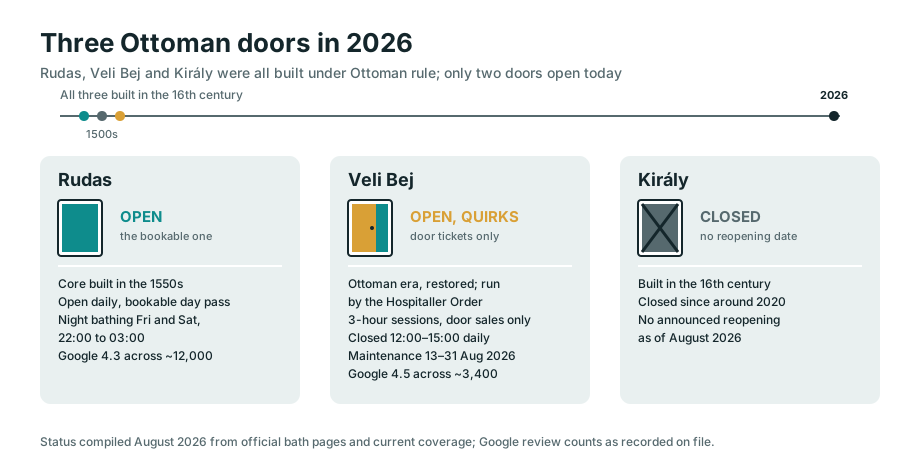
Budapest has three surviving Ottoman-era Turkish baths. Rudas is open daily and is the only one you can book ahead, Veli Bej is open with door-only tickets and 3-hour sessions, and Király has been closed for reconstruction since around 2020 with no announced reopening date as of August 2026.
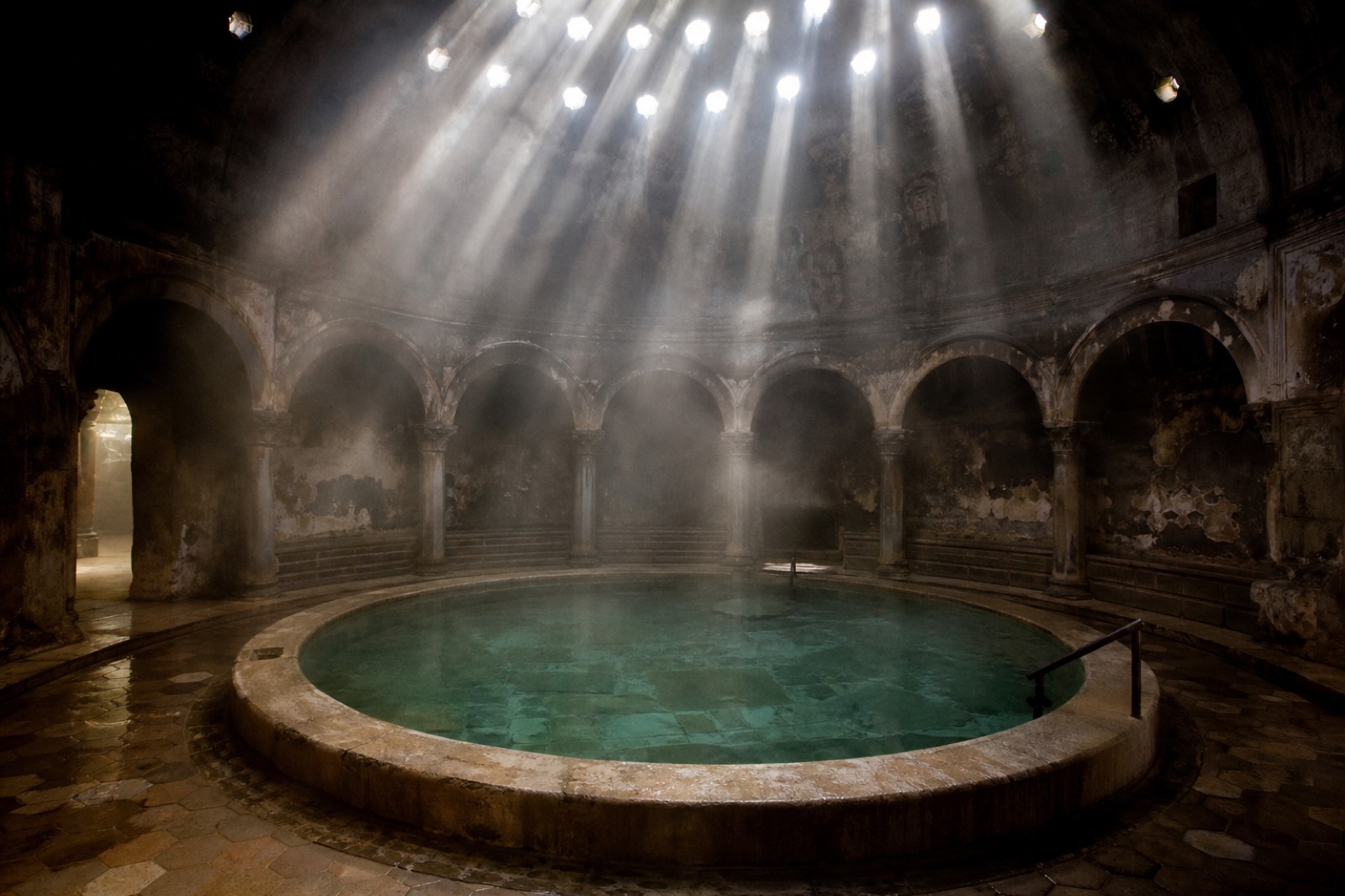
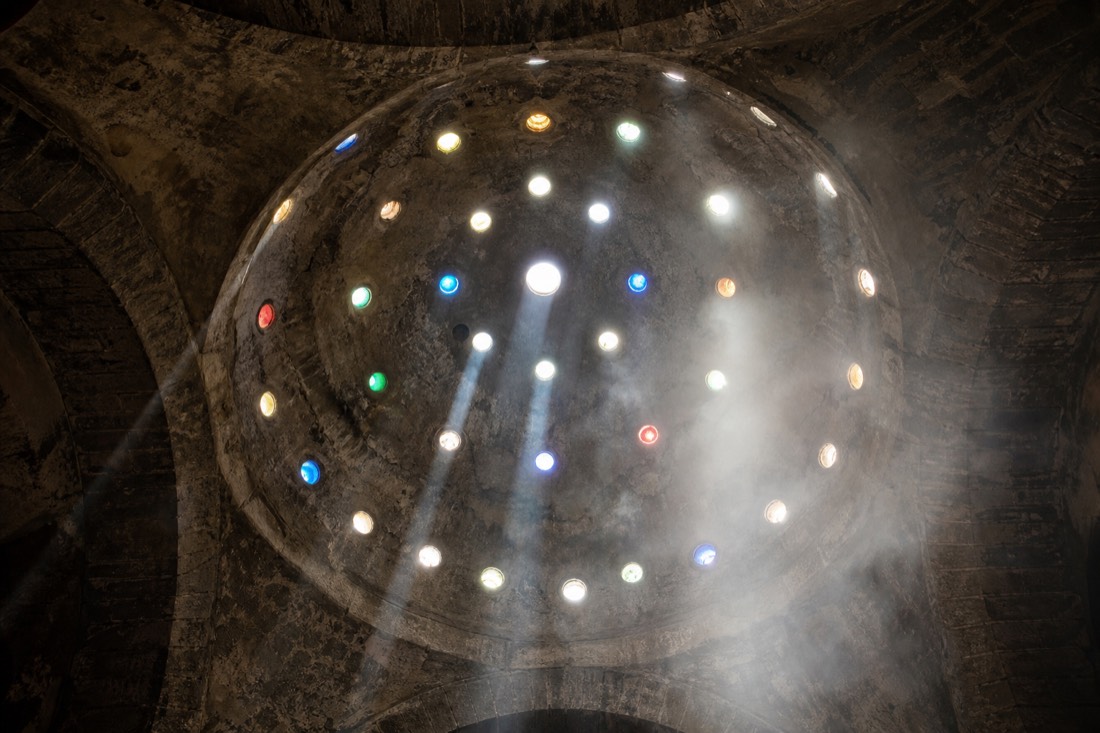
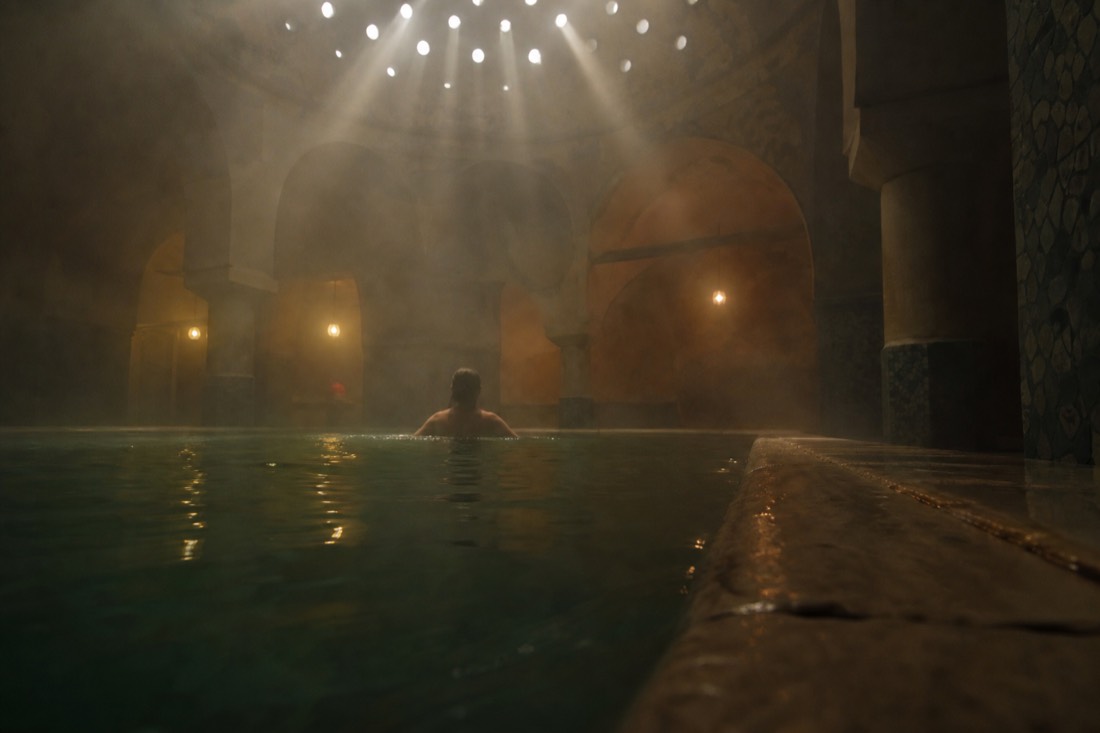
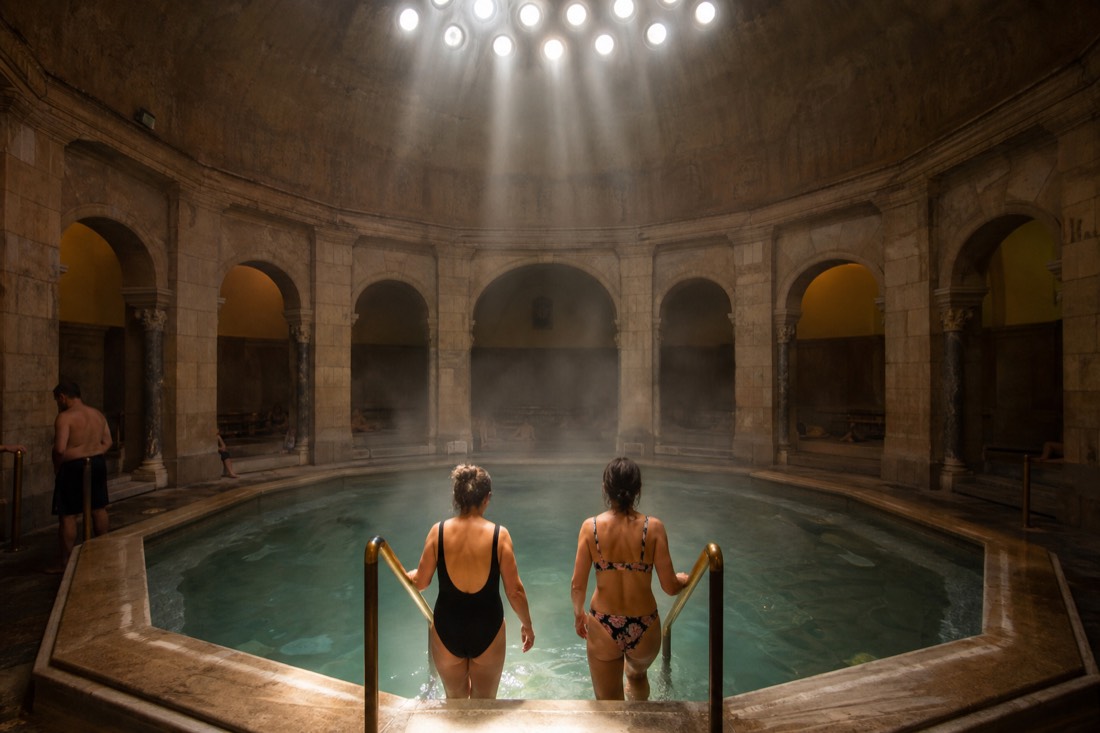
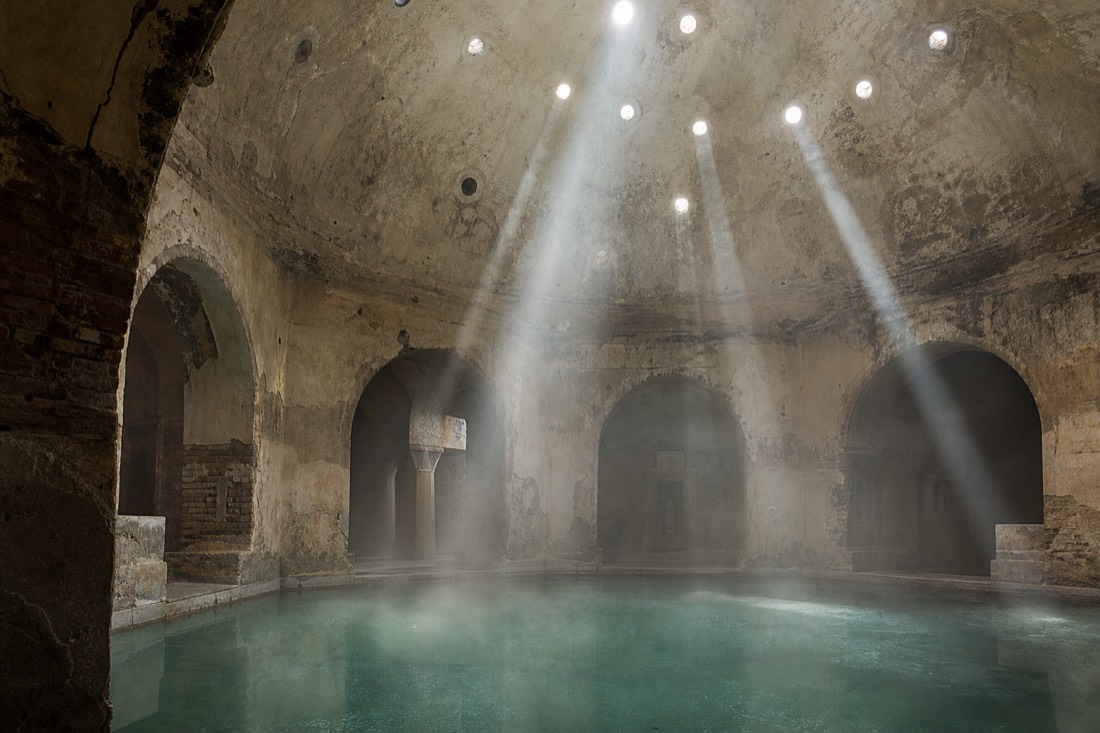
The light is the first thing people mention. In the oldest bath halls of Budapest, sun falls through small glass eyes cut into a stone dome, and the beams stand upright in the steam like columns. Nobody engineered that effect in the last hundred years. It is Ottoman work, and you can still soak underneath it. I have been walking visitors into this city's baths since 2022, and no topic produces more confusion than the Turkish ones: which are real, which are open, and which one the older guidebooks refuse to stop recommending.
What makes a bath "Turkish" in Budapest?
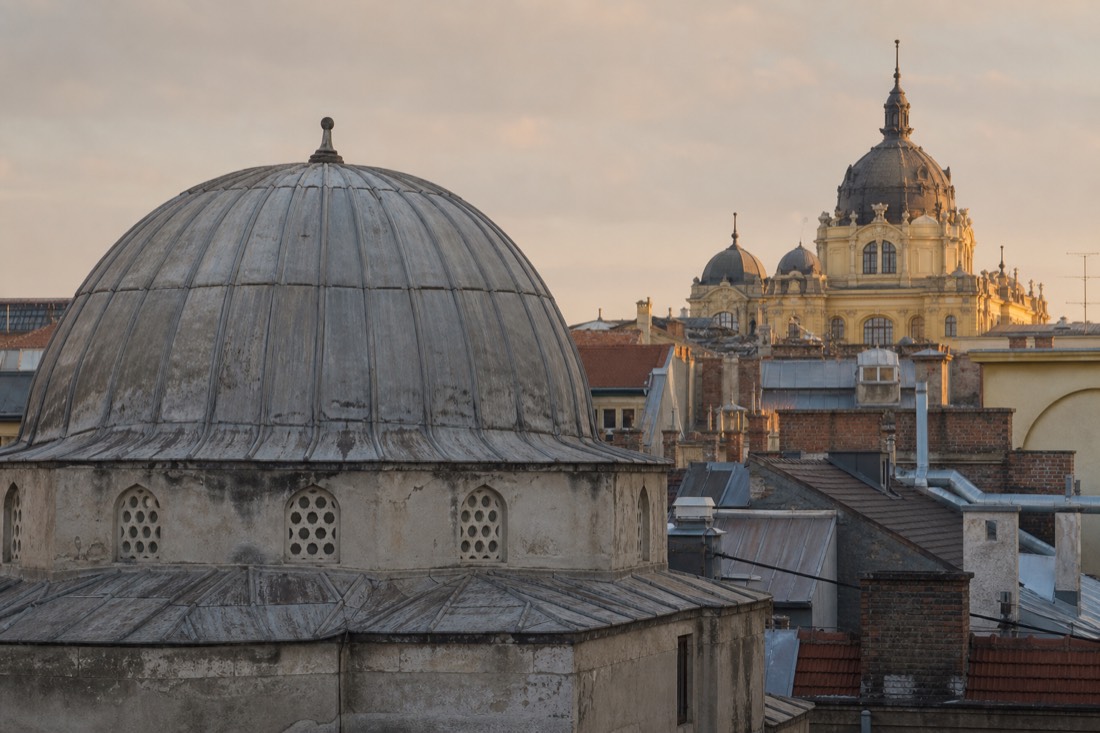
A Turkish bath in Budapest is a bath house physically built during the Ottoman occupation in the 16th century, arranged around a central pool beneath a masonry dome. Three survive in recognizable form: Rudas and Veli Bej, both open to bathers in 2026, and Király, which has been closed for reconstruction for years.
The Ottomans held Buda through the 16th and 17th centuries, and they did what they did everywhere they found hot water: they built domed bath houses directly over the springs. Budapest gave them plenty to work with. The city sits on more than 100 medicinal geothermal springs, with the largest thermal water cave system known anywhere underneath it. I cover the geology properly in the guide to Budapest's thermal springs; the short version is that the Buda side leaks hot mineral water constantly, and people have organized their lives around that fact since the Romans bathed at Aquincum.
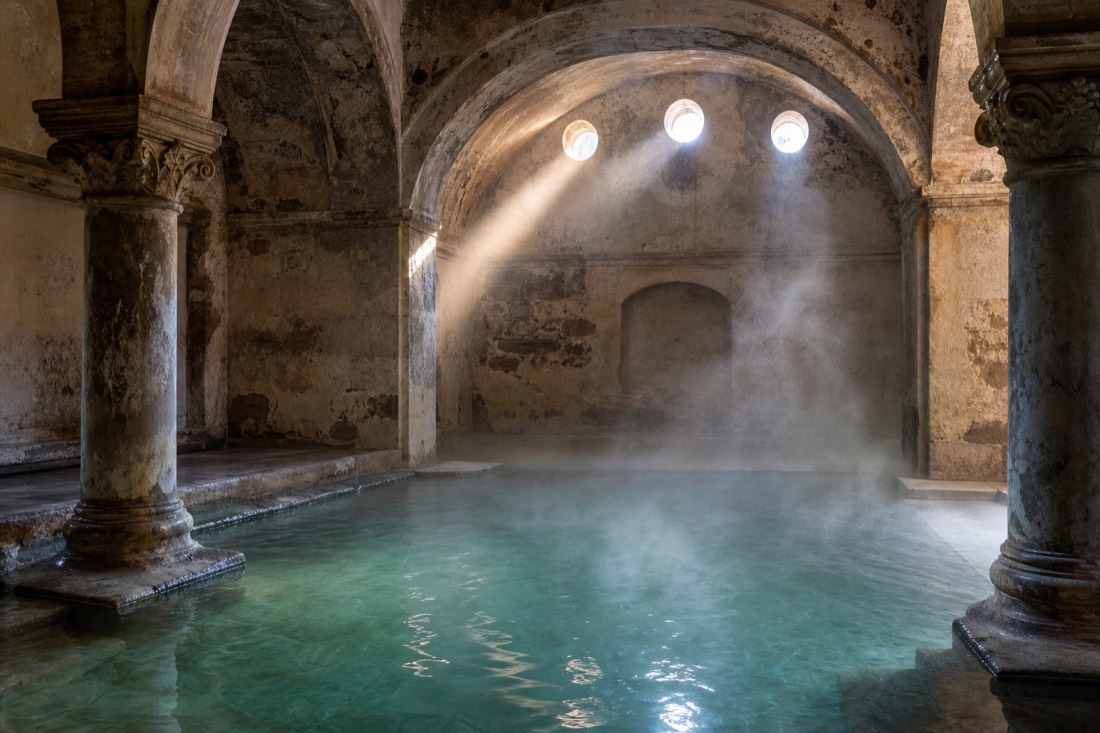
"Turkish bath" gets used loosely. Hotels will put the phrase on any steam room with a mosaic in it. In Budapest it means something narrower and better: an actual 16th-century Ottoman building, a central pool under a stone dome, smaller pools at different temperatures tucked into the corners, and daylight arriving through little glass windows set into the cupola. The architecture does the work here. No wave machine, no lap lanes, just stone, steam and water.
Széchenyi, for the record, is not a Turkish bath. It is a 1913 palace from a completely different bathing era, magnificent in its own way but about as Ottoman as a croissant. The real Ottoman survivors are quieter, darker and older, and each of the three is in a different state today. That status question is where most visitors get burned, so it gets its own section.
Which Ottoman baths still operate in Budapest?
Two of the three take bathers in 2026. Rudas is open every day, pairing its 1550s Turkish section with a modern wellness wing and a rooftop pool. Veli Bej is open on an odd schedule, with door-only tickets and sessions capped at three hours, and it closes 13 to 31 August 2026 for maintenance. Király stays shut.
Here is the state of play, in one place, because no two older articles agree on it.
| Bath | Origin | Status in 2026 | How you get in |
|---|---|---|---|
| Rudas | Core built in the 1550s under Ottoman rule | Open daily; Turkish section, wellness wing, rooftop panorama pool | At the door, or book the GetYourGuide day pass ahead |
| Veli Bej | Ottoman era, run today by the Hospitaller Order | Open, except 13 to 31 August 2026 (maintenance) | Door sale only, no online tickets, 3-hour sessions |
| Király | Built in the 16th century under the Ottomans | Closed since around 2020, no announced reopening | You currently cannot |
Rudas is the workhorse of the three and the one I point most guests toward. Bathers rate it 4.3 across roughly 12,000 Google reviews, and it is the only Ottoman bath with a bookable product on a major platform. The full visit logistics, from the entrance sequence to the rooftop, live in the Rudas visit guide.
Veli Bej is the connoisseur's pick, restored beautifully and run with monastic calm by a religious order inside their hospital complex. It scores 4.5 across about 3,400 Google reviews, the best ratio of the city's classic baths, and stays oddly unknown because it does zero marketing. The catch is the logistics, which I break down in the Veli Bej guide: you cannot book, you cannot linger past three hours, and the doors shut every midday.
What happened to Király Baths?
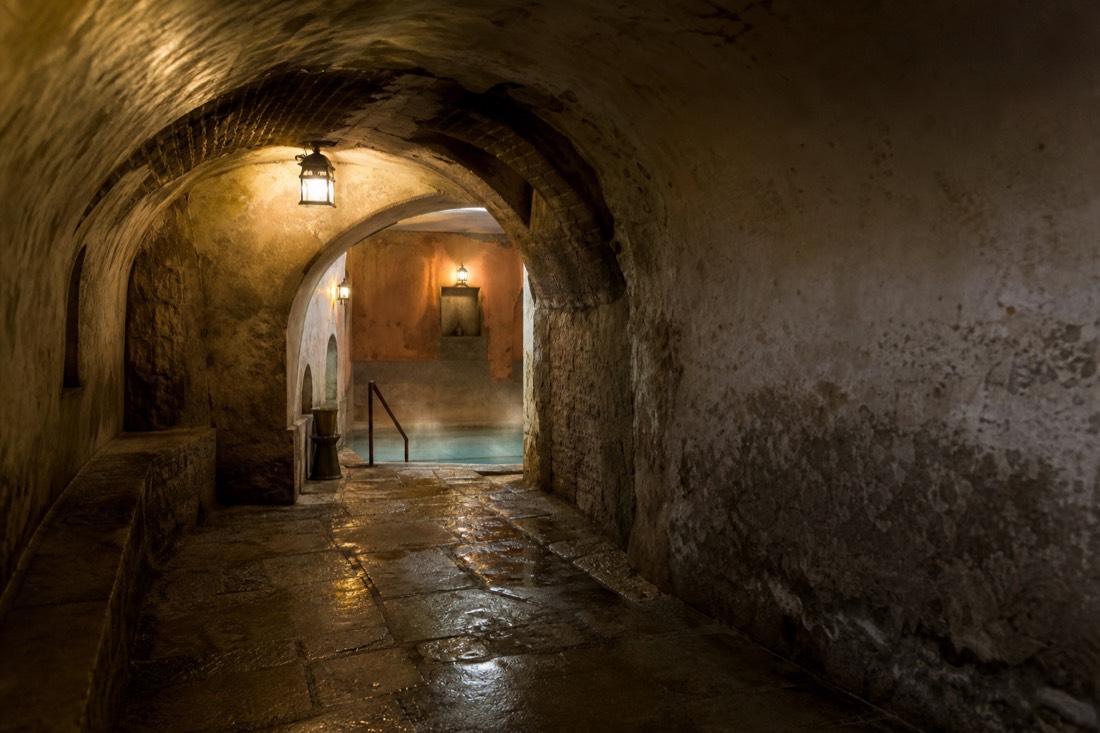
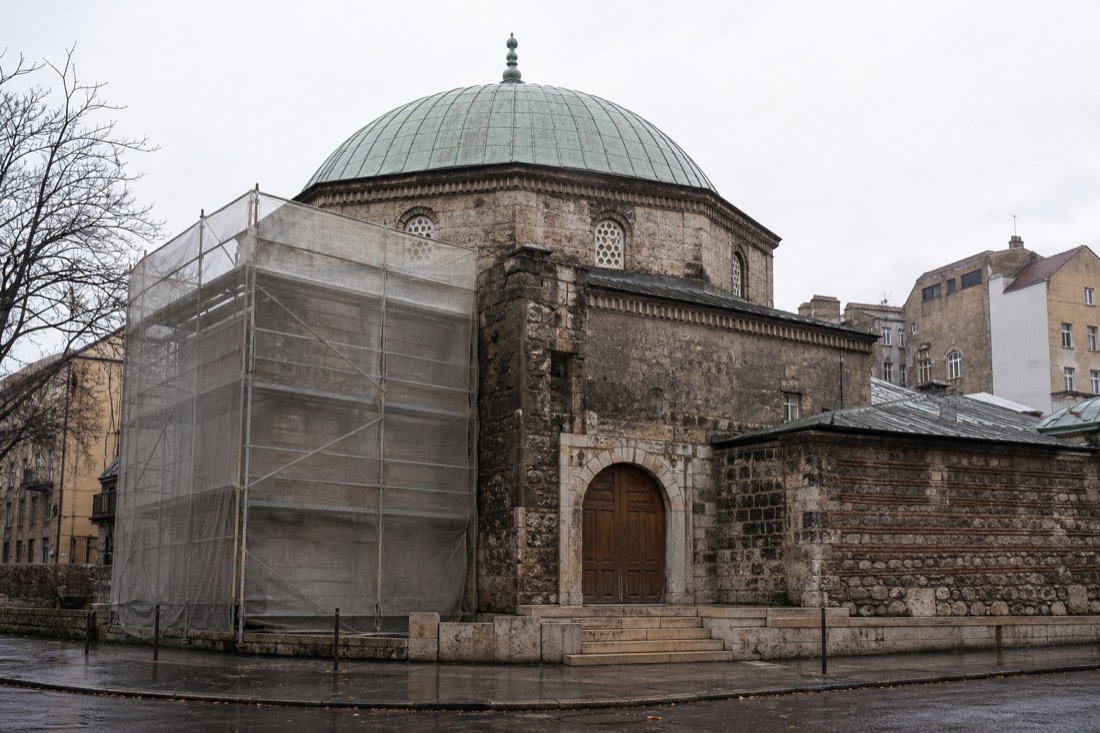
Király closed around 2020 for a full reconstruction and has not reopened. As of August 2026 there is no announced reopening date, according to current coverage. Any blog post, map pin or guidebook page selling Király as a place you can bathe today is stale; treat it as a construction site with a lovely dome.
Király is the heartbreaker. Built in the 16th century under the Ottomans, it was for decades the moody, low-lit alternative to the grand palace baths, the one travel writers loved precisely because it felt untouched. Then it closed for reconstruction, the pandemic years swallowed the schedule, and the reopening date simply never arrived. Current reporting still lists no date. I get asked about Király most weeks, usually by someone holding an itinerary written years ago.
This is the same trap that catches people with Gellért, which shut on 1 October 2025 for its own renovation with a planned 2028 return. The internet does not delete old recommendations, it just buries them slightly below new ones. A page written in 2019 praising Király's atmosphere is still technically accurate about the atmosphere. It is uselessly wrong about the door. The FAQ page keeps a running list of these closed-bath questions because they refuse to die.
Which Turkish bath should you actually visit?
Rudas, for almost everyone. It is open daily, it is the only Ottoman bath you can book ahead, and it stacks the 16th-century section, a wellness wing and a rooftop pool into one ticket. Choose Veli Bej instead if you want the quietest room in Budapest and are happy buying your ticket at the door.
My honest sorting logic goes like this. If your dates are fixed and you hate uncertainty, that alone decides it. Rudas sells a proper pre-bookable product: read the Rudas visit guide for the room-by-room walkthrough, then check live availability for the Rudas day pass with the 3-course meal on GetYourGuide, which bathers rate 4.1 across 1,298 reviews. The pass rolls the Turkish section, the wellness side and a sit-down meal into one booking, and the live price is on the listing.
Veli Bej rewards a different temperament. It asks you to show up in person, accept a three-hour cap, and plan around a schedule with a hole in the middle of every day. In exchange you get the best-kept Ottoman interior in the city with a fraction of the crowd. The official opening hours page is the thing to check on the morning you go.
| Veli Bej practicality | The reality |
|---|---|
| Tickets | Sold at the door only, no online sales anywhere |
| Session length | Capped at 3 hours |
| Midday | Closed 12:00 to 15:00, every day |
| Monday and Tuesday | Afternoons only, 15:00 to 21:00 |
| Wednesday to Sunday | Mornings 06:00 to 12:00 as well as afternoons |
| 13 to 31 August 2026 | Fully closed for maintenance |
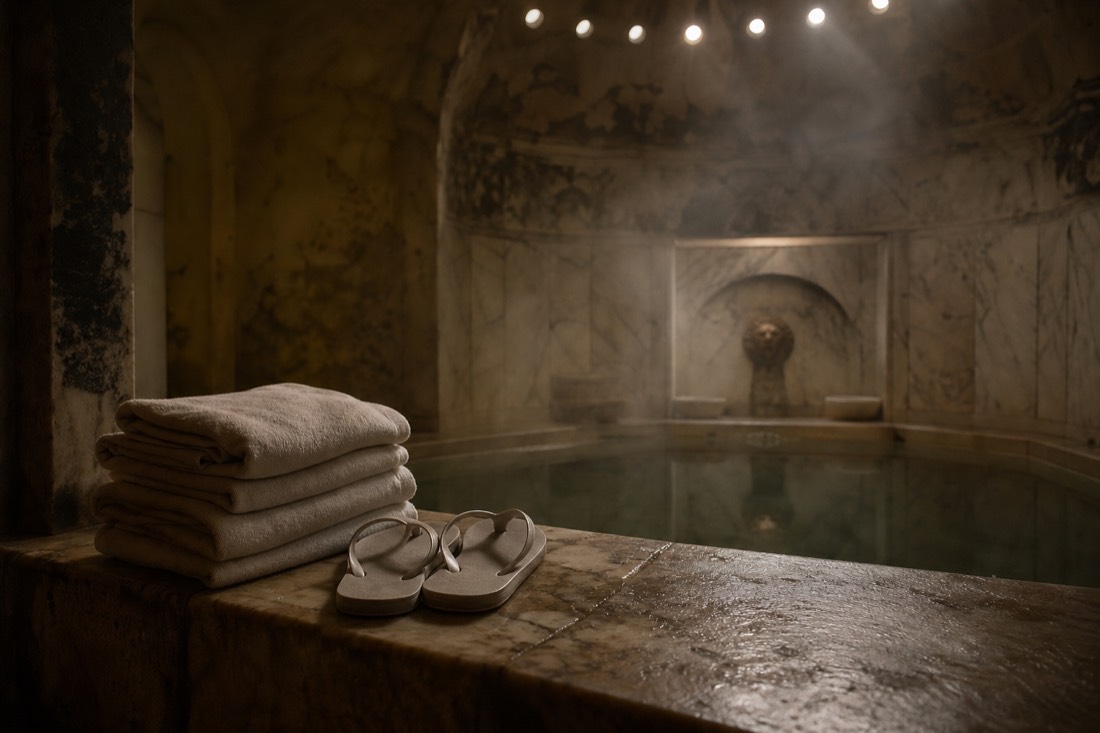
One practical note that applies to both: pack like a local. Flip-flops and your own towel save money and queue time, and an early arrival beats the crowd that builds from late morning. The Ottoman halls are small compared with the palace baths. Twenty people change the feel of a room that forty would barely register in at Széchenyi.
If you are still torn between a Turkish bath and the big palace experience, the comparison page puts them side by side.
What are the rules inside an Ottoman section?
Rudas runs single-sex mornings in its Turkish section: men only from 06:00 to 10:45 on Monday, Wednesday, Thursday and Friday, and women only on Tuesday from 06:00 to 20:00. From 11:00 the section goes co-ed and swimsuits are required. Friday and Saturday add night bathing from 22:00 to 03:00.
The single-sex tradition is the most Ottoman thing about these baths that is not made of stone, and Rudas still honors it. Get the day wrong and you will be turned away from the Turkish section, politely but firmly, which is a rough start to a relaxing morning. The pattern is stable but worth confirming against the official Rudas schedule before you commit to a dawn visit.
| When | Who bathes in the Rudas Turkish section |
|---|---|
| Mon, Wed, Thu, Fri, 06:00 to 10:45 | Men only |
| Tuesday, 06:00 to 20:00 | Women only, all day |
| From 11:00 (outside Tuesday) | Everyone, swimsuits required |
| Friday and Saturday, 22:00 to 03:00 | Night bathing sessions |
Dress is simple to get right. In every co-ed window a swimsuit is mandatory, full stop. On single-sex mornings the house rules are posted on site, so follow whatever the attendants hand you or tell you rather than a forum post from 2015. Bring flip-flops and your own towel whichever bath you choose; guests mention both constantly, and renting on site is the expensive way to learn that lesson.
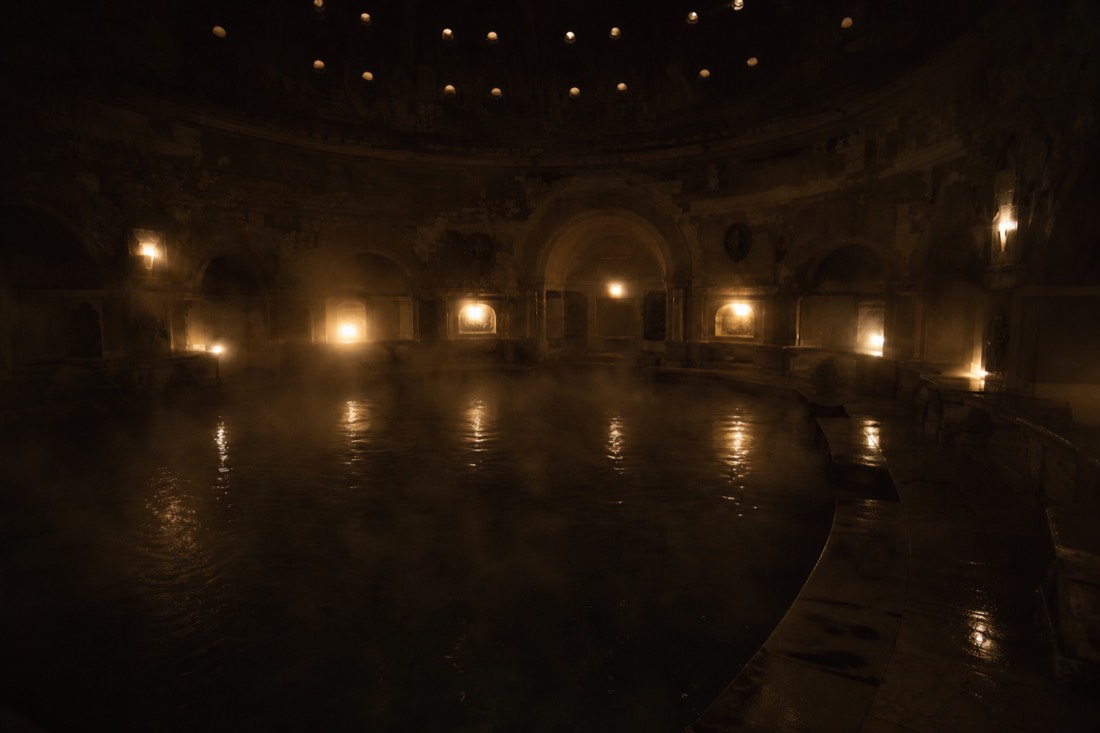
The Friday night window deserves a special mention, because almost nobody plans for it. Bathing in a 16th-century stone hall at one in the morning, city quiet, steam thick, is a completely different experience from the same room at noon. It is the single best under-publicized ticket in Budapest bathing, and it happens twice a week.
How does the Ottoman era still shape Budapest bathing?
Directly. Budapest sits on more than 100 medicinal springs and the largest known thermal water cave system, and the Ottoman houses are the oldest working link in that chain. Roman Aquincum came earlier, but you cannot bathe in a ruin. At Rudas you soak in the original, under the original roof.
Everything that came later grew on the Ottoman root. The grand palace era arrived in the early 20th century, when Széchenyi opened in 1913 over a well drilled 1,246 meters down, the city's second deepest. The "City of Spas" title followed in the 1930s. The habits inside the water, though, are older: the unhurried circuit between pools of different temperatures, the single-sex sessions, the idea that a bath is an afternoon rather than an errand. If you want the modern, sociable end of that lineage, the Széchenyi full-day pass is the flagship, and I say that as someone who soaks there regularly.
The water itself carries official weight, too. Hungary legally classifies these thermal waters as medicinal, which is why the old baths still feel half spa, half clinic, with locals arriving on a rhythm their doctor suggested. I stay out of the health-claims business; if you have a condition, talk to your doctor before planning long hot soaks. What I can say from watching four years of first-timers is that the ritual itself works on everyone.
But the Turkish baths are the origin story you can still touch. My standing advice after four years of walking people through both eras is to do one of each if you have two bath days in Budapest: one bright yellow palace morning, one dark domed Ottoman soak. Guests who do the pair almost always tell me the Ottoman one is the memory that stuck. The palace is a spectacle. The dome, with its needles of light in the steam, is something closer to time travel.
How do the Ottoman baths fit into Budapest's bathing timeline?
The Ottoman bath houses are the middle chapter of a story that runs from Roman Aquincum to the 2028 Gellért reopening. Rudas's core dates to the 1550s and Király to the 16th century; Széchenyi's 1913 palace is the counterpoint; and the recent chapters are closures: Király around 2020, Gellért in October 2025, Veli Bej for maintenance in August 2026.
I draw this timeline for guests on the tram because it fixes the one thing older guidebooks blur: how far apart the eras actually sit. The Romans bathed at Aquincum in the north of the city; that heritage is a ruin you visit, not a pool you enter. The Ottomans arrived well over a thousand years later and built the domed halls that still hold water. Then came a long gap before the palace era, and Széchenyi's opening in 1913 is the clean marker for that. The "City of Spas" title, which everyone quotes and nobody dates, belongs to the 1930s. After that the story is mostly about the doors: which ones are open, and which have shut for repair.
| Period | What happened | What you can do about it in 2026 |
|---|---|---|
| Roman era | Baths at Aquincum, the settlement north of today's centre | Visit as archaeology; nothing to soak in |
| 16th century | Ottoman bath building in Buda; Király built | Király is closed; the era survives at Rudas and Veli Bej |
| 1550s | Rudas's Turkish core built under Ottoman rule | Open daily, the only Ottoman bath you can book ahead |
| 1913 | Széchenyi opens in City Park over a 1,246 m well | Open; the palace counterpoint to the domes |
| 1930s | Budapest takes the "City of Spas" title | The phrase you will see on every brochure |
| Around 2020 | Király closes for reconstruction | No announced reopening date as of August 2026 |
| 1 October 2025 | Gellért closes for renovation | Reopening planned for 2028; not bookable |
| 13 to 31 August 2026 | Veli Bej closes for maintenance | Rudas is the fallback dome for those dates |
Two things jump out of that table. First, the two Ottoman baths that still work are separated from Széchenyi by roughly three and a half centuries, which is why they feel like different countries rather than different buildings. Second, the closure rows are all recent, and they explain the confusion I meet daily. Someone reads a 2019 article, plans a Király morning and a Gellért afternoon, and lands in a city where neither door opens. My open-status rundown tracks the doors; the Gellért versus Széchenyi comparison explains what the 2025 closure changed for palace-bath planning.
Single-sex or co-ed: what is the etiquette inside the Ottoman sections?
In the Rudas Turkish section, single-sex mornings (men only 06:00 to 10:45 on Monday, Wednesday, Thursday and Friday; women only all day Tuesday) run on posted house rules, and from 11:00 the section is co-ed with swimsuits mandatory. Veli Bej publishes no single-sex schedule, so plan on swimsuits throughout. In both, keep it quiet, keep it slow, keep the phone in the locker.
The etiquette question splits neatly by window, and getting the window right matters more than any dress detail. On a co-ed session there is nothing to agonise over: swimsuit on, towel with you, flip-flops on the wet stone. On a single-sex morning at Rudas the house rules are posted on site and the attendants will tell you what applies, and that beats any forum thread I have ever seen quoted at me. My grid below is the version I hand guests before a dawn visit; the schedule column is the operator's, the manners column is mine after four years of watching what earns a frown under the dome.
| Situation | Rudas Turkish section | Veli Bej |
|---|---|---|
| Men-only window | Mon, Wed, Thu, Fri 06:00 to 10:45 | None published |
| Women-only window | Tuesday 06:00 to 20:00 | None published |
| Co-ed window | From 11:00 (outside Tuesday), swimsuits required | Every session, plan on a swimsuit |
| Night bathing | Friday and Saturday 22:00 to 03:00 | None |
| What to wear in single-sex windows | Follow the posted house rules and the attendants | Not applicable |
| Towel and footwear | Bring your own towel and flip-flops | Same |
| Voice level | Low; the halls are small and echo | Lower still; this is a bath run by a hospital order |
| Phones and cameras | Leave them in the locker | Same, and the three-hour clock is a good excuse |
| Time in the hottest water | Move between pools; nobody camps | Same, and the cap makes it natural |
The manners rows are not fussiness. Ottoman halls are small, and the dome amplifies everything, so a group of six talking at Széchenyi volume changes the whole room. The Turkish section at Rudas is where I most often see visitors get quietly corrected, usually for phones. If you want the full clothing rundown, from swim caps for lap pools to what happens on a women-only Tuesday, my what to wear and etiquette guide goes bath by bath, and the Veli Bej guide has the door-only ticket mechanics that trip up first visits there.
Which Turkish bath suits which kind of visitor?
Rudas suits the first-timer, the planner who needs a booking, the night owl and anyone who wants the rooftop pool with their dome. Veli Bej suits the second-trip visitor, the solo traveller and anyone staying in Buda with a free morning. Nobody gets Király until it reopens, and nobody gets Veli Bej between 13 and 31 August 2026.
The two open Ottoman baths do not really compete; they sort. Rudas offers a bookable product, a full-day rhythm and the extras a first visit wants, and Veli Bej offers a capped, unmarketed soak for people who already know they like this. When a guest tells me their dates and their temperament, the ladder below usually answers itself. It leaves out Széchenyi on purpose, since it is not Ottoman, but the comparison page folds the palace bath back in for people still choosing between the two eras.
| Visitor | Pick | Why |
|---|---|---|
| First Budapest trip, one Turkish-bath slot | Rudas | Open daily, bookable, dome plus wellness wing plus rooftop |
| Needs a confirmed reservation before flying | Rudas | The day pass with meal is the only Ottoman product you can book (4.1 across 1,298) |
| Wants the quietest room in the city | Veli Bej | Door-only tickets and a three-hour cap keep the crowd small (4.5 across ~3,400 on Google) |
| Woman who wants the single-sex tradition | Rudas, Tuesday | Women-only in the Turkish section 06:00 to 20:00 |
| Man who wants the single-sex tradition | Rudas, weekday morning | Men-only 06:00 to 10:45 Mon, Wed, Thu, Fri |
| Night owl | Rudas, Friday or Saturday | Night bathing 22:00 to 03:00 |
| Staying in Buda with a free early morning | Veli Bej, Wed to Sun | 06:00 block, out by 09:00 with the day ahead |
| Travelling with children under 14 | Neither is my first call | See the baths with kids guide for the family-friendly options |
| Dates fall 13 to 31 August 2026 | Rudas | Veli Bej is closed for maintenance |
| Set on Király from an old article | Neither, yet | Closed since around 2020, no reopening date |
A word on the family row, because it surprises people. The Ottoman halls are hushed, hot and small; that is their whole appeal, and it is the opposite of what a child needs from an afternoon. Budapest has baths built for families, and the guide above lists them. Keep the domes for the trip when you can give them three unhurried hours. For a broader Buda-side view that adds Lukács to the picture, the Lukács guide covers the neighbourhood bath that sits just outside this Ottoman shortlist.
What does Gábor tell people who want the "real" Turkish bath?
I tell them the real one is whichever 16th-century dome has an open door on the day they visit, and in 2026 that means Rudas or Veli Bej. I also tell them the word "real" is doing a lot of work: they usually mean Király from an old article, or a scrub-and-massage hammam that these soaking baths were never built to be.
"Real" is the most common adjective in the messages I get before a bath day, and it hides three different requests. Some people mean old, and want the oldest stone they can sit under; that is Rudas, with its 1550s core, and the answer takes one sentence. Some people mean untouristed, and want the room locals use; that is Veli Bej, and the answer takes a paragraph about door tickets and the midday closure. And some people mean a ritual they saw somewhere else, a full hammam scrub sequence, and for those I have to reset expectations, because the Budapest Ottoman baths are soaking baths under domes, and I do not promise services I cannot verify are on offer. Here is the standing expectations reset I give:
| What people expect | What is actually the case in 2026 |
|---|---|
| "Király is the atmospheric one" | Closed since around 2020, no reopening date |
| "Széchenyi is a Turkish bath" | A 1913 palace bath; the Ottoman baths are Rudas, Veli Bej and the closed Király |
| "I'll book Veli Bej online" | Door sale only, three-hour sessions, closed 12:00 to 15:00 daily |
| "Any hour is fine at Rudas" | Single-sex mornings in the Turkish section; co-ed from 11:00 |
| "Turkish baths are open all night" | Only Rudas, only Friday and Saturday, 22:00 to 03:00 |
| "Gellért is the other historic one" | A palace bath, and closed since 1 October 2025 until a planned 2028 return |
Once the vocabulary is sorted, my advice is short and has not changed in four years. Take the oldest open door. Go at the start of a session, when the dome is quietest and the light through the glass eyes is strongest. Do the pair if you have two bath days, one Ottoman and one palace, and let the contrast teach you what each era was for; the thermal springs guide explains the water that both eras were built on. And if your heart is set on a bath that is closed, grieve briefly, then go to Rudas, because a Turkish bath you can actually enter beats a legendary one behind scaffolding every single time.
Is Király Baths open in 2026?
No. Király has been closed since around 2020 for reconstruction, and as of August 2026 current coverage reports no announced reopening date. Ignore older articles that list it as open; the two Ottoman baths you can enter are Rudas and Veli Bej.
Can women visit the Rudas Turkish section?
Yes. Tuesday is women-only in the Turkish section from 06:00 to 20:00, and every day it runs co-ed with mandatory swimsuits from 11:00. Friday and Saturday night bathing, from 22:00 to 03:00, is another option. Mornings on Monday, Wednesday, Thursday and Friday are men-only until 10:45.
Can you book Veli Bej online?
No. Veli Bej sells tickets at the door only, with no online sales on any platform. Sessions are limited to three hours, the bath closes from 12:00 to 15:00 daily, Monday and Tuesday are afternoon-only, and it is fully closed for maintenance from 13 to 31 August 2026.
Is Széchenyi a Turkish bath?
No. Széchenyi is a Neo-Baroque palace bath that opened in 1913, centuries after the Ottoman era. Budapest's genuine Turkish baths are Rudas, Veli Bej and the closed Király, all built as domed Ottoman bath houses in the 16th century.
Which is the oldest bath in Budapest you can still enter?
Of the baths open today, Rudas has the oldest documented core, built in the 1550s under Ottoman rule. Király is also 16th century but closed. Veli Bej is Ottoman-era as well and beautifully restored, open with door-only tickets and three-hour sessions.
Do Turkish baths in Budapest cost more than Széchenyi?
Prices shift by season and day, so I do not print numbers that will age badly. The live price for the bookable Rudas day pass sits on the GetYourGuide listing, and Veli Bej posts its door prices on site and on its official page.