The Local Baths of Budapest: Dandár, Paskál and the Palatinus
The baths Budapesters actually use, and how to visit them when there is no English checkout in sight.
 Written with Gábor Kovács, Budapest thermal bath specialist and spa experience guide
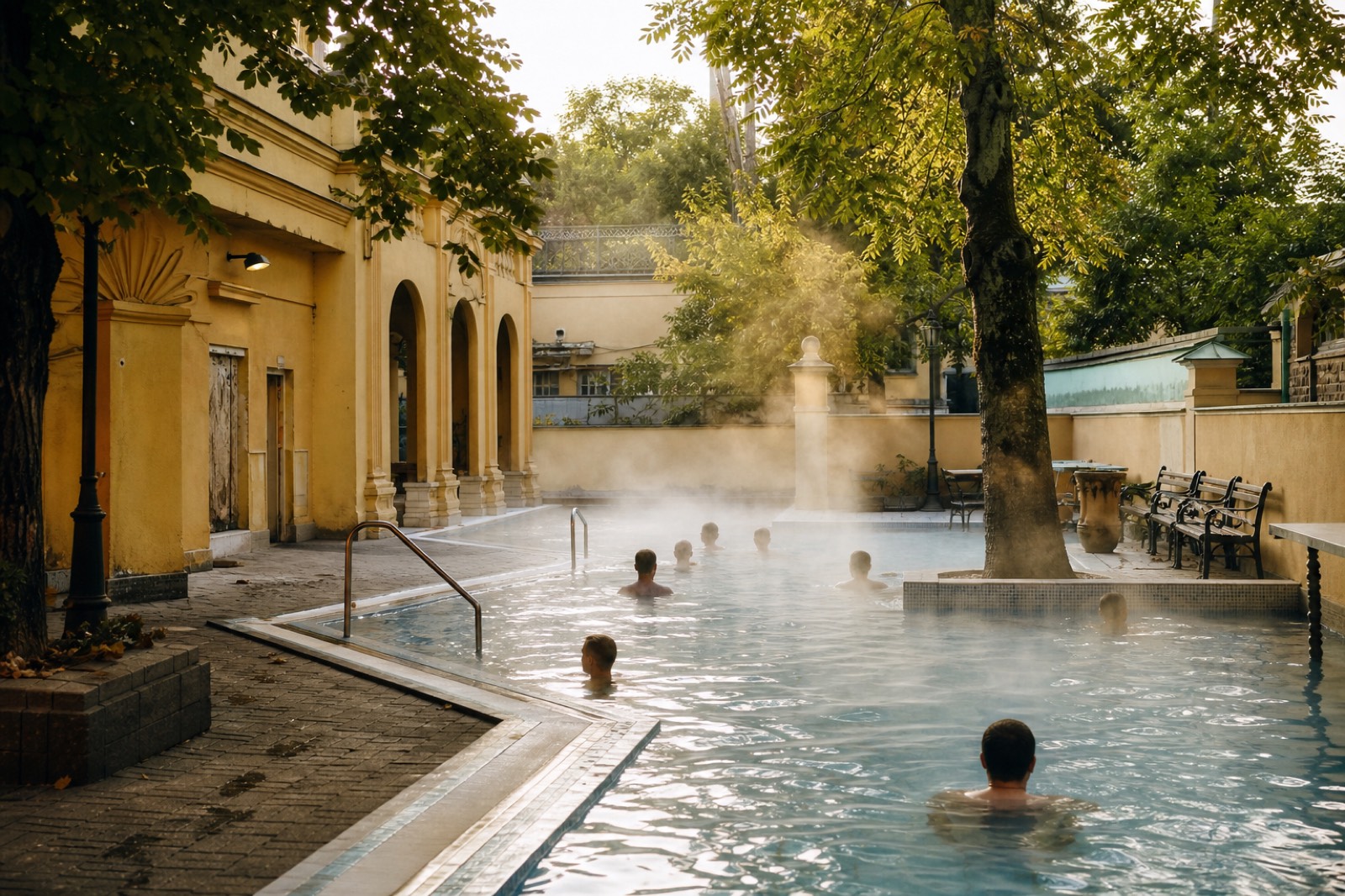
Short answer
Dandár, Paskál and the Palatinus strand on Margaret Island are the baths Budapesters use themselves. None of them appear on GetYourGuide or Viator. You pay at the door, pricing is set for locals, and current hours live on each bath's official Hungarian site. Go famous first, then go local.
The queue outside Széchenyi on a warm morning starts forming before the ticket windows open, and by ten it bends around the corner of the yellow facade. I walk guests past that queue most weeks of the year. What almost none of them know is that at the same moment, in other corners of the city, there are thermal pools with steam curling off the water, no queue at all, and a cashier with time to say jó reggelt. Those are the local baths. This guide covers the three I get asked about once people discover they exist: Dandár, Paskál and the Palatinus strand on Margaret Island.
What counts as a local bath in Budapest?
A local bath serves its own neighborhood first. Tickets are sold at the door, the website leads in Hungarian, the regulars arrive with their own towels, and there is no listing on GetYourGuide or Viator. In this city that means places like Dandár, Paskál and the Palatinus strand out on Margaret Island.
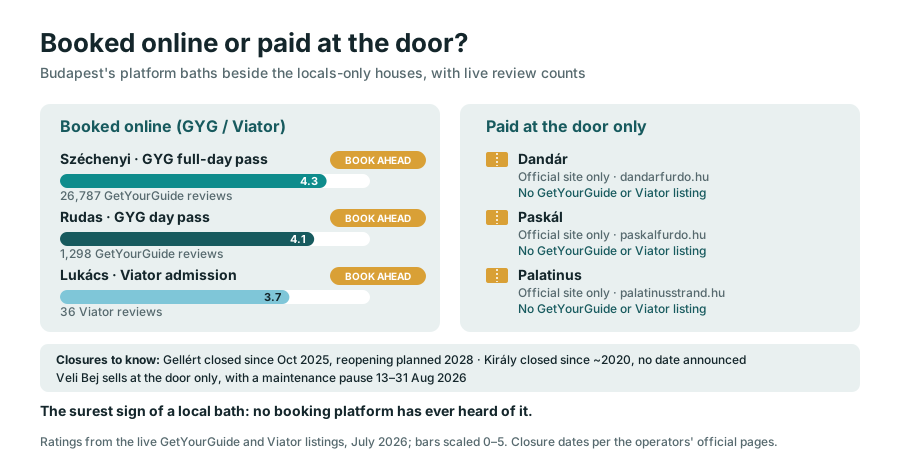
The cleanest test is the last one. Budapest sits on more than a hundred medicinal springs, so the famous names are only the visible edge of the bath map. Széchenyi, Rudas and Lukács all sell entry through international booking platforms, which is exactly what fills them with visitors. Gellért would belong on that list too, but it has been closed since October 2025 with reopening planned for 2028, and Király has been shut for reconstruction since around 2020 with no date announced. I keep a separate rundown of which baths are open right now, because the closures still surprise people weekly.
The local three never joined the platforms at all. No commission structure, no tour-group allotments, no English sales funnel. You show up, you pay what a Budapester pays, you soak. Lukács straddles the line, a famous-name bath that still feels half local, but Dandár, Paskál and the Palatinus sit fully on the other side of it.
| Bath | Character | Best suited to | Official site |
|---|---|---|---|
| Dandár | Small, calm neighborhood thermal bath with a regulars' crowd | Return visitors who want silence | dandarfurdo.hu |
| Palatinus | Open-air strand on Margaret Island, green and family-paced | Hot days, children, whole afternoons | palatinusstrand.hu |
| Paskál | The everyday bath, a weekly habit rather than an event | Long stays and slow travelers | paskalfurdo.hu |
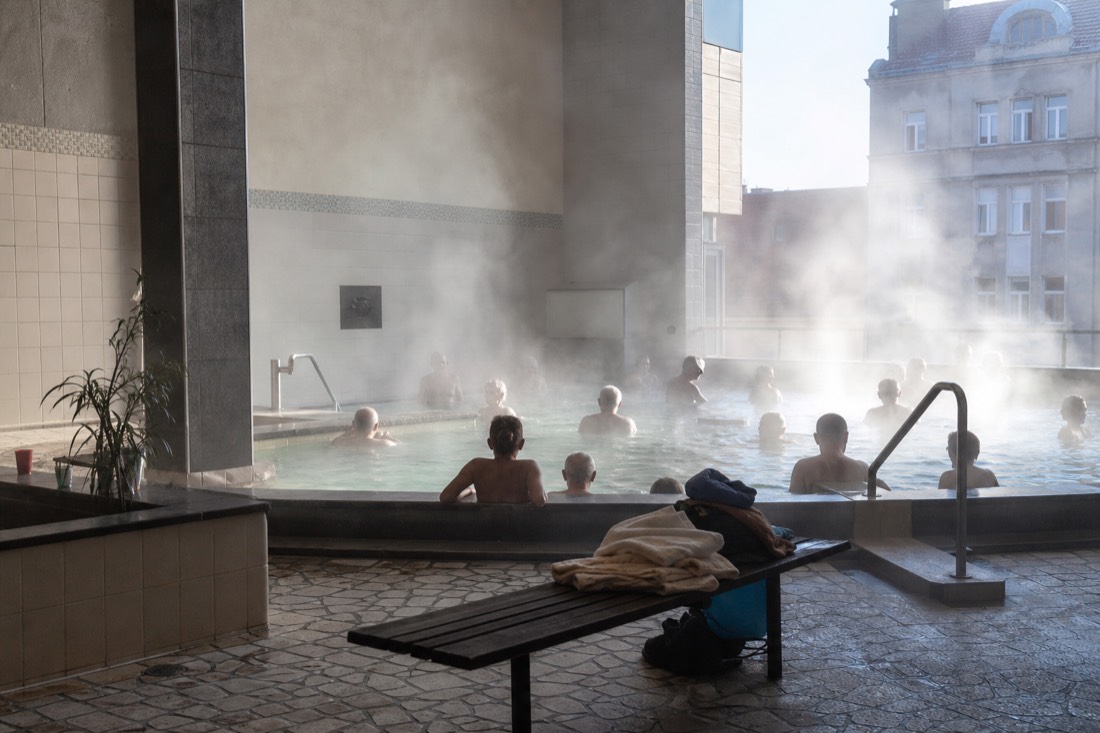
What is Dandár Thermal Bath like?
Dandár is the quiet counterpoint to the palace baths: a compact neighborhood fürdő where most of the people in the water live nearby. There is no online pipeline feeding tourists into it. You buy a ticket at the door, and the current opening times and prices are published on its official site.
When a returning guest tells me Széchenyi felt like a swimming stadium, Dandár is usually my answer. The scale is the whole point. Nobody is filming anything. Conversations happen in Hungarian, at low volume, between people who clearly greet each other every week. The rhythm follows the classic local pattern I see across the city's smaller baths: an early shift of pensioners who treat the warm water as medicine, a midday lull, then a modest after-work wave.
I am deliberately not printing Dandár's hours, prices or pool details here. The bath publishes all of it on dandarfurdo.hu, and those specifics change often enough that a copied number would only mislead you by the time you read this. Check the site the day before you go, not a screenshot from someone's two-year-old blog post.
What I can tell you with confidence is who leaves Dandár happy. It suits second-visit travelers, solo soakers, readers, and anyone whose favorite part of a thermal bath is the part where nothing happens. It does not suit someone chasing grandeur or a party. There is a bath for that, and it is not this one.
Manage your expectations on arrival and the place rewards you. You are walking into somebody's weekly routine, not an attraction staged for you, so the pleasures are quiet ones: warm water taken seriously, unhurried time, the mild pride of having found a door most visitors never notice. Guests who go in expecting a small Széchenyi come out disappointed. Guests who go in expecting an honest neighborhood institution tend to call it a trip highlight.
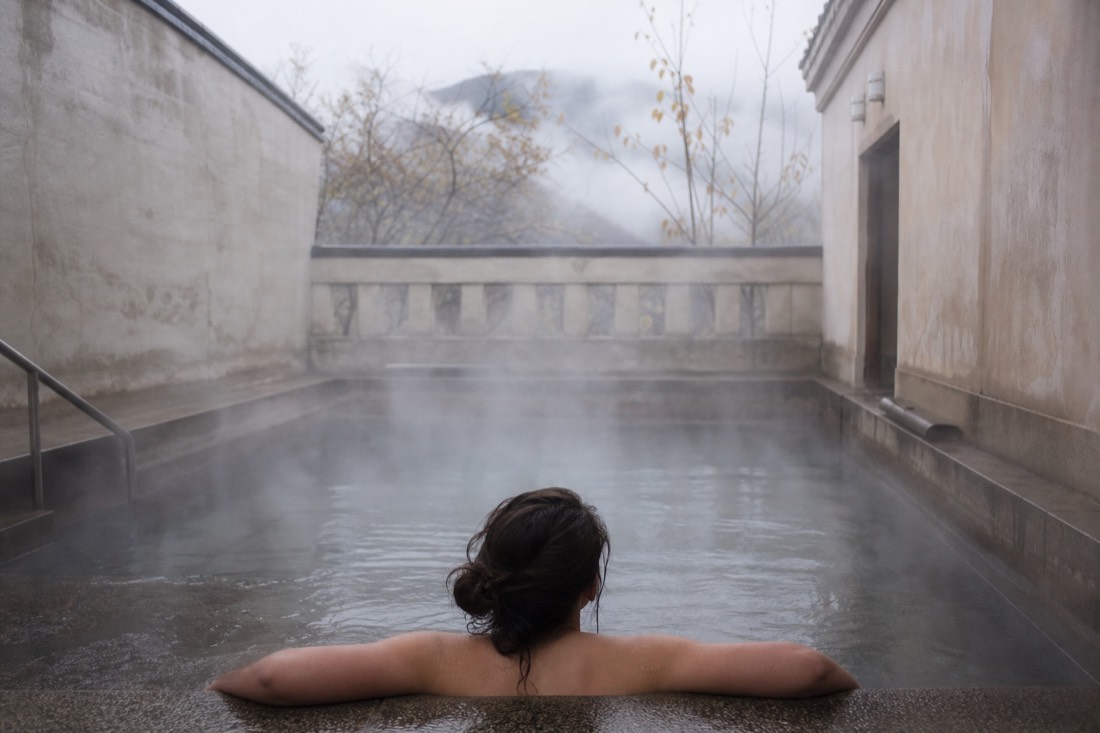
What is the Palatinus strand on Margaret Island?
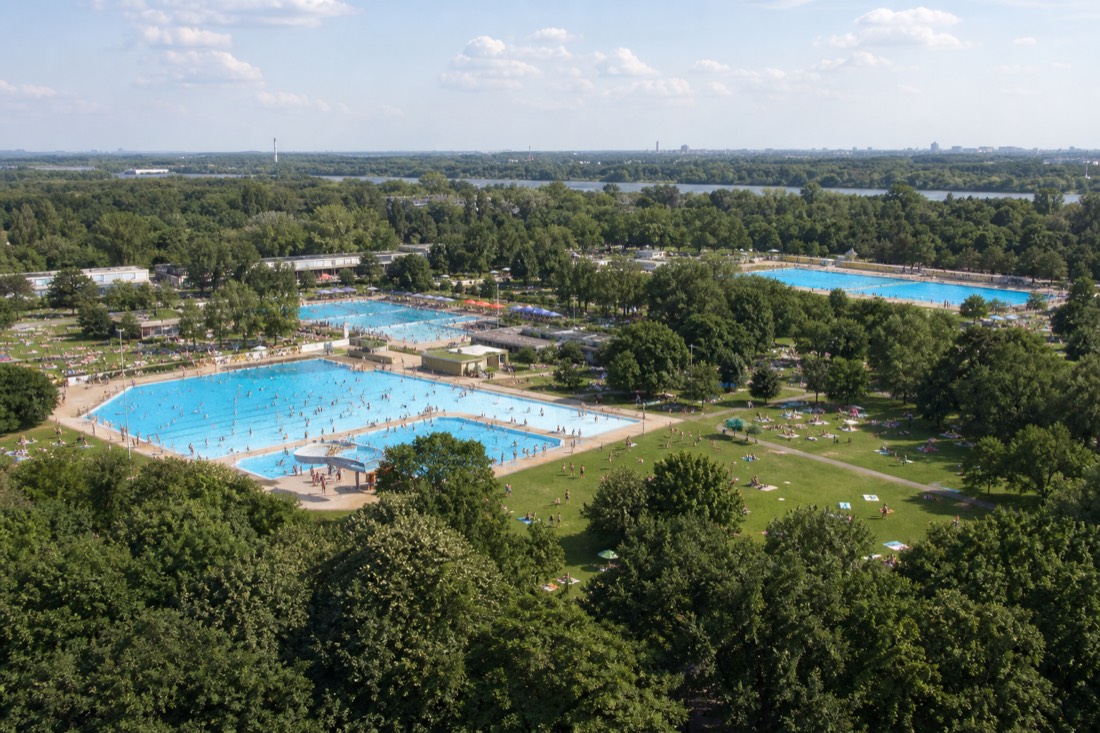
The Palatinus is Margaret Island's open-air strand, the lido where Budapest families spend hot days on grass between swims rather than under chandeliers. Tickets are sold at the door, the rhythm follows the season, and the calendar and prices live on palatinusstrand.hu rather than on any tour platform.
A strand is its own category of Hungarian institution, closer to a park with pools than to a marble bathhouse. The Palatinus is the city's classic example, set in the green middle of Margaret Island, and on a hot weekend it is where a real cross-section of Budapest goes. Picnic blankets, sunscreen, kids negotiating one more swim. If your image of this city's bathing culture is entirely steam and stone arches, an afternoon here rebalances it.
Because it is an open-air place, its year is not flat. Seasons change what is open and when, so treat palatinusstrand.hu as the only source worth trusting for dates, hours and tickets before you commit a day to the island. Locals plan a Palatinus visit the way they would plan a beach day, with food, shade and no fixed departure time, and copying that habit is the single best piece of advice I can give you for it.
Families end up here for one more quiet reason. The city spa company does not permit children under 14 in medicinal water pools, which rules the hot thermal sections of the famous baths out for young kids. A strand day solves the problem without anyone feeling short-changed, and the island around it gives you the rest of the afternoon for free.
What is Paskál Thermal Bath like?
Paskál is the everyday bath: residential, unglamorous, and used by people for whom a thermal soak is a weekly habit rather than a holiday event. You will not find it on GetYourGuide or Viator. Tickets are sold on site, and all practical details live on its official page, paskalfurdo.hu.
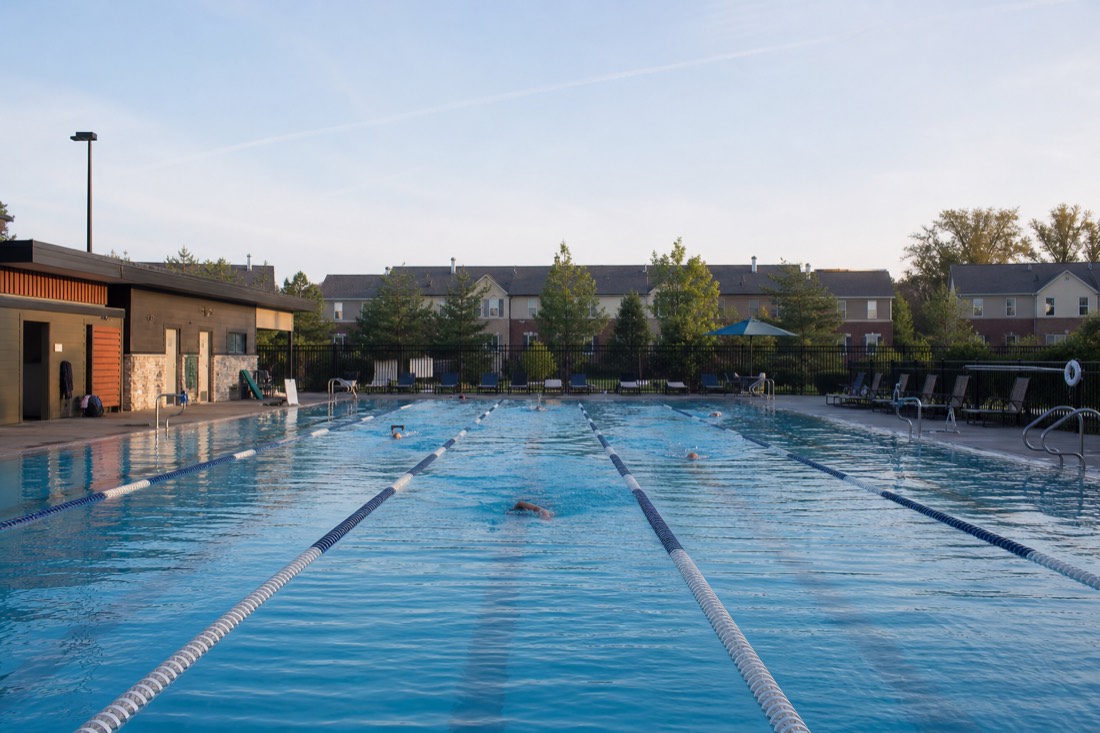
Every city that takes bathing seriously has places like this, and Budapest has more than most. Paskál is not trying to impress anyone, which is precisely its charm. The crowd is the neighborhood: swimmers doing their lengths, older regulars parked in the warm water solving the country's problems, parents with schedules. Nobody hands you a wristband with a QR code from a tour reseller, because no reseller has ever touched the place.
For a visitor, Paskál makes sense in one specific situation: you are staying in Budapest long enough that a bath stops being an attraction and becomes part of your week. A month-long remote worker, a slow traveler, someone visiting family. Go the way locals go, as routine rather than pilgrimage, and it delivers something Széchenyi never can, the feeling of having a normal Budapest day.
As with the other two, I will not quote hours or prices. They belong to paskalfurdo.hu, which is live, current and the only version of those numbers that matters.
Should a visitor pick a local bath over Széchenyi?
For a first visit, no. Széchenyi earns its fame, and one grand bath belongs on every first Budapest itinerary. The local baths are the second move: come back to them for the calm, the door pricing, and the feeling of joining the city instead of watching it perform.
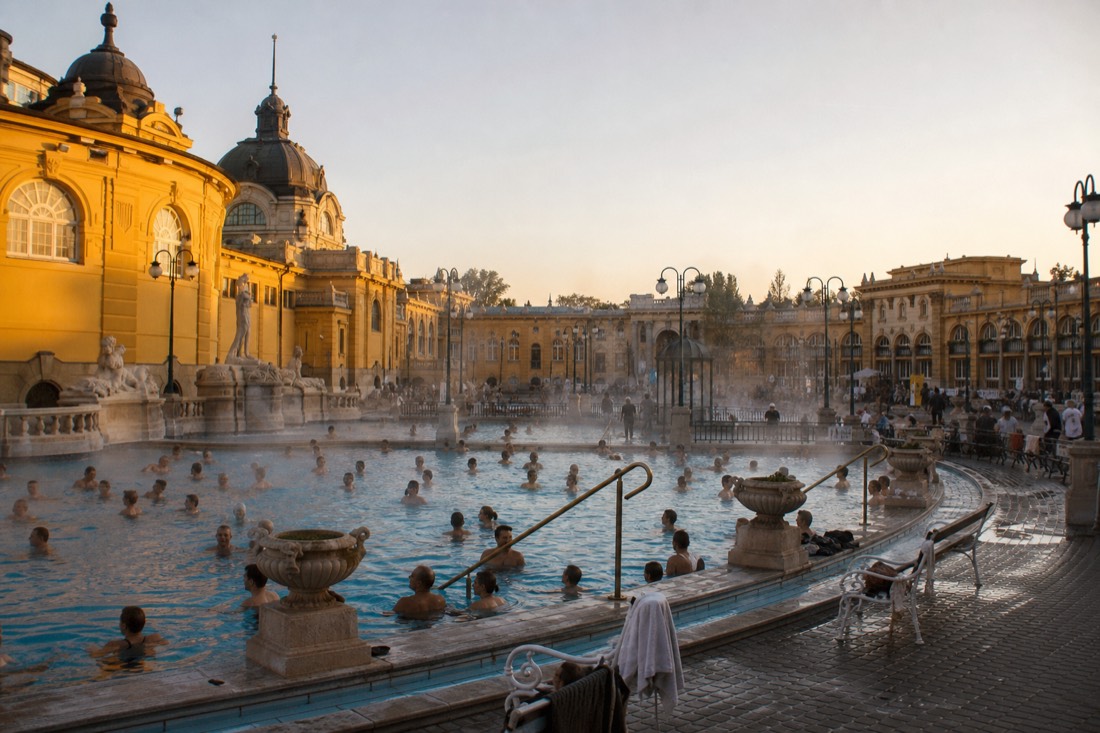
I say this as the person who just spent four sections praising the quiet places. The 1913 palace in City Park is genuinely one of Europe's great bathing experiences, and the numbers behind it are not tourist-trap numbers: the day pass holds 4.3 across 26,787 GetYourGuide reviews, and Google shows 4.2 across roughly 66,000. Crowds follow quality here, not hype. My honest playbook for a week in Budapest is both: book the Széchenyi full-day pass and check live availability and prices on GetYourGuide for the grand day, then keep one unbooked morning for Dandár or the island. If you are still weighing the famous baths against each other, my side-by-side comparison does that job properly.
One timing trick most first-pagers miss: Széchenyi stays open until 22:00 on Fridays, per the official site, and the late evening feels closer to a local bath than the same pools do at noon.
| Bath | On GetYourGuide or Viator? | Review base you can check | At the gate |
|---|---|---|---|
| Széchenyi | Yes, GYG full-day pass | 4.3 across 26,787 GYG reviews | Book ahead, flagged likely to sell out |
| Rudas | Yes, GYG day pass with 3-course meal | 4.1 across 1,298 GYG reviews | Bookable in advance |
| Lukács | Yes, Viator full-day admission | 3.7 across 36 Viator reviews | Bookable, small review base |
| Dandár | No | None on the platforms | Pay at the door |
| Palatinus | No | None on the platforms | Pay at the door |
| Paskál | No | None on the platforms | Pay at the door |
| Your situation | Pick | Why |
|---|---|---|
| First time in the city, one bath only | Széchenyi | The grand experience, bookable in advance |
| Return visit, craving silence | Dandár | Small, calm, a regulars' pace |
| Hot day with children | Palatinus | An open-air island strand built for exactly this |
| Staying a month, want a weekly soak | Paskál | The everyday bath locals treat as routine |
| Ottoman stone and night bathing | Rudas | A 1550s Turkish core, plus Friday and Saturday night sessions until 03:00 |
| A famous-name bath without the biggest queue | Lukács | Still open, prebookable on Viator, covered in our Lukács guide |
How do you handle a bath with no English booking page?
Slowly, and in person. None of the three requires an online reservation, so the missing English checkout costs you nothing. Read the official Hungarian site for the day's hours, bring your own towel and flip-flops, and let the cashier's pointing finger handle most of the translation.
This is the part that stops people, and it should not. The absence of an English booking flow is not a wall, it is the filter that keeps these baths local, and walking through it is easier than it looks. Most official bath sites have an English toggle or respond well to your browser's translate button. The habits that regulars bring apply doubly to you: pack a towel and flip-flops rather than planning to rent, carry a swimsuit and a swim cap if you intend to do lengths in a lap pool, and give yourself an unhurried first twenty minutes to decode the changing-room system. Whether the desk takes foreign cards is exactly the kind of detail to confirm on the official page rather than assume.
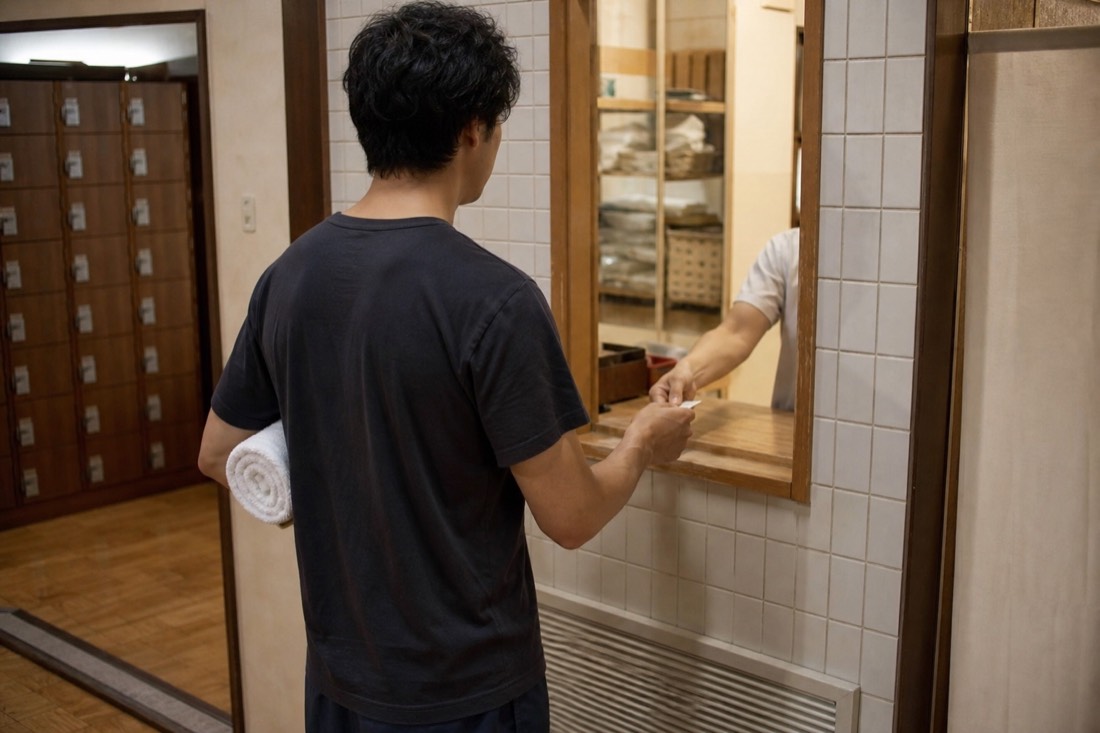
The desk itself is a thirty-second transaction once you have watched it done. Regulars barely break stride: name the ticket type, tap or pay, take the band or paper slip, walk. You will be slower the first time, and nobody minds. If the cashier asks you something you do not catch, it is almost always the locker-or-cabin question, so decide before you queue whether you want a shared changing room or a private cubicle and answer with the word from the sign, öltöző or kabin. That one prepared answer removes most of the friction people fear.
At the door, a handful of words carries you a long way.
| On the sign | What it means |
|---|---|
| Fürdő | Bath |
| Strand | Open-air lido |
| Pénztár | Ticket desk |
| Nyitvatartás | Opening hours |
| Öltöző / Kabin | Changing room / private cabin |
| Férfi / Női | Men / Women |
| Nyitva / Zárva | Open / Closed |
| Gyógyvíz | Medicinal water |
Budget-wise the local baths are the easy end of the scale, priced for residents rather than tour groups, though I will not print figures that the official sites own. For the famous baths, where the numbers move even faster, I keep a full guide to what a bath day actually costs and update it as the season shifts.
When does a local bath beat a famous one, and when does it lose?
A local bath wins on calm, on door pricing and on the feeling of an ordinary Budapest day. A famous bath wins on architecture, on booking certainty, on English at every desk and on the sheer scale of the pools. Read the ladder below against what you actually want from the day, then choose without guilt.
People ask me this as if there were a correct answer, and there is not. There is only a trade. Every rung you climb toward the local end of the scale hands you more quiet and more authenticity while taking away a little certainty, a little grandeur and most of the English. Every rung toward the famous end reverses that. The mistake I watch visitors make is choosing on the wrong axis: picking Dandár because a blog called it "hidden" when what they really wanted was a photograph under a dome, or standing in the Széchenyi queue at eleven on a Saturday when the thing they wanted was to be left alone in warm water.
The one rung where the famous baths simply own the ladder is the night. Rudas runs its night bathing on Friday and Saturday from 22:00 to 03:00, Széchenyi keeps its doors open until 22:00 on Fridays, and the Saturday-night Sparty is a Széchenyi thing, 18 and over. Nothing on the local side answers any of that. The rung where the local baths own it is small children on a hot day. The under-14 rule keeps kids out of medicinal pools everywhere in the city network, and the famous baths have little else to offer a seven-year-old, while the Palatinus strand exists for precisely that child.
Between those two ends it is a matter of taste, and taste changes with the trip. A first three-day visit sits naturally on the famous end. A second week, or a stay long enough for the novelty to fade, drifts local. Some guests do both in a single day: the Ottoman stone at Rudas in the morning, an unbooked island afternoon.
| What you are weighing | Local bath (Dandár, Paskál, Palatinus) | Famous bath (Széchenyi, Rudas, Lukács) | Edge |
|---|---|---|---|
| Crowd at the pool edge | Thin, neighborhood pace | Thick from mid-morning, thickest at Széchenyi | Local |
| Architecture and photographs | Modest, functional | A 1913 palace, a 1550s Ottoman core at Rudas | Famous |
| Booking certainty | None needed, none possible; you walk up | Prebookable; the Széchenyi pass is flagged likely to sell out | Famous in peak weeks, local for spontaneity |
| English at the desk | Plan for little | Routine | Famous |
| Price logic | Set for residents, paid at the door | Tourist-facing, live on the listing | Local |
| Children under 14 | The Palatinus strand is built for them | Medicinal pools off limits, little else for small kids | Local |
| Night bathing | None | Rudas Fri and Sat 22:00-03:00, Széchenyi to 22:00 Fridays, Sparty Saturdays (18+) | Famous |
| Feeling of joining the city | The whole point | You are watching the city perform | Local |
| Massage and extras | Whatever the official site lists | Optional upgrades on the Széchenyi listing | Famous |
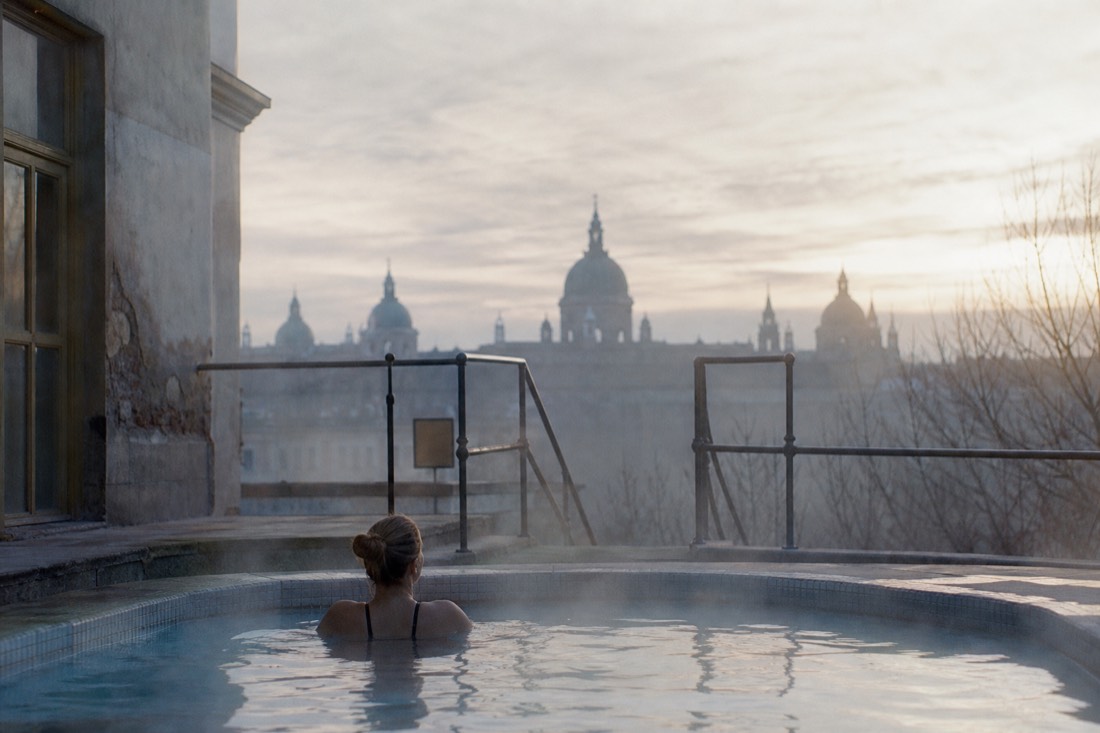
Which Hungarian bath words are worth learning beyond the door sign?
About twenty. The door-sign set gets you through the ticket window; a second layer of pool-side words tells you which basin is medicinal, where the showers are, what the swim-cap rule says and how to greet the attendant. None of it needs pronunciation practice, only recognition, since you will read these words far more than you say them.
Hungarian frightens people on paper and then turns out to be irrelevant in practice, because a bath is a place of pictograms, arrows and habit. Still, a small vocabulary changes the experience from decoding to belonging. The words below are the ones I see guests actually need, and I have kept the list to the common ones that recur across the city's baths rather than anything specific to a single site. Read them once on the tram over and you will recognise most of the building.
Two words earn their place above all others. Gyógymedence, medicinal pool, marks the warm basins where the etiquette tightens: quiet voices, no splashing, no children under 14, and a soak measured in short rounds rather than an hour. Úszósapka kötelező, swim cap compulsory, appears at lap pools, and it is the rule visitors break most often without meaning to. Széchenyi's official pool page states the swim-cap requirement for lengths in its 50 m pool, and the smaller baths follow the same convention often enough that I pack a cap for every visit.
Etiquette beyond the words is short. Shower before the water, every time, and again after the sauna if there is one. Dry off before you walk back into the changing hall. Do not dive, do not swim in the medicinal pools, do not photograph strangers. Greet the attendant, and say köszönöm on the way out. My full rundown of what to wear and how to behave goes deeper, and if the whole idea of undressing among strangers in a foreign language still makes your stomach turn, I wrote about first-bath nerves for exactly that reader.
| Hungarian | English | Where you meet it |
|---|---|---|
| Bejárat / Kijárat | Entrance / Exit | Doors and corridors |
| Jegy, Belépő | Ticket, entry ticket | The ticket window |
| Felnőtt / Gyerek / Nyugdíjas | Adult / Child / Pensioner | Ticket categories on the price board |
| Hétköznap / Hétvége / Ünnepnap | Weekday / Weekend / Public holiday | Hours and price notices |
| Medence | Pool | Everywhere |
| Gyógymedence | Medicinal pool | The warm basins |
| Úszómedence | Swimming pool | The lap pool |
| Élménymedence | Leisure pool | Pools with jets and currents |
| Zuhany | Shower | Between changing hall and water |
| Szauna / Gőzkabin | Sauna / Steam room | The wellness corner |
| Szekrény / Kulcs | Locker / Key | The changing hall |
| Karszalag | Wristband | Handed over at the desk where used |
| Úszósapka kötelező | Swim cap compulsory | Lap-pool signs |
| Törölköző / Papucs / Fürdőruha | Towel / Flip-flops / Swimsuit | Your own bag, or a rental desk |
| Tilos | Forbidden | Any red sign |
| Mosdó / WC | Toilets | Corridors |
| Büfé | Snack bar | Poolside |
| Kérem / Köszönöm | Please / Thank you | The desk, the attendant |
| Jó napot kívánok / Viszontlátásra | Good day / Goodbye | Everyone, always |
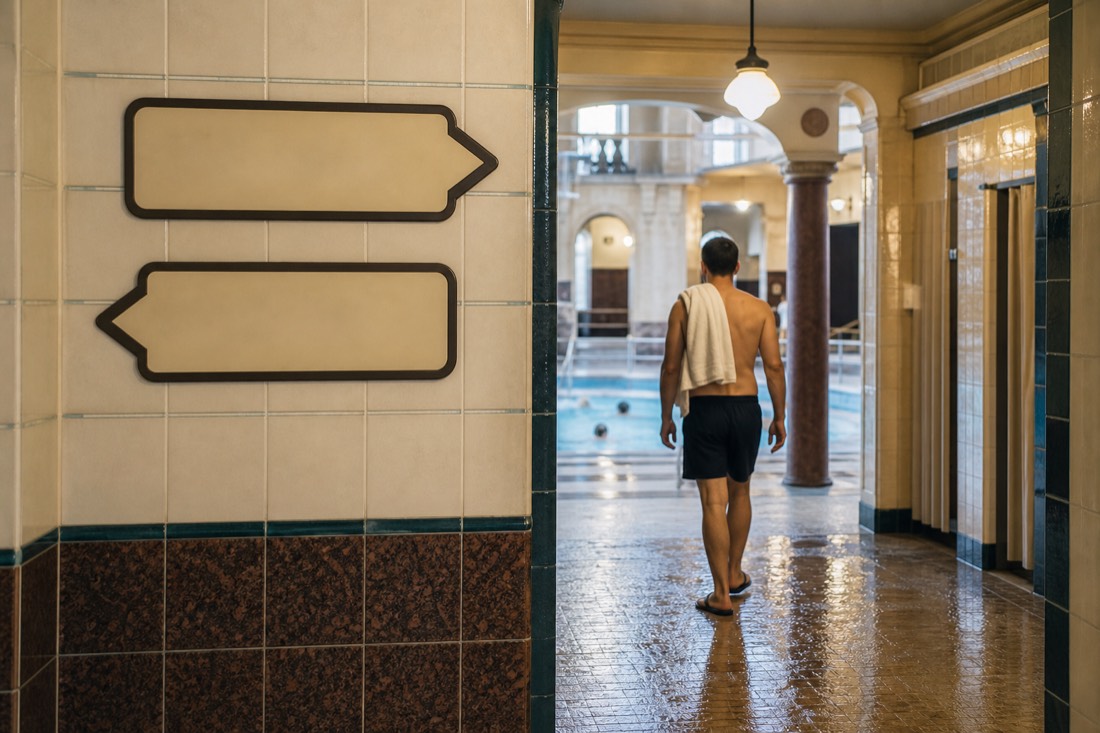
Which local bath suits which visitor?
Dandár for the solo soaker and the return visitor who wants quiet, the Palatinus for families and hot-day groups, Paskál for anyone staying long enough to want a weekly routine. Couples split by mood, first-timers should still start at Széchenyi, and night owls have nothing here at all: Rudas owns that shift.
The situation table earlier in this guide mixed the famous baths in. This grid strips it back to the three local names and asks a narrower question: given who you are travelling as, which door do you walk through, and where do you go if none of the three fits? I have filled it from the pattern of what guests report back to me, not from any inventory of pools, and where a bath's suitability depends on facilities I have not verified I say so and point you to the official page.
Two rows deserve a note. Families with children under 14 hit the same wall everywhere: the city spa company keeps young children out of medicinal water pools, so the warm basins at any bath are off the table for them. The Palatinus strand sidesteps that entirely, and I keep a longer guide to bath days with kids for the details of the famous baths. Groups of friends, meanwhile, tend to want a scene rather than a silence, and the local three are silence by design. Széchenyi's courtyard is the daytime answer, and the Saturday-night party is the after-dark one, adults only.
One caveat on the Palatinus column. It is an open-air strand, so its usefulness rises and falls with the season, and every "good" in that column assumes warm weather and a check of palatinusstrand.hu for what is open that week.
| Travelling as | Dandár | Palatinus | Paskál | If none fits |
|---|---|---|---|---|
| Solo, second visit, wants quiet | Best fit | Fine on a hot day | Good | Lukács, still open, small crowds |
| Couple, slow morning | Good | Summer only | Good | Rudas after 11:00, when it goes co-ed |
| Family with under-14s | Check the official site; medicinal pools are off limits | Best fit | Check the official site for the swimming side | Our kids guide walks through the famous baths |
| Group of friends after a scene | Skip | Good on a hot day | Skip | Széchenyi by day, Sparty on Saturday (18+) |
| Long-stay, wants a weekly soak | Good | Seasonal treat | Best fit | Széchenyi's Friday evening to 22:00 |
| Older traveler, warm water and calm | Best fit | Fine | Good | Lukács |
| First-timer, one bath, wants the photograph | Skip | Skip | Skip | Széchenyi, prebooked |
| Night owl | None | None | None | Rudas, Friday and Saturday 22:00-03:00 |
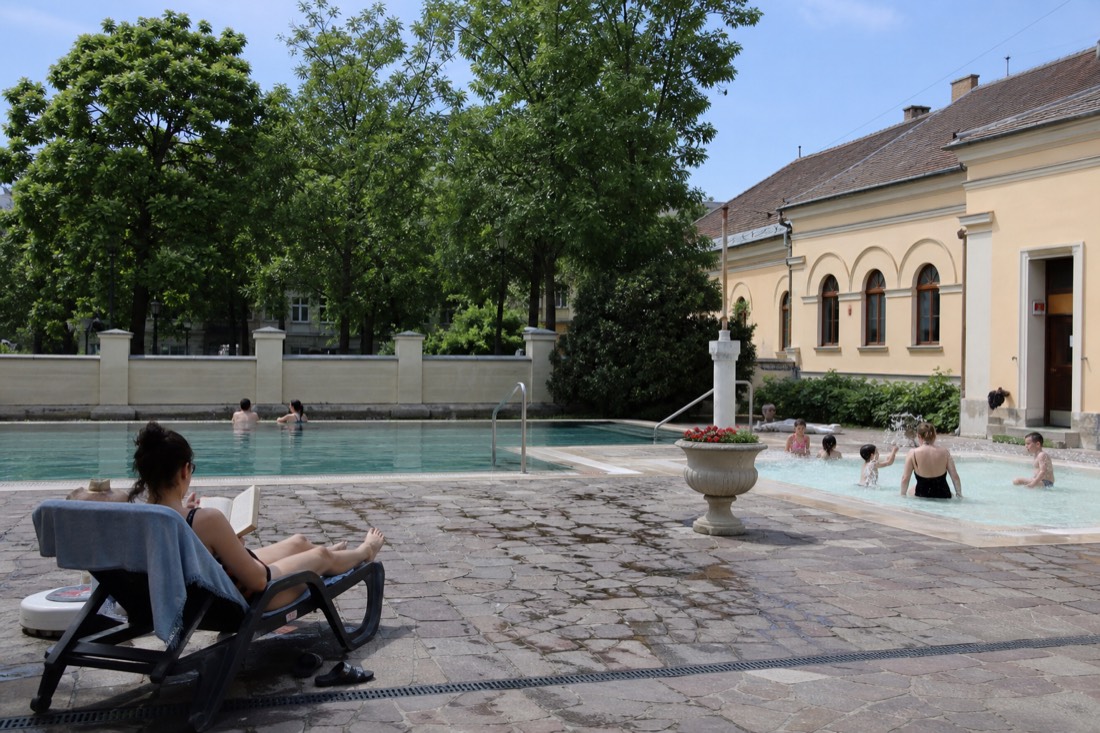
What is Gábor's walk-up routine at a bath with no English booking page?
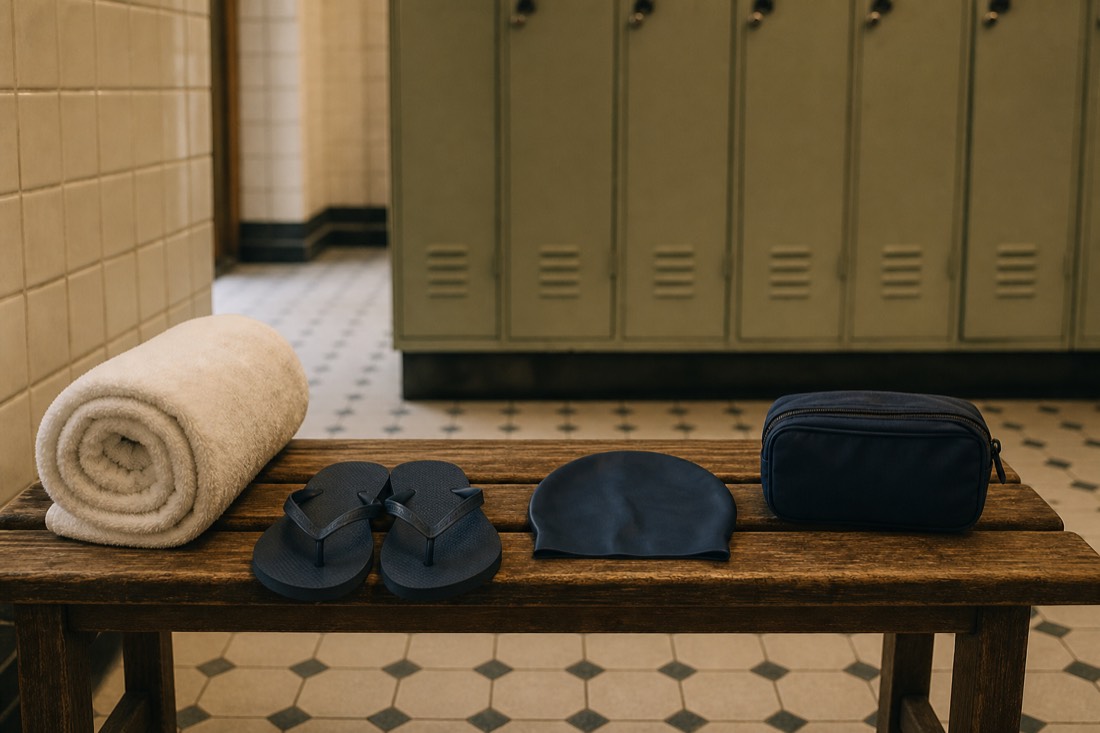
The night before, the official site for hours; the morning of, a packed bag with towel, flip-flops, swimsuit and swim cap; at the door, forints and a card, one prepared answer to the locker-or-cabin question, and twenty unhurried minutes for the changing hall. After that the bath runs itself.
I have walked enough first-timers through door-ticket baths since 2022 that the routine has stopped being a plan and become a habit, and the whole of it fits in one table. The principle underneath is simple: move every decision to the evening before, so that at the door there is nothing left to decide. Hours are read and screenshotted the night before, because the official Hungarian sites are the only current source and I do not want to be squinting at a phone in a doorway. The bag is packed the night before for the same reason. Hungary's currency is the forint, and whether a particular desk takes a foreign card is exactly the sort of detail the official page owns, so I carry both and let the cashier choose.
Timing is the part visitors underrate. Two things set the rhythm of a local bath day, and neither is a clock on the wall. The first is the local pattern of the crowd, an early shift of regulars and a midday lull, which is why I aim for either opening time or early afternoon rather than the middle of the morning. The second is the water itself. Széchenyi's official guidance for its hottest pools is a soak of around 20 minutes, and I carry that rhythm to every bath: twenty in, a real break with water and shade, then back. It is the reason my guests leave a bath rested rather than wrung out, and it is the honest version of the what the water does for you conversation.
Veli Bej is worth mentioning as the same logic in a stricter form. It sells at the door only, no online sales at all, and limits each session to three hours, so if you can manage a Veli Bej visit you can manage any of the three baths in this guide.
| Step | Allow | What Gábor actually does |
|---|---|---|
| Evening before | 5 minutes | Opens the official site, switches to English or browser translate, reads that day's hours, screenshots them, notes any line about card payment |
| Packing | 5 minutes | Towel, flip-flops, swimsuit, swim cap, hair tie, water bottle, some forint plus a card, phone in a zip bag |
| Arrival | Opening time or early afternoon | Skips the mid-morning peak; the early regulars' shift and the midday lull are the calm windows |
| Ticket window | 2 to 5 minutes | Jó napot, names the ticket, answers öltöző or kabin without being asked, pays, takes the band or slip |
| Changing hall | 20 minutes first time, 10 after | Finds the locker or cabin, works out the lock, showers before the water |
| First soak | Around 20 minutes | The Széchenyi guidance for the hottest pools, carried to every bath |
| Break | 10 to 15 minutes | Water, a bench, shade in summer, then a second round |
| Leaving | 20 to 30 minutes | Dries off before the hall, dresses, returns the key or band, drinks water, köszönöm |
Are Dandár, Paskál or the Palatinus on GetYourGuide or Viator?
No, none of the three appears on either platform. They sell tickets at the door at local pricing, which is a large part of why they stay local. Current hours and prices are on their official sites: dandarfurdo.hu, paskalfurdo.hu and palatinusstrand.hu.
Do I need to book a local bath in advance?
No. There is no online tourist booking to make. Check the official site for that day's opening hours, then pay at the ticket desk when you arrive. The only baths worth prebooking are the famous ones, where entry passes genuinely do sell out in busy weeks.
Will the staff speak English?
Plan for less English than at Széchenyi and you will be fine. In my experience walking guests into smaller baths, pointing, patience and a few Hungarian words on the signs cover almost everything, and the transaction itself is simple: ticket, changing room, water.
Is the Palatinus open all year?
It is an open-air strand, so its rhythm follows the seasons and not every part of the complex runs all the time. Check the calendar on palatinusstrand.hu before you plan a day around it, especially outside high summer.
Which local bath should a first-timer try?
Honestly, none on a first short trip. Do Széchenyi first, since one grand bath belongs on every first itinerary. On a return visit, pick Dandár for quiet, the Palatinus for a hot family day, or Paskál if you are staying long enough to want a routine.
Can children use the local baths?
The Palatinus strand is the natural family pick. Note that Budapest's spa company does not permit children under 14 in medicinal water pools anywhere, so hot thermal sections are off the table for young kids regardless of which bath you choose.