Nervous About Your First Hungarian Bath Visit? Every Worry, Answered
A Budapest local answers the worries first-timers bring to Széchenyi: swimsuits, lockers, swimming, how long you can stay, and health questions.
 By Gábor Kovács, Budapest thermal bath specialist and spa experience guide
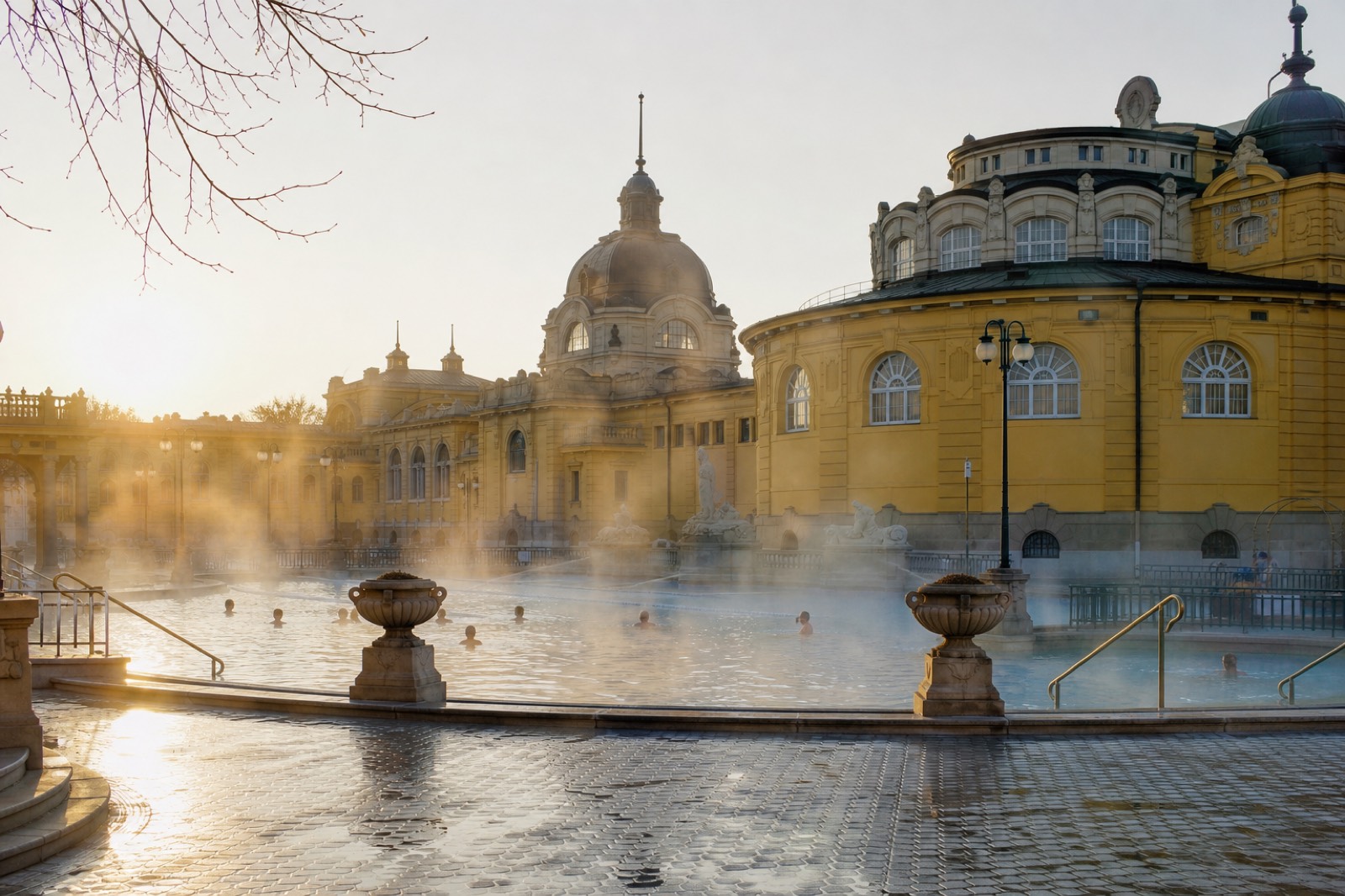
There is a moment I see almost every week on Állatkerti körút. A guest stops a few steps from the entrance, looks up at the big yellow building, and goes quiet. Not tired quiet. Worried quiet. Then the questions come out in a rush, usually starting with swimwear and ending with something they are half embarrassed to ask. After a few years of walking people through those doors, I can tell you the questions barely change from week to week. So here they all are, the whole anxiety file, answered the way I answer them at the gate: honestly, and with the actual rules rather than guesses.
Will I be the only one wearing a swimsuit?
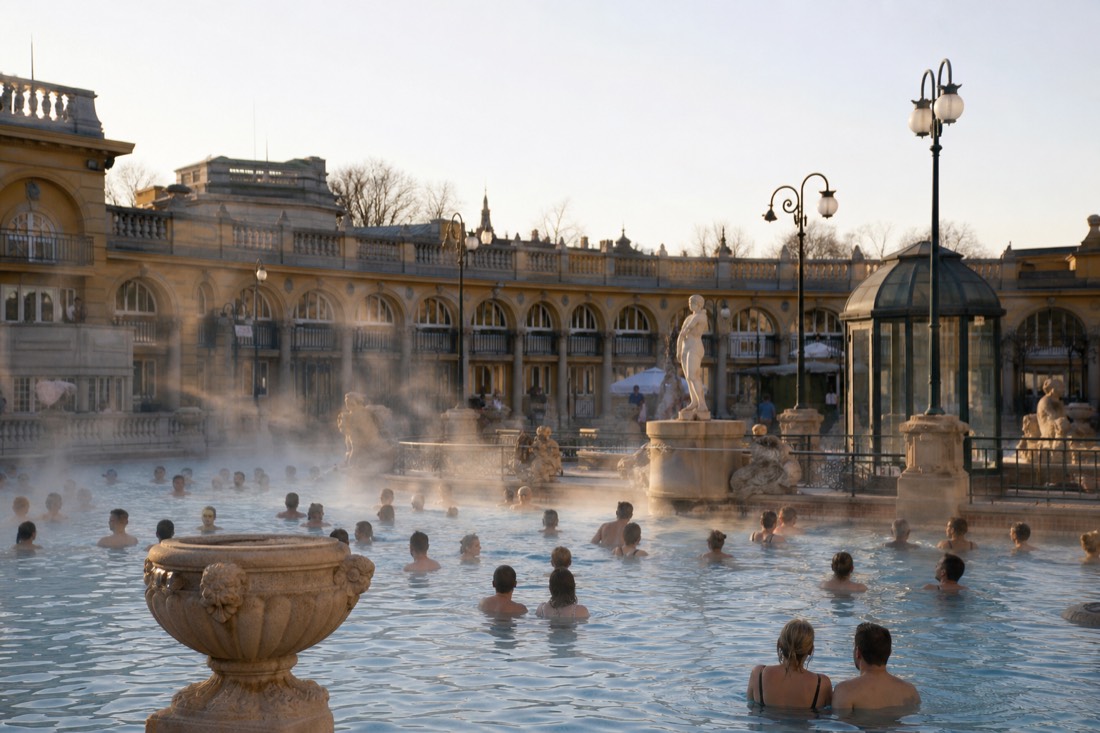
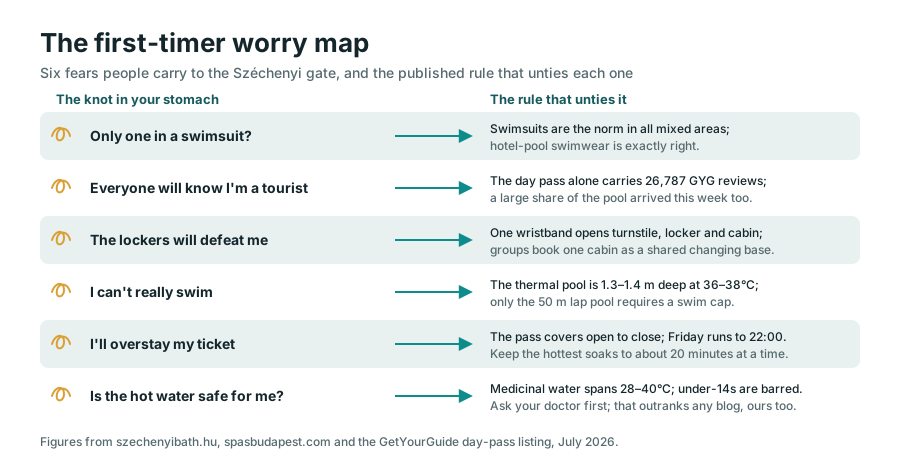
No. In the mixed pools and halls of Széchenyi, which is nearly the entire bath, everyone wears a swimsuit and nudity is not the norm. The swimwear you would take to a hotel pool is exactly right. Nobody looks twice, because every age and body shape in Europe is already standing in the water.
This is the worry people are most reluctant to say out loud, and it usually traces back to stories about German sauna culture or the old single-sex bathing days. Budapest's big baths do not work that way in their shared areas. You change in private, you walk out in your swimsuit, and you soak in your swimsuit. That is the whole dress code. Whatever you own already will do, though flip-flops matter more than the suit itself, and I go through the full packing logic in the guide to what to wear and how to behave in the baths.
The deeper fear underneath this question is really about being looked at. I understand it. Here is what actually happens: nothing. The crowd at a thermal bath is grandmothers, teenagers, men playing chess in the water, honeymooners, and people recovering from long flights. Nobody is auditing anybody. Within ten minutes most of my nervous guests have forgotten they are wearing anything at all.
Since the worries tend to arrive as a bundle, here is the whole matrix at a glance.
| The worry | The reality |
|---|---|
| "I'll be the only one in a swimsuit" | Swimsuits are the norm in all mixed areas; nudity is not |
| "Everyone will know I'm a tourist" | A large share of the pool arrived this week too |
| "I won't understand the lockers" | Wristband taps open everything; staff redirect people all day |
| "I have to be able to swim" | Most of the day is standing and soaking in warm water |
| "I'll overstay my ticket" | The pass covers the whole day, open to close |
| "My body isn't pool-ready" | Every age and shape is already in the water |
Will everyone know I am a tourist?
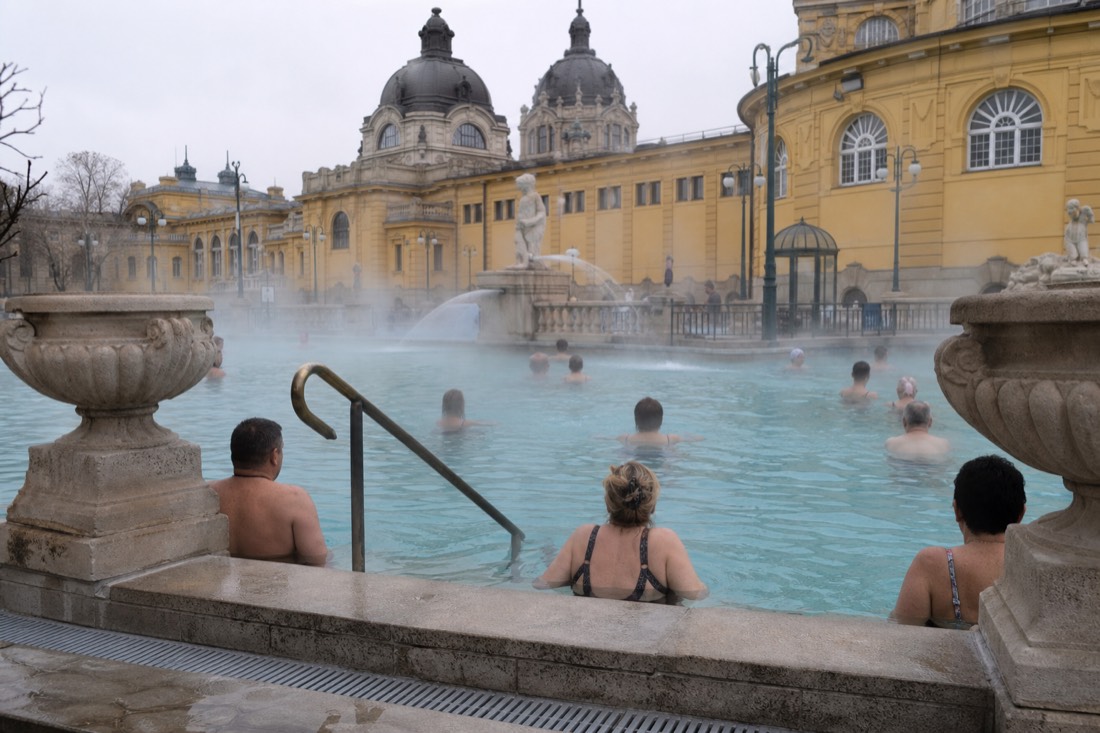
Probably, and it does not matter, because on any given afternoon a large share of the people around you flew in that week too. Széchenyi draws visitors from everywhere; its day pass alone carries 26,787 reviews on GetYourGuide. Locals share the water with tourists daily and pay you no attention at all.
Széchenyi is not a hidden local secret that tourists spoil by showing up. It is one of Europe's great public baths and it has absorbed outsiders for over a century. The men hunched over floating chessboards in the 38 degree pool have played through decades of camera-carrying visitors. They will play through you too.
What I tell nervous guests is this: the only behaviour that marks someone as clueless, rather than merely foreign, is skipping the pre-pool shower or shrieking across the water. Shower first, keep your voice at conversation level, and you are indistinguishable from someone who has come every winter for years. The etiquette bar is genuinely that low.
There is also a practical upside to the crowd being half international. Signage is in English. Staff at the ticket desks and pool edges deal with confused first-timers all day long, in several languages, and treat it as completely normal work. You will not be the strangest question they hear before lunch. If you want a feel for how a whole visit flows once the nerves settle, I wrote up the full rhythm in a full day at Széchenyi, from the early quiet to the evening glow.
How does the locker system actually work?
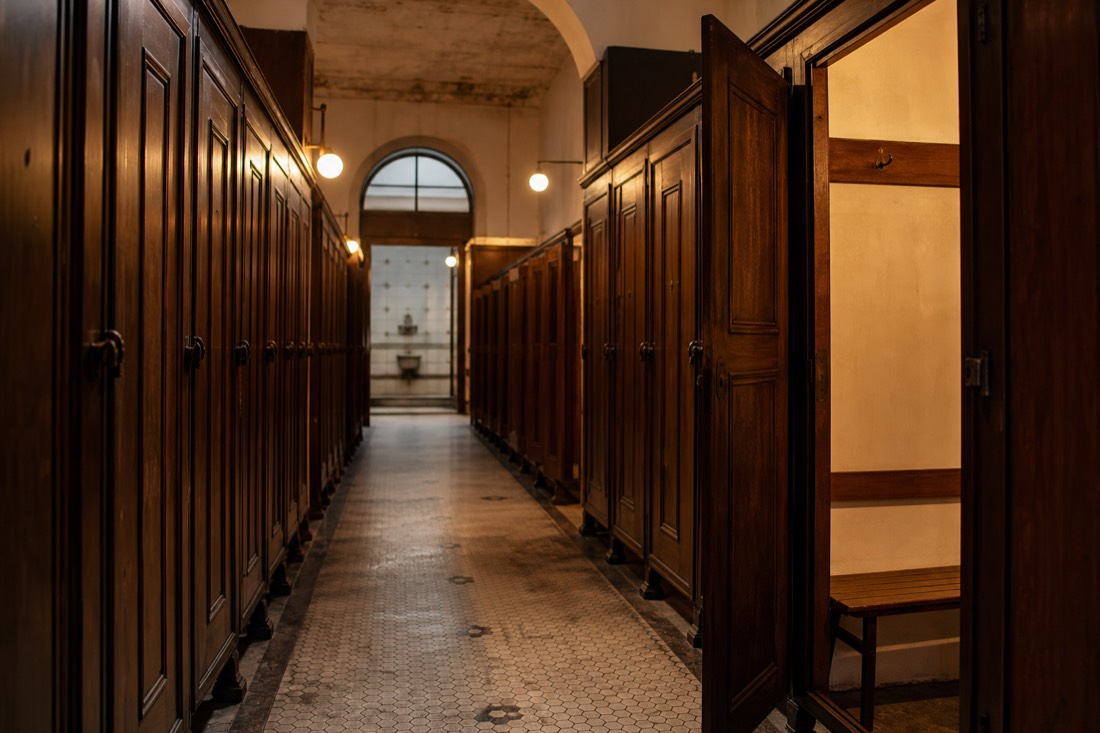
You tap a wristband, and a locker or a private changing cabin opens for you; the choice between them is made when you book, not at a confusing counter. Cabins are small lockable rooms. The quiet trick regulars use: a group books one cabin to change in, plus lockers for everyone's bags.
The locker hall is where I watch the most visible relief happen, because people expect Soviet-era chaos and find a wristband instead. At the entrance your ticket becomes a rubber band for your wrist. It opens the turnstile, and it opens your storage. A locker is a tall cabinet for your clothes and bag. A cabin is a private booth: you change inside it, lock it, and come back to it all day, which solves the "where do I get changed" panic in one stroke.
Groups have worked out something smarter than everyone paying for privacy. Book a single cabin between three or four of you, take turns changing in it, and keep the overflow bags in lockers. Guests mention this cabin-sharing arrangement again and again in reviews, and it is exactly what I suggest to families and friend groups at the gate.
The cleanest way to remove locker anxiety entirely is to settle it before you fly. The Széchenyi full-day pass includes your entry with a locker or cabin already attached, rated 4.3 across those 26,787 reviews, with free cancellation up to 24 hours ahead; you can check live availability and prices on GetYourGuide and arrive with the decision already made.
Here is how the first hour typically runs once you are inside.
| First hour | What happens |
|---|---|
| 0-10 min | Entrance queue, ticket scanned, wristband on |
| 10-20 min | Find your locker or cabin, change into swimwear |
| 20-25 min | Shower before entering any pool (expected of everyone) |
| 25-45 min | First soak, usually the 36-38°C outdoor thermal pool |
| 45-60 min | Wander the indoor medicinal pools, pick your favourites |
Do I need to know how to swim?
No. A thermal bath day is soaking, not swimming. The outdoor thermal pool at Széchenyi is 1.3 to 1.4 metres deep and heated to 36 to 38°C; you stand, sit on ledges, and drift. Only the 50-metre lap pool is for actual swimming, and that one requires a swim cap.
I have walked in plenty of guests who cannot swim a stroke and were braced to confess it like a crime. The confession always lands flat, because thermal bathing is closer to a warm outdoor bath with company than to a swimming session. In the main thermal pool an average adult stands with shoulders above the water. There are ledges to sit on, rails to hold, and a whirlpool ring where the current does the moving for you.
The one pool that behaves like a sports facility is the 50-metre cold-water lap pool in the middle, kept at 26 to 28°C, where lap swimmers need a cap. If you are not there to do lengths, you simply never enter it, and you lose nothing. The indoor medicinal pools run shallower and warmer still, spread across a range of about 28 to 40°C, and they are all standing-and-sitting territory.
Non-swimmers tend to carry a second, related worry: the water itself. What is in it, how often it is changed, whether the milky mineral colour means anything sinister. Those are fair questions with reassuring answers, and I put the whole subject under a microscope in are the baths actually clean. The short version is that the mineral content is the point, not a flaw, and the pools are on filtration and refill cycles. Go read that one if water quality is the fear keeping you on the fence.
How long am I allowed to stay?
As long as you like within opening hours; the entrance pass covers the whole day. The bath itself recommends limiting soaks in the hottest medicinal pools to around 20 minutes at a time, so the rhythm is soak, cool off, repeat, with breaks for water and food between rounds.
Nobody is timing you. There is no ninety-minute slot, no attendant tapping a watch. One entry is good from whenever you arrive until the doors close, and plenty of people make a slow six-hour day of it. The 20-minute guidance is not a rule enforced by staff but the bath's own recommendation for the hottest medicinal water, published with the pool temperatures on the official Széchenyi site, and your body will agree with it. Hot mineral water is lovely and quietly draining. Soak, climb out, sip water, sit in the cooler leisure pool, go back in.
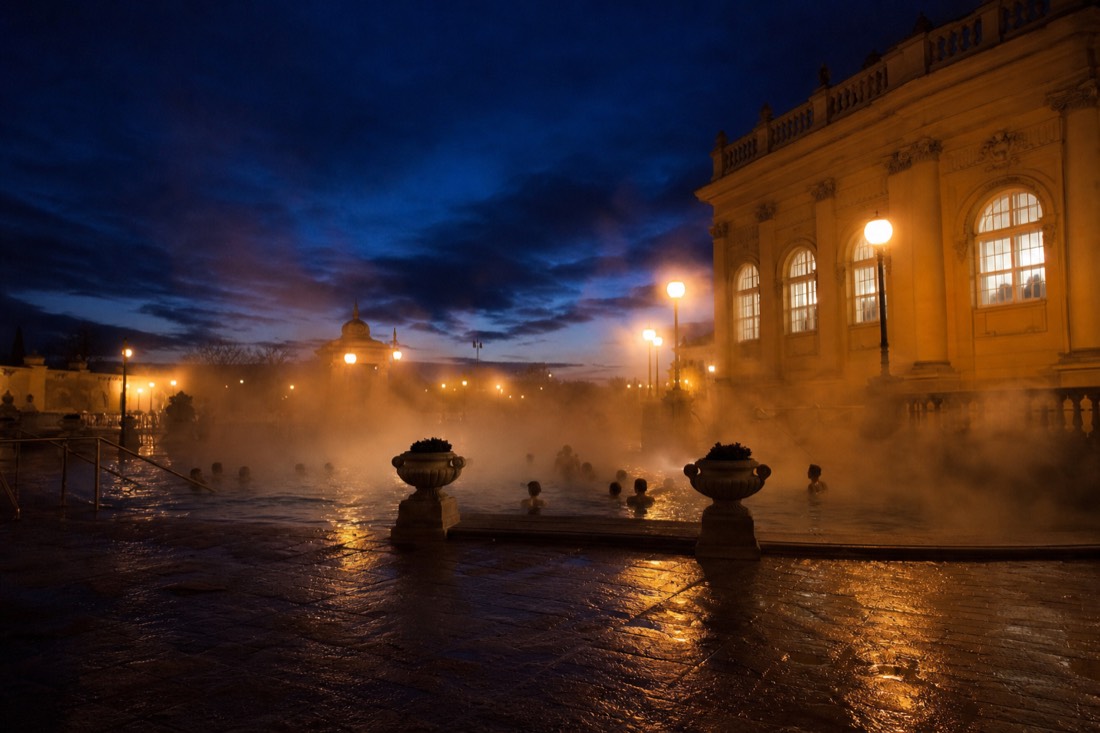
One scheduling detail most first-timers never hear: Friday is the long evening. Széchenyi runs 07:00 to 20:00 Monday to Thursday, but Fridays stretch to 22:00, with weekends at 08:00 to 20:00. That Friday 22:00 window means you can have a full tourist day and still get a two-hour night soak under the lit facade, which is the single most atmospheric version of the bath I know.
A long stay only works if you packed for one, so here is the bring-list I recite most often.
| Item | Verdict | Why |
|---|---|---|
| Swimsuit | Non-negotiable | The only dress code in the mixed areas |
| Flip-flops or sliders | Bring them | The single most repeated tip in guest reviews; floors are wet everywhere |
| Your own towel | Bring one | Rentals exist but guests consistently prefer having their own |
| Swim cap | Only for lap swimmers | Required in the 50 m pool, irrelevant everywhere else |
| Waterproof phone pouch | Optional | For chessboard photos without poolside nerves |
| Card or cash for snacks | Useful | Guests regularly note on-site food and drink prices run high |
What if I have a health condition?
Then this is the one worry to take seriously, and not to a travel blog. The waters are medicinal, official bath sites carry their own cautions, and rules exist for a reason, including one barring under-14s from medicinal pools. Ask your doctor before you travel; that answer outranks anything written here.
I will happily talk you out of swimsuit anxiety, but I will not talk you into hot water against medical advice, and you should be suspicious of any website that would. These are medicinal thermal pools, which is precisely why they feel so good and precisely why they deserve respect. The operators publish their own health guidance, and the age rule is a live example of how seriously they take it: children under 14 are not permitted in the medicinal water pools, by order of the Budapest Spas company itself, and the day-pass listing carries the same under-14 restriction.
So the honest script is short. If you are pregnant, have a heart or circulation condition, or manage anything your doctor monitors, put the question to that doctor with the specifics: hot mineral water, 36 to 40°C, repeated 20-minute immersions. A five-minute conversation before the trip beats any reassurance a stranger on the internet can offer, mine included. Most people get a green light with common-sense limits. Some get told to stick to the cooler leisure pools. A few are told to skip it, and knowing that in advance is a kindness, not a loss.
For the smaller practical questions in this category, the timing ones, the what-counts-as-a-medicinal-pool ones, the FAQ page collects everything I get asked that did not fit here.
One last thing I say on the steps, to the guests still hesitating. The nerves you are carrying are the most ordinary luggage at the entrance, and the water does not care about any of it. If a crowd of strangers is truly the sticking point, there is even a private route in: the beer spa at Entrance One is a 45-minute session in your own wooden tub behind a lockable door, rated 4.7 across 58 GetYourGuide reviews, and more than one shy guest has used it as a warm-up lap before braving the big pools. But most people never need it. They walk in worried, and two hours later I cannot get them out of the water.