What Budapest's Thermal Water Actually Does (and Who Should Be Careful)
The honest version of the thermal water benefits question, with official facts kept separate from guest reports and from things only a doctor can tell you.
 Written with Gábor Kovács, Budapest thermal bath specialist and spa experience guide
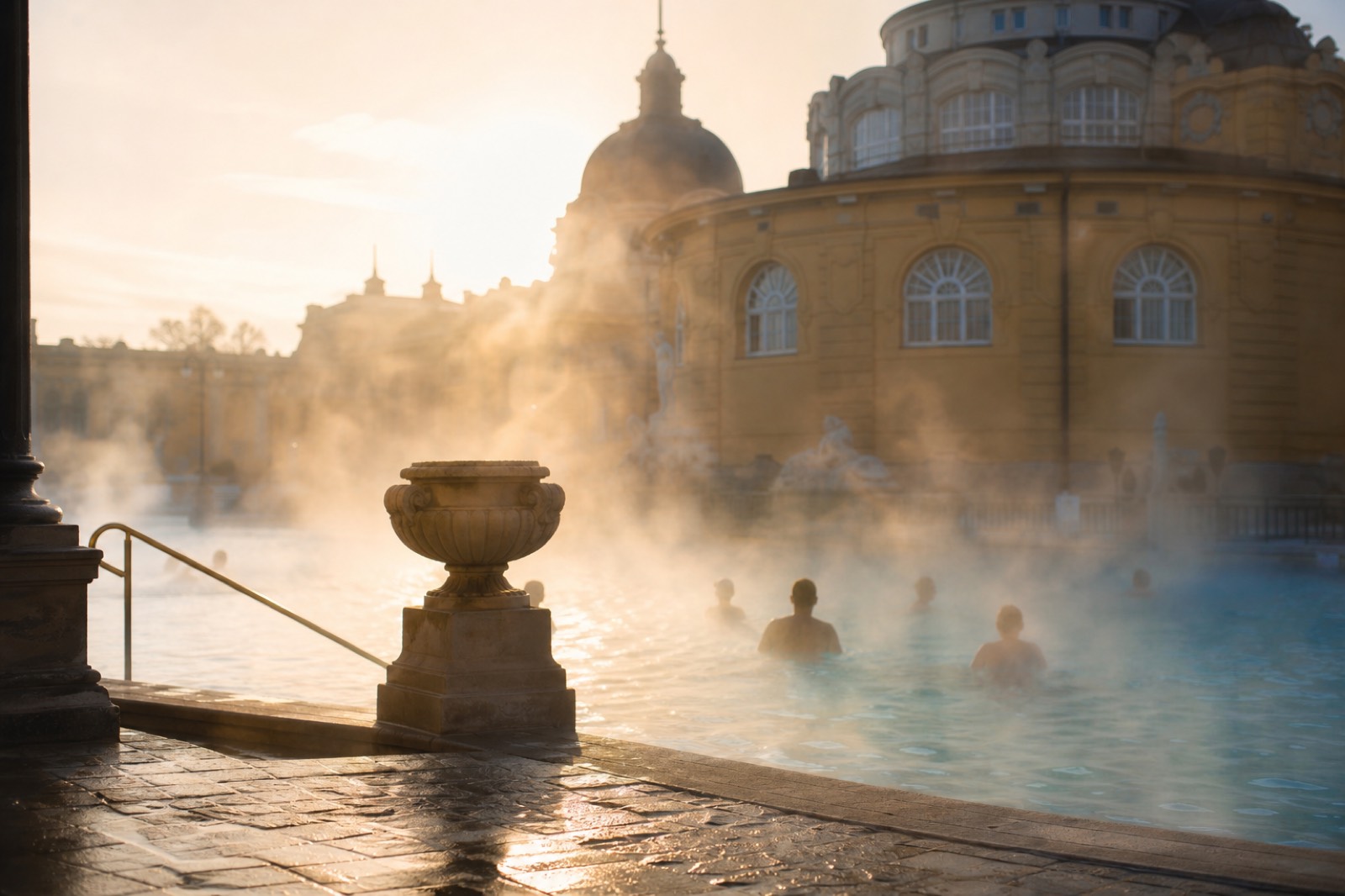
Short answer
Budapest's thermal water is legally classified as medicinal in Hungary, and bathers consistently report deep relaxation and soft skin. The exact mineral mix varies by spring, so read the composition board at each bath. Keep hot soaks to about 20 minutes per Széchenyi's own guidance, and ask your doctor first if you are pregnant or have a heart or blood-pressure condition.
The first thing guests ask me in the changing corridor at Széchenyi is almost never about towels. It is some version of "so what does this water actually do?" I have been walking visitors into these baths since 2022, and I have heard the water credited with everything from curing a decade of back pain to fixing a marriage. I am not going to do that here. This page keeps three piles separate: what official sources state, what thousands of bathers report, and what only your own doctor can tell you. The water deserves that honesty. So do you.
What is actually in the water?
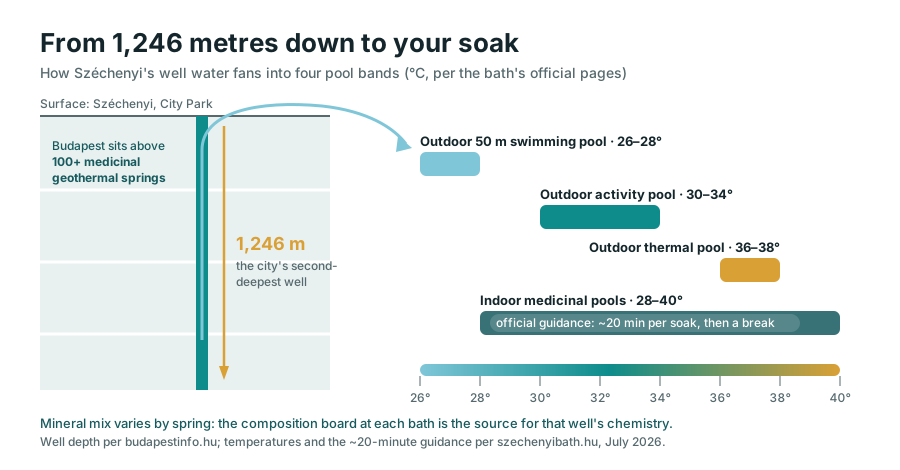
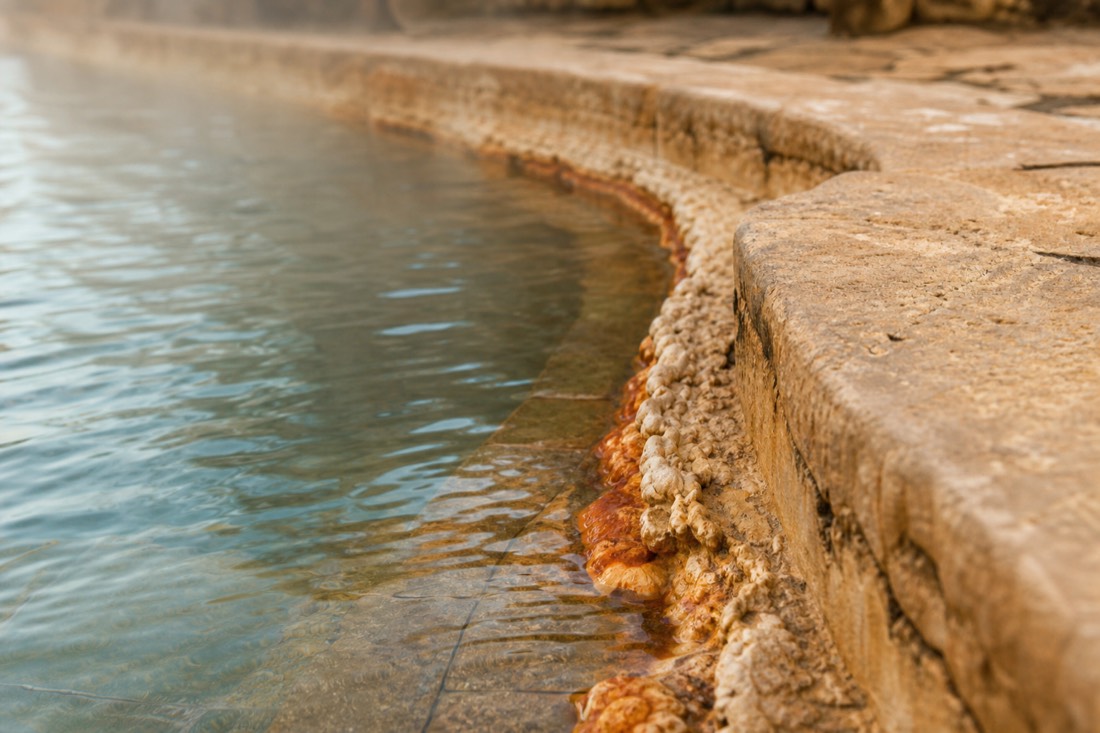
Mineral-rich groundwater, and the honest answer is that the mix varies by spring. Budapest sits above more than 100 medicinal geothermal springs, each bath draws from its own source, and the exact composition is posted on boards inside each building. Széchenyi's water rises from a well 1,246 metres deep, the second deepest in the city.
You will find plenty of sites that print confident element lists: calcium this, sulphate that. I do not reprint them, because I have not verified them, and the mix genuinely differs from bath to bath. Budapest is built over more than 100 medicinal geothermal springs and the largest thermal water cave system anywhere, which is exactly why no single mineral table can describe "the" Budapest water. If the precise chemistry matters to you, the composition board posted at each bath is the primary source, written by the people who test that specific well.
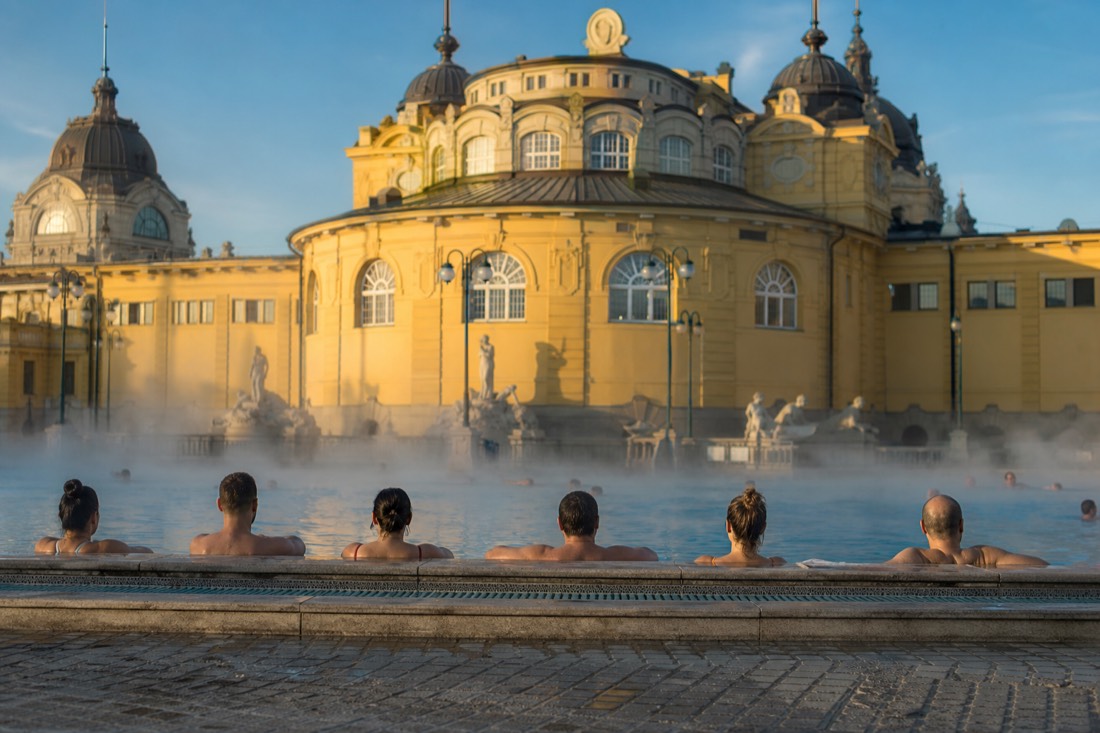
What is verifiable is the plumbing. Széchenyi's medicinal water comes up from a well 1,246 metres below the city, which is a genuinely strange thing to think about while you float under open sky in a building from 1913. The water in your pool spent its recent history over a kilometre down. If you want the longer geology story, where the springs come from and why Buda got the caves, I wrote that up separately in my guide to Budapest's thermal springs.
What do official sources actually claim?
Hungarian law classifies these waters as medicinal, and the baths themselves label their hottest pools medicinal pools. That classification has teeth: it is why children under 14 are barred from those pools. What the water treats in any individual case is a question official sources leave to doctors, and so do I.
"Medicinal" is not marketing copy in Hungary. It is a legal category, and the bath operators use it precisely: at Széchenyi the indoor pools running 28 to 40°C are named medicinal pools, not wellness pools. The clearest proof that the label carries real weight is a restriction, not a promise. Budapest Spas, the company operating the city's baths, bars children under 14 from the medicinal-water pools entirely. You do not fence kids out of ordinary warm water. You fence them out of water the law treats as an active substance.
Here is how I sort every claim you will meet about this water, on this site and elsewhere.
| Claim you will hear | Who actually states it | How to treat it |
|---|---|---|
| The water is legally medicinal | Hungarian classification, used by the bath operators | Verified fact |
| Keep hot soaks to about 20 minutes | Széchenyi's official guidance for its hottest pools | Verified house rule |
| Under-14s stay out of medicinal pools | Budapest Spas cPlc, posted policy | Verified rule |
| Exact mineral content of each pool | The composition board at each bath | Read it on site; I do not reprint unverified lists |
| Relief for a named condition | Only your own doctor can say | Not a travel site's call |
| Soft skin, deep relaxation | Thousands of guest reviews | Reported experience, not medicine |
Notice what is missing from the verified rows: any sentence of the form "this water heals X". That absence is deliberate, and it is the most honest thing I can give you.
What do bathers actually report?
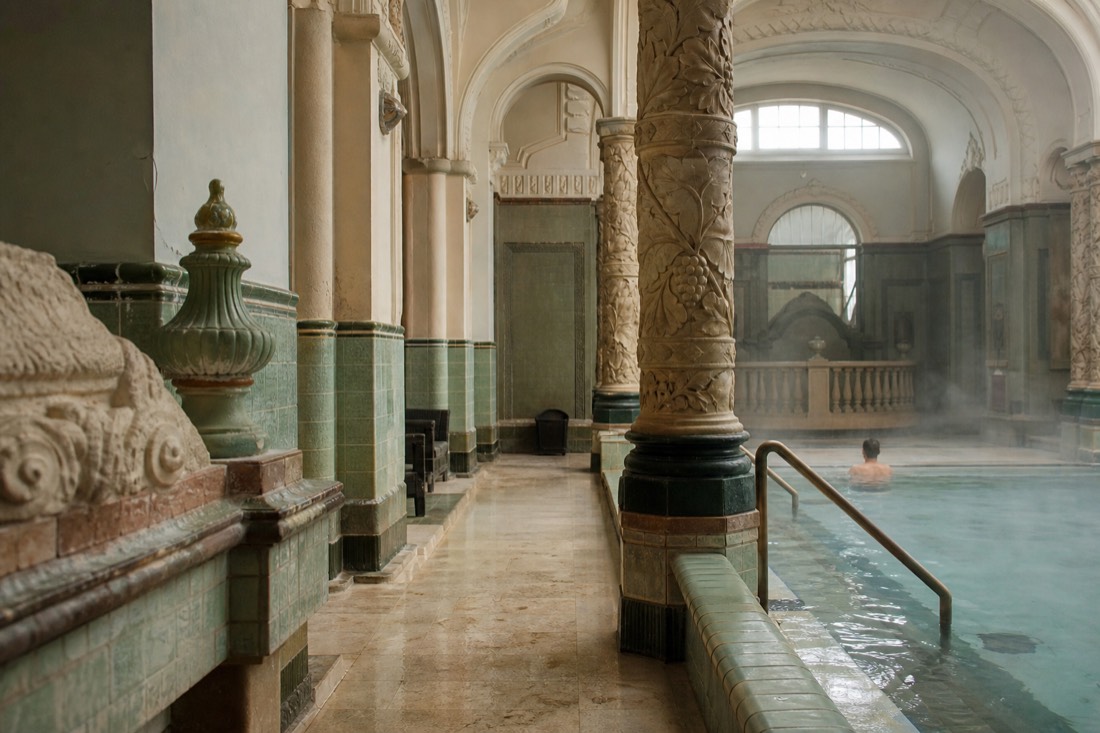
Across tens of thousands of reviews, two reports come up again and again: deep relaxation and noticeably soft skin afterwards. Those are guest experiences, not medical outcomes. The Széchenyi day pass holds 4.3 across 26,787 GetYourGuide reviews, and soft skin is a steady theme in beer spa feedback.
Guest reports are a different kind of evidence. They cannot tell you what the water does to a joint, but at this volume they tell you reliably what an afternoon in it feels like. The pattern is consistent across platforms and across baths, which is worth something.
| Bath or product | Rating | Sample size | What guests keep reporting |
|---|---|---|---|
| Széchenyi day pass (GetYourGuide) | 4.3 | 26,787 reviews | Relaxation; go early to beat crowds |
| Széchenyi (Google reviews) | 4.2 | ~66,000 | The outdoor pools, the atmosphere |
| Rudas (Google reviews) | 4.3 | ~12,000 | The Ottoman section, night sessions |
| Veli Bej (Google reviews) | 4.5 | ~3,400 | Quieter, more local feel |
| Beer spa (GetYourGuide) | 4.7 | 58 reviews, small sample | Friendly staff, soft skin afterwards |
The soft-skin theme is strongest in beer spa feedback, where guests soak 45 minutes in a wooden tub with hops and malt, and several reviews mention how their skin felt after. I pass that on as what it is: repeated guest experience from a small sample, 58 reviews, so hold it loosely. Relaxation is the near-universal report at Széchenyi itself, and it usually arrives bundled with practical advice rather than health talk, which tells you something about what actually occupies a bather's mind. Go early before the crowds build. Bring flip-flops and your own towel, because renting and buying on site adds up. Expect food and drinks inside to be pricey, and eat beforehand if you are watching the budget.
Read enough of these reviews and a picture forms that no mineral chart could give you: the benefit people actually walk away with is a slow, warm, phone-free afternoon, and the complaints are almost never about the water itself. That distinction matters for setting expectations. And if the question behind your question is hygiene rather than health, I looked at that separately in are the baths actually clean, because the two get tangled together and they should not be.
How long should you soak?
Follow the house guidance. At Széchenyi the official recommendation is about 20 minutes per soak in the hottest medicinal pools, with breaks in between. The cooler outdoor pools, 26 to 34°C, are built for longer stretches. Alternate hot water with cooler water and rest, and pace the day rather than racing it.
The numbers matter here, because "hot pool" covers a 14-degree range at Széchenyi alone. The official pool list on szechenyibath.hu breaks down like this.
| Pool | Temperature | The practical note |
|---|---|---|
| Outdoor thermal pool | 36-38°C | Depth 1.3-1.4 m, the famous one, hot but social |
| Outdoor activity pool | 30-34°C | The comfortable long-stay temperature |
| Outdoor 50 m swimming pool | 26-28°C | Swim cap needed for lap swimming |
| Indoor medicinal pools | 28-40°C | The hottest water; ~20 minutes per soak, then a break |
My working rhythm with guests is simple: start warm, not hot, and treat the hottest indoor pools as short courses rather than a place to camp. Twenty minutes in, break, cooler pool or a rest on the side, then back if you want. The breaks are also where the day gets good, honestly. That is when you notice the building, chat with whoever you came with, and let your body settle before the next round.
A full day at this pace is genuinely a full day, which is why I send most first-timers to the Széchenyi full-day pass rather than a rushed two-hour visit; you can check live availability and prices on GetYourGuide, and it cancels free up to 24 hours ahead if your plans move. The pass covers the same pools as the door ticket, with a locker or cabin included, so the soak-break-soak rhythm costs nothing extra. One trick straight from the reviews if you are visiting as a group: book one cabin between you and lockers for the rest. The cabin becomes a shared base for bags and dry clothes, everyone gets a secure locker, and nobody pays for private space they only use twice.
Does the 20-minute rule really matter?
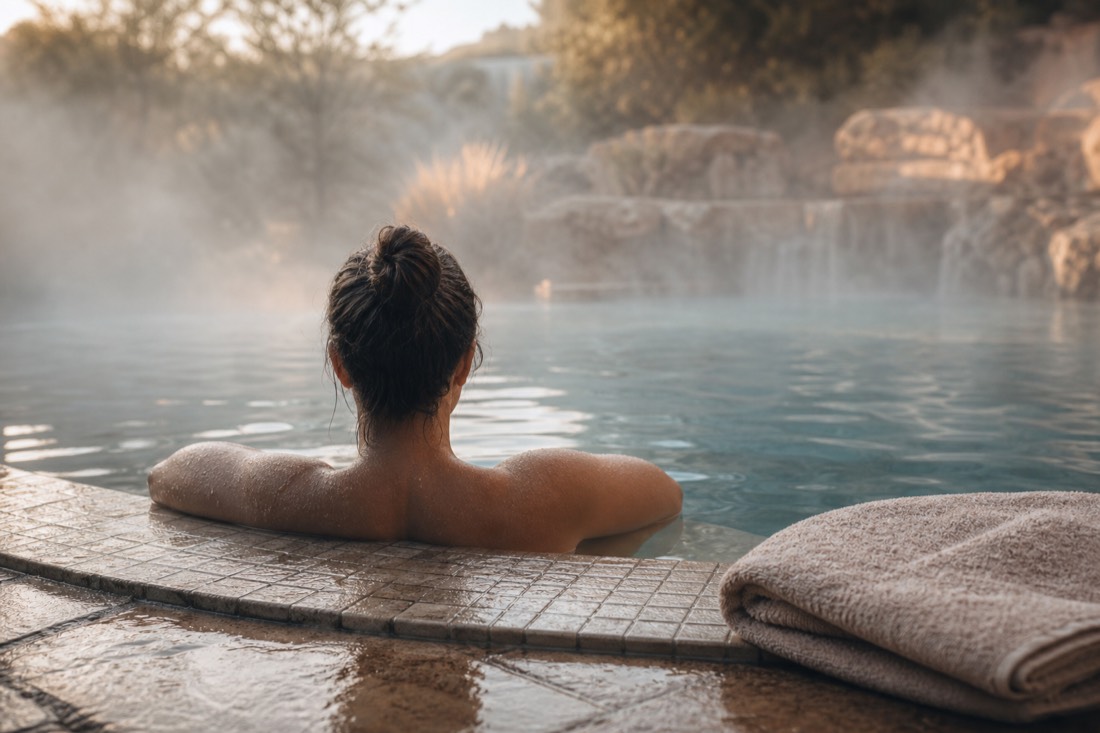
It matters because it is the bath's own instruction for its own hottest water, not a suggestion from a travel blogger. Treat it as a rhythm rather than a stopwatch: soak, climb out, cool off, go again. In four years of walking guests in, the ones who skip breaks are the ones who cut their day short.
I cannot tell you what 40°C water does to your cardiovascular system, and I will not pretend to. What I can tell you is what I see. Guests who bounce straight from the hottest indoor pool back into it, no break, no cooler water, are the ones who go pale, sit down hard on a bench, and ask to leave by mid-afternoon. Guests who keep the rhythm are still floating happily at closing. The bath did not print its 20-minute guidance for fun.
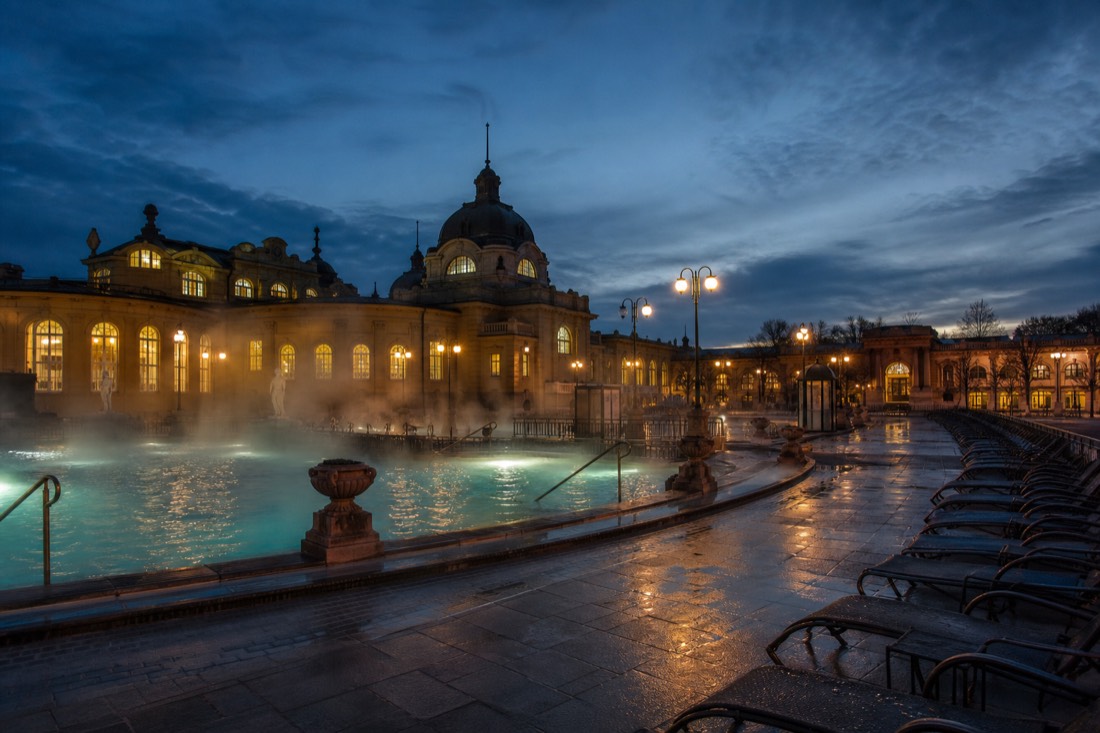
The rule also changes how you should plan the day. If you only have two hours, the break time feels like a tax. Across a full day it is just the shape of the visit: hot soak, lap in the 26-28°C pool, snack, another soak. Friday is my favourite day for this, because Széchenyi stays open to 22:00 instead of 20:00, and that last stretch after 20:00, when the day-trippers have gone and steam lifts off the water into the dark, is the calmest the big pool ever gets. Whether that full unhurried day justifies the cost is its own question, and I answered it honestly in is a Budapest bath day worth it.
Who should be careful or skip the hot pools?
Ask your doctor before soaking if you are pregnant, have a heart condition or a blood-pressure issue. That is not caution theatre. The listings themselves draw hard lines: the beer spa excludes pregnant guests outright, and children under 14 are not allowed in the medicinal pools at all.
This is the section where a travel site can do real harm by being breezy, so I will be blunt instead. I am a guide, not a doctor. Hot medicinal water is exactly the kind of thing your own doctor can assess in one short conversation, and cannot be assessed by a stranger on the internet who has never met you. What I can give you is the set of rules that are actually written down and verified.
| Who | The verified rule | Where it comes from |
|---|---|---|
| Children under 14 | Not permitted in medicinal-water pools | Budapest Spas posted policy |
| Pregnant guests | Beer spa excludes pregnant guests; for hot pools, ask your doctor first | GetYourGuide listing restriction; doctor question |
| Heart condition or blood pressure | No posted ban, so the decision is medical | One for your doctor, before you travel |
| Under 18 | No beer spa, no Sparty | Listing restrictions, both 18+ |
Two things soften this picture honestly. First, exclusion from the hottest pools is not exclusion from the baths: Széchenyi's outdoor activity pool sits at a mild 30-34°C and the swimming pool cooler still, so a cautious visitor with a doctor's nod for warm (not hot) water still has plenty of building to enjoy. Second, the baths differ enough that the right one matters, and the comparison page lays out temperatures and atmospheres side by side if you are choosing with a condition in mind.
One last framing before the questions people ask me most. Budapest has carried a spa-city title since the 1930s, and a century of bathing culture means the staff here have seen every kind of visitor, cautious ones included. Nobody will blink if you sit on the steps, keep to the mild pools, or spend half your visit on a lounger. The pressure to go hot, stay long and tough it out comes from holiday adrenaline, never from the baths themselves. The house rules run the opposite way: shorter soaks, real breaks, cooler water in between. Take the water seriously, take your doctor's answer seriously, and the rest of the day takes care of itself.
What does the water do for skin, joints, sleep and blood pressure?
Skin gets the strongest bather report, soft afterwards, especially at the beer spa. Joints, sleep and blood pressure get no verified claim I can print in my own voice: official sources classify the water as medicinal and stop there, the reviews on file talk about relaxation, and the rest is a question for your doctor.
These four are the questions I hear most, in roughly that order, and the honest ledger for each one has three columns rather than one. The first column is what an official source actually states, and for all four it is thin by design: Hungarian classification calls the water medicinal, the operators name their hottest basins medicinal pools, and Széchenyi publishes a soak guidance of around 20 minutes for the hottest of them. No official page I have verified says "good for joints" or "lowers blood pressure", so neither do I.
The second column is what bathers report, and here I only repeat themes that are genuinely on file. Soft skin is one, strongest in beer spa feedback where guests sit 45 minutes in a wooden tub of hops and malt; the sample is small, 58 reviews at 4.7, so I hold it loosely. Relaxation is the other, and it is close to universal across the tens of thousands of Széchenyi reviews. Joints, sleep and blood pressure are simply not review themes I can point to, and I would rather leave a cell empty than fill it with what a stranger on a forum once said. My beer spa write-up has the skin theme in the guests' own words.
The third column is the doctor's. It is not a dodge. Warm mineral water at 36 to 40°C is exactly the kind of variable a doctor can weigh against your own history in a two-minute conversation, and cannot be weighed by me. If any of the four matters to you medically, that conversation happens before you travel, not on the pool steps.
| The question | What official sources state | What bathers report (on file) | The doctor's question |
|---|---|---|---|
| Skin | Water is legally medicinal; no skin claim published | Soft skin afterwards, strongest at the beer spa (58 reviews, small sample) | Any skin condition, any open wound: ask first |
| Joints and back | Medicinal classification only; ~20 minutes per hot soak | Not a theme in the reviews on file; relaxation is what people describe | Whether hot water suits your specific joint or back issue |
| Sleep | Nothing published | Relaxation and a slow, phone-free afternoon; sleep itself is not measured in any review | Ask your doctor if you take regular medication |
| Blood pressure and heart | No posted ban, no posted claim | Not a review theme | The central question; ask before you soak, not after |
| Stress | Nothing published beyond the house rhythm of soak and break | The near-universal report at Széchenyi | Rarely a doctor question, unless it comes with one of the above |
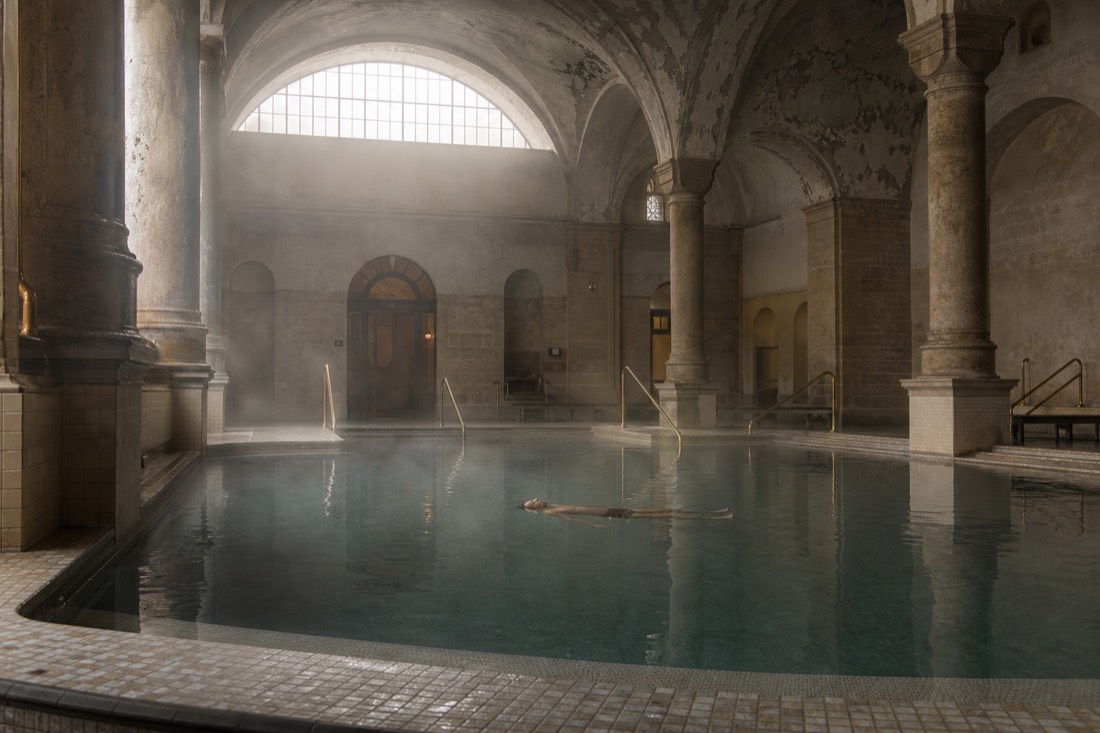
What does a soak-and-break day look like in practice?
A paced day is a ladder: twenty minutes in the mild outdoor activity pool to start, then hot soaks of around 20 minutes each, every one followed by a real break, cooler water or a bench. Four hot rounds and the breaks between them fill an unhurried day at Széchenyi without ever breaking its own house rule.
The 20-minute guidance sounds abstract until you lay it across a real day, so here is the shape I walk guests through at Széchenyi. Every allowance below is mine, a planning figure rather than anything the bath promises, and the pool temperatures come straight from the official pool list: activity pool 30 to 34°C, outdoor thermal pool 36 to 38°C, indoor medicinal pools 28 to 40°C, the 50 m swimming pool at 26 to 28°C with a cap for laps. What I am doing with those bands is simple. Start mild, go hot in short rounds, come back down to cool water or a bench between each one, and let lunch be the long break in the middle.
Two things people get wrong. The first is starting hot, straight from the changing hall into 38°C water, which is the surest way I know to feel done by two o'clock. The second is treating the swimming pool as a separate activity for "sporty" people, when its real job in this rhythm is to be the cool rung between hot ones. Bring the cap. My guide to what to wear and bring has the full kit list.
Read as elapsed time from arrival, the worked example runs about four and a half hours before you even think about the evening, which is exactly why a two-hour visit always feels rushed and a full-day pass rarely does. On a Friday you can stretch the tail: the doors stay open to 22:00, and the last two hours are the calmest the courtyard gets. If you want the whole thing narrated rather than tabulated, I wrote up a full day at Széchenyi hour by hour.
| Elapsed | Rung | Allow | Why it sits here |
|---|---|---|---|
| 0:00 | Ticket, changing hall, shower | 20 minutes | Queue, locker or cabin, the lock; unhurried on purpose |
| 0:20 | Mild start, outdoor activity pool 30-34°C | 20-30 minutes | Lets the body settle before hot water |
| 0:50 | First hot round, outdoor thermal pool 36-38°C | About 20 minutes | The official guidance for the hottest water |
| 1:10 | Break, bench, water bottle | 15 minutes | The rule is soak and break, not soak and soak |
| 1:25 | Cool rung, 50 m pool 26-28°C, cap on | 15-20 minutes | Cool water between hot rounds |
| 1:45 | Second hot round, indoor medicinal pools 28-40°C | About 20 minutes | Choose a cooler basin first, then the hottest |
| 2:05 | Long break, lunch | 45-60 minutes | Food inside runs pricey in the reviews, so eat first or budget for it |
| 3:00 | Third hot round | About 20 minutes | Back to the outdoor thermal pool, the social one |
| 3:20 | Break, cool pool or lounger | 20 minutes | Judge honestly whether a fourth round is wanted |
| 3:40 | Fourth hot round, or skip it | About 20 minutes | Skipping is the right call more often than people admit |
| 4:00 | Wind down in the mild pool, dry, dress | 30-40 minutes | Leaving rested rather than wrung out |
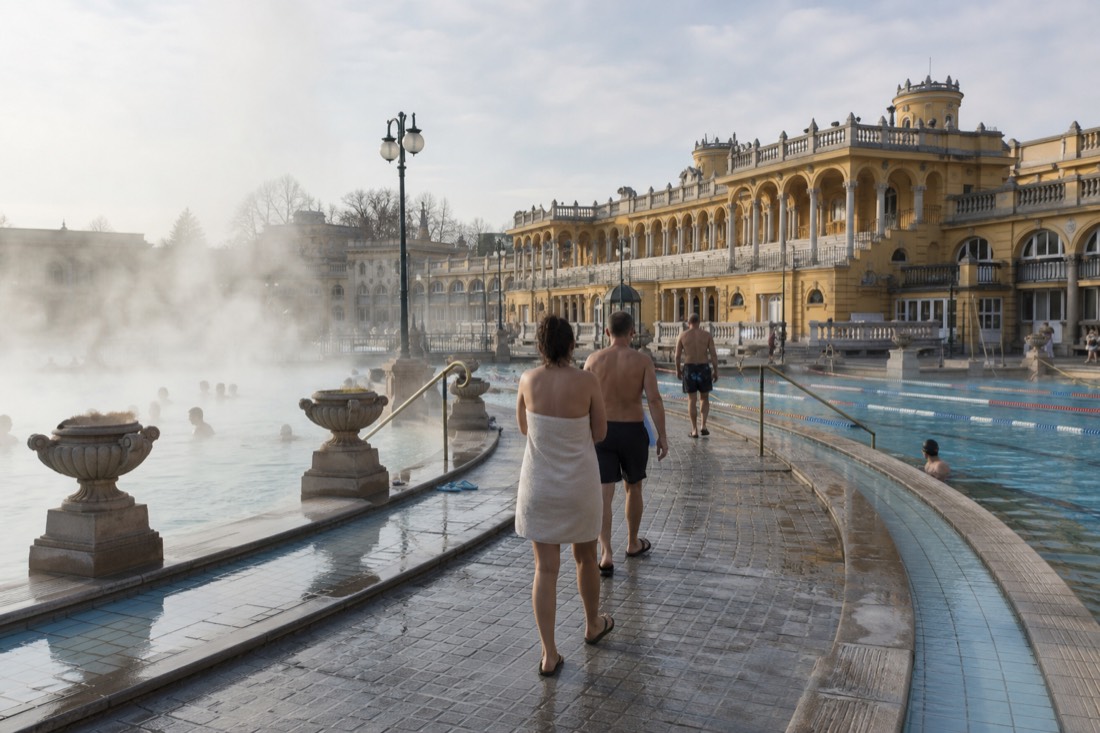
Who should be careful, product by product?
The only hard bars written down are these: under-14s out of medicinal pools and off the Széchenyi pass, under-18s out of the beer spa and Sparty, pregnant guests out of the beer spa. Every other caution, heart, blood pressure, medication, is a doctor's call, and the grid below says so in every cell where it applies.
The earlier table in this guide sorted people by rule. This one turns it sideways and sorts by product, because the practical question is usually "can my daughter come to Széchenyi with us" or "is the beer spa fine for my wife", and the answer changes with the door you are walking through. Every hard restriction below is taken from a listing or an official policy I have verified: the Széchenyi day pass does not admit under-14s, the beer spa is 18 and over and excludes pregnant guests, the Saturday-night Sparty is 18 and over, and Budapest Spas keeps under-14s out of medicinal-water pools across its baths. Where a cell reads "no posted bar", that is a statement about paperwork, not about safety, and it is exactly where your doctor comes in.
Two rows are mine rather than the listings'. Weak swimmers get a row because the official pool list gives the outdoor thermal pool a depth of 1.3 to 1.4 m and reserves the 50 m pool for lap swimming, which is useful to know before you commit to a day. Drinking gets a row because the beer spa serves unlimited draft beer beside a hot tub and Sparty sells drinks by a cash-loaded card, and hot water plus alcohol is a combination I keep shorter and gentler with guests, and one to raise with your doctor if you take anything regularly.
For the Ottoman baths the same logic applies with less paperwork: Rudas and Veli Bej publish hours and house rules rather than listing restrictions, so read the Rudas guide for the single-sex schedule and treat any medical question the same way. And if the daughter question is the one you came with, the kids guide is the fuller answer.
| Traveling with, or as | Széchenyi day pass | Beer spa | Sparty (Saturdays) | What to do |
|---|---|---|---|---|
| A child under 14 | Not admitted on the pass; medicinal pools barred citywide | 18+ only | 18+ only | Plan a family day around the kids guide, not the hot pools |
| A 14 to 17 year old | No posted bar above 14; an adult should read the listing | 18+ only | 18+ only | Széchenyi by day, nothing after dark |
| Pregnant | No posted bar; a doctor question before any hot soak | Excluded by the listing | 18+ and late-night; ask your doctor | Ask first, and if yes, keep to the mild 30-34°C water |
| Heart condition or blood pressure | No posted bar | No posted bar | No posted bar | Doctor before travel; mild pools first if the answer is yes |
| On regular medication | No posted bar | No posted bar, unlimited beer served | No posted bar, drinks sold | Ask about heat and about alcohol, separately |
| Weak swimmer | Thermal pool 1.3-1.4 m deep; the 50 m pool is for laps | Seated in a tub | Same Széchenyi pools, at night and crowded | Stay in the thermal and activity pools, skip the lap pool |
| Planning to drink | Nothing served in the pools | Unlimited draft beer beside the tub | Cash-card bar | Shorter, gentler rounds; a doctor question if you take anything regularly |
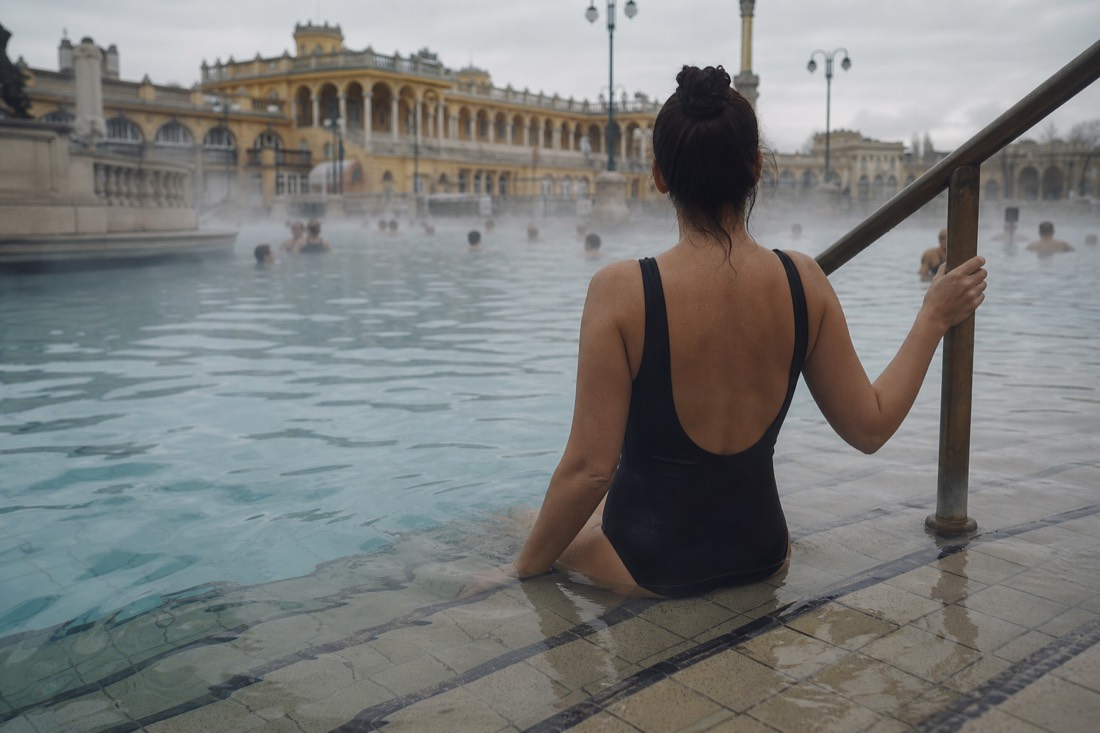
How does Gábor talk about the water with guests?
Carefully, and never as a diagnosis. I describe what the water is, legally medicinal, what the house rules are, and what other guests report. When someone asks whether it will help their back, their skin or their sleep, my answer is the same every time: try it gently, notice how you feel, ask your doctor about anything specific.
I have had the water conversation with more than a thousand people since 2022, by my own count, and it has settled into a script I am not embarrassed by. The script has three moves. First, I tell people what the water is, in the terms an official source would recognise: medicinal by Hungarian classification, drawn from deep wells, run through pools that the operators themselves label medicinal and fence children out of. Second, I tell them the house rules, above all the roughly 20-minute guidance for the hottest basins, and I frame it as the bath's instruction rather than mine. Third, I pass on what other guests report, clearly labelled as reports: soft skin, deep relaxation, a slow afternoon.
What I do not do is answer the medical question, and I say so out loud. "Will it help my knee" gets "I genuinely do not know, and nobody at this desk does either; try the mild pool, see how the knee feels, and ask your doctor about hot water if it is a real question." Guests are almost never annoyed by that. Most of them are relieved that somebody finally declined to make a promise.
The one place I do get firm is pacing. Not because I know what the water does to a heart, but because I know what I see, and what I see is that the visitors who skip breaks are the visitors who leave early. So the script ends the same way for everyone: start mild, hot in short rounds, cool water between, and let the Széchenyi day be long rather than intense. If you want the version of that day tuned to the calmest hours, the best time to visit guide has it.
| What guests ask | What I say | What I never say |
|---|---|---|
| "What does the water do?" | Legally medicinal, drawn from deep wells, mineral mix varies by spring; the composition board at each bath is the source | Any element list I have not verified |
| "Will it help my back or knee?" | Try the mild pool, notice how it feels, ask your doctor about hot water | "Yes" or "no" |
| "How long can I stay in?" | About 20 minutes per hot soak, then a real break; that is the bath's own guidance | "As long as you like" |
| "Is it safe with my blood pressure?" | That is a doctor's question, before you travel; if the answer is yes, start at 30-34°C | Anything that sounds like clearance |
| "Can my kids come in?" | Under-14s are barred from medicinal pools citywide and from the Széchenyi pass; the kids guide has the alternatives | A workaround |
| "Is the beer spa fine for my pregnant wife?" | No, the listing excludes pregnant guests; for the hot pools, ask her doctor | A guess |
| "Did it help you?" | I leave rested; that is my report, not a finding | A testimonial dressed as evidence |
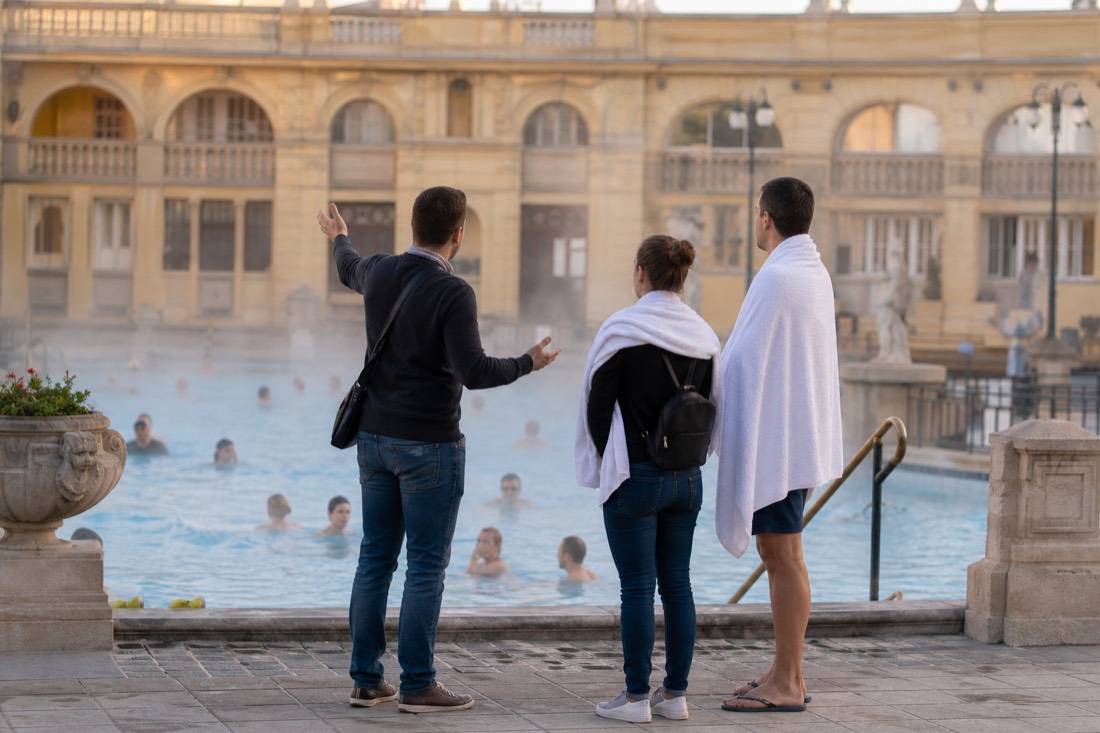
Is Budapest's thermal water really medicinal?
Yes, in the legal sense. Hungary classifies these waters as medicinal, and the baths label their hottest pools medicinal pools. What that means for any specific condition of yours is a question for your doctor, not for a bath or a travel site.
What minerals are in the water?
The mix varies by spring, and I do not reprint element lists I have not verified. Each bath posts a composition board for its own well; that board is the primary source for the pool you are actually sitting in.
How long can I stay in the hot pools?
Széchenyi's official guidance is about 20 minutes per soak in the hottest medicinal pools, with breaks between rounds. The cooler outdoor pools at 26-34°C are fine for much longer stretches.
Can children use the thermal pools?
Children under 14 are not permitted in the medicinal-water pools under Budapest Spas policy. Cooler swimming and activity pools have their own rules, so check the bath's official page before you plan a family visit.
Can I go to the baths while pregnant?
Ask your doctor before any hot soak; that is the only honest answer. Note that the beer spa explicitly excludes pregnant guests as a listing rule, so plan around that one regardless.
Should I visit with a heart condition or high blood pressure?
There is no posted ban, which means the decision is medical rather than administrative. Talk to your doctor before you travel, and if you get a yes for warm water, the 30-34°C outdoor activity pool is the gentler entry point.